What Is the Difference Between a Kamado and a Pellet Grill?
On this page (3 sections)
The main difference between a kamado and a pellet grill is how they cook and what fuel they use. A kamado grill uses lump charcoal and ceramic insulation for superb heat retention, ideal for high-heat searing and low-and-slow smoking. A pellet grill uses electricity and wood pellets, offering precise temperature control and a smoky flavor with less effort.
You’re likely wondering which grill best fits your backyard cooking style. We found that kamado grills excel at versatility and extreme temperatures, while pellet grills offer set-it-and-forget-it convenience. Both bring incredible flavor to your food, just in different ways.
- Kamado grills use charcoal; pellet grills use wood pellets.
- Kamados are ceramic for excellent heat retention.
- Pellet grills offer digital temperature control.
- Kamados are great for high-heat searing and smoking.
- Pellet grills shine with consistent, low-and-slow cooks.
Ready to figure out which one will be your new grilling buddy? Let’s break down everything you need to know about kamado versus pellet grills so you can make the best choice for your outdoor cooking.
Kamado vs. Pellet Grills: A Deep Dive into Their Differences
You’re looking for the perfect outdoor cooking companion, and it comes down to a kamado or a pellet grill. Let’s break down the key distinctions so you can confidently choose.
Fuel Source: The Heart of the Cook
The type of fuel your grill uses makes a huge difference. It affects flavor, temperature control, and even the cooking process itself. Are you a charcoal purist, or do you prefer the consistent burn of pellets?
Kamado Grills: The Charcoal Champion
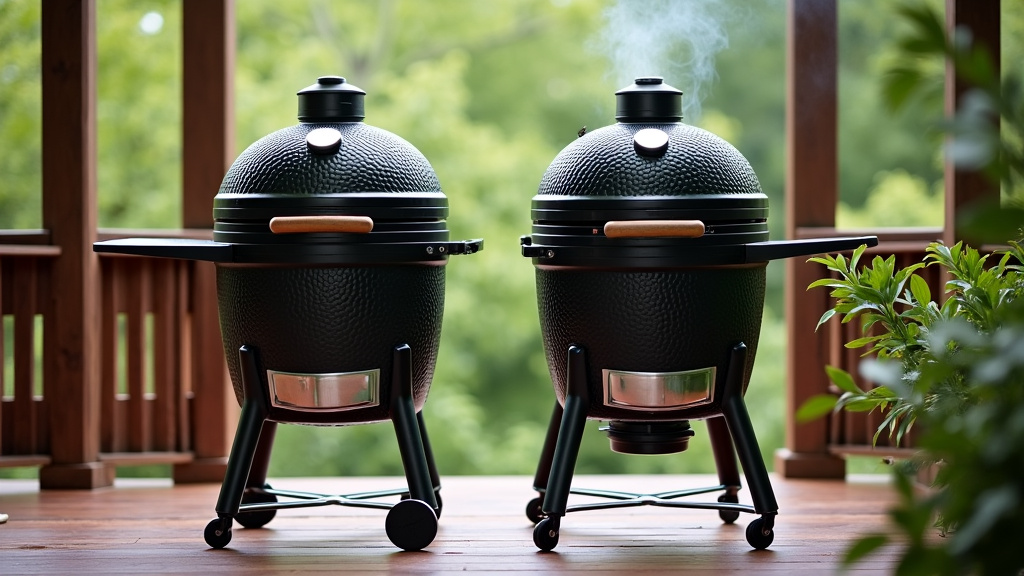
Kamado grills run on lump charcoal. This isn’t your average briquette. Lump charcoal is made from natural wood, burned in a low-oxygen environment. This process creates a cleaner, hotter, and more natural fuel source.
When you light lump charcoal, you get a distinct smoky flavor. It’s a taste that many grilling enthusiasts absolutely love. You control the temperature by adjusting airflow through vents. More air means hotter temperatures, less air means cooler temperatures.
Pellet Grills: The Wood Pellet Powerhouse
Pellet grills use wood pellets, which are made from compressed sawdust. These pellets come in various wood types, like hickory, apple, or mesquite. Each type imparts a different smoky flavor to your food.
A digital controller feeds these pellets into a fire pot. An electric igniter starts them, and a fan helps maintain the fire. This system gives you very precise temperature control, almost like an indoor oven. You just set the desired temperature, and the grill does the rest.
Temperature Control and Consistency
How much control do you want over your cooking temperature? And how important is a consistent temperature throughout your cook?
Kamado Grills: Mastering the Flames
With a kamado grill, you are the temperature master. You adjust the top and bottom vents to regulate airflow. This takes a little practice to get just right. But once you learn, you can achieve incredibly precise temperatures.
Kamados are famous for their ability to reach extremely high temperatures for searing steaks. They also maintain very low temperatures for hours for slow smoking. The ceramic construction helps keep the heat stable once you dial it in. We found this takes some hands-on experience (Weber).
Pellet Grills: Set It and Forget It
Pellet grills offer unparalleled convenience when it comes to temperature. You simply set the desired temperature on a digital control panel. The grill then automatically feeds pellets and adjusts fan speed to maintain that temperature.
This “set it and forget it” approach is perfect for long cooks, like briskets or pulled pork. You don’t need to constantly monitor the grill. Many models even have Wi-Fi connectivity, letting you monitor and adjust from your phone.
Versatility: What Can Each Grill Do?
What kind of cooking do you plan to do most often? Both grills are versatile, but they shine in different areas.
Kamado Grills: The All-Around Athlete
Kamado grills are incredibly versatile. Their thick ceramic walls and excellent heat retention allow them to do almost anything:
- Smoking: Long, low, and slow cooks are a kamado’s specialty.
- Grilling: Direct heat for burgers and steaks.
- Searing: Reach extremely high temperatures for a perfect crust.
- Baking: Yes, you can bake pizzas, bread, and even pies! The ceramic acts like a convection oven.
- Roasting: Perfect for whole chickens or prime rib.
You can truly cook almost anything on a kamado. It might take a bit more skill and attention than a pellet grill, but the results are often worth it.
Pellet Grills: The Smoking and Roasting Pro
Pellet grills excel at smoking and roasting, thanks to their consistent temperatures and smoky flavor profile:
- Smoking: This is where pellet grills truly shine. They produce consistent smoke for hours.
- Roasting: Even, indirect heat makes them great for poultry and roasts.
- Baking: Similar to an oven, they can bake casseroles or desserts.
Some newer pellet grills also offer direct flame searing options. However, they typically don’t reach the extreme searing temperatures of a kamado. They are more focused on the delicious smoky flavor (Traeger Grills).
Flavor Profile: Taste the Difference
Ultimately, it’s about the food. How do these two grills impact the taste of what you cook?
Kamado Grills: The Rich, Intense Smoke
The flavor from a kamado grill is often described as deep, authentic, and intense. This comes from the lump charcoal and the way the ceramic traps moisture and smoke.
You get a more pronounced smoky taste, especially on longer cooks. It’s that classic BBQ flavor that purists crave. Many people feel kamado grills give a superior smoke ring and bark on meats.
Pellet Grills: The Consistent, Milder Smoke
Pellet grills offer a cleaner, more consistent smoky flavor. The type of wood pellet you choose directly influences the taste. You can easily switch between applewood for pork and hickory for beef, for example.
The smoke is usually less intense than a kamado, which can be a plus for those who prefer a milder smoke flavor. It’s often described as a “wood-fired” taste, delicious and reliable.
Maintenance and Cleaning
Nobody loves cleaning. Which grill makes it easier?
Kamado grills require you to empty ash after each cook. You’ll also need to clean the grates. The ceramic can eventually collect grease, but it’s not a major issue.
Pellet grills also have ash to clean out, but often less frequently than a kamado. They also have grease management systems that direct drippings away. Both require occasional deep cleaning, but pellet grills often have more components that can get greasy, like the fire pot and fan.
Which Grill Is Right for You? A Quick Checklist
Still on the fence? Consider these points to help you decide:
- Do you love the process of managing a fire? Choose kamado.
- Is “set it and forget it” your ideal cooking style? Go for pellet.
- Do you prioritize extreme searing temperatures? Kamado is best.
- Is consistent, mild smoke more your preference? Pellet excels here.
- Are you looking for an “oven-like” outdoor experience? Pellet grills are great.
- Do you enjoy baking and high-heat cooking outdoors? A kamado is incredibly versatile.
Comparing Kamado and Pellet Grills
Let’s put it all together in a handy comparison table:
| Feature | Kamado Grill | Pellet Grill |
|---|---|---|
| Fuel Type | Lump Charcoal | Wood Pellets |
| Temperature Control | Manual (vents), highly versatile | Digital, precise, automated |
| Temperature Range | Very Low to Extremely High (200°F – 750°F+) | Low to High (180°F – 500°F+, some sear up to 700°F) |
| Smoking Flavor | Intense, deep, traditional charcoal/wood smoke | Consistent, milder, wood-fired flavor (adjustable by pellet type) |
| Searing Ability | Excellent (can reach very high temps) | Good, but often requires specific models or accessories for high-heat searing |
| Ease of Use | Requires practice and attention | Very easy, “set it and forget it” |
| Versatility | Smoking, grilling, searing, baking, roasting | Smoking, roasting, grilling (some models), baking |
| Ignition Time | ~15-25 minutes | ~5-10 minutes (electric igniter) |
Conclusion
Choosing between a kamado and a pellet grill ultimately comes down to your cooking style and priorities. If you enjoy hands-on cooking, mastering fire, and achieving intense searing temperatures, a kamado grill is your ideal match. For those who prefer “set-it-and-forget-it” convenience, precise temperature control, and consistent smoky flavors, a pellet grill will serve you best.
Both will significantly upgrade your outdoor cooking experience. Consider what excites you most in the kitchen—or rather, the backyard—to pick your perfect grilling partner.
Frequently Asked Questions
Is a kamado grill hard to use for beginners?
A kamado grill requires some practice to master its manual temperature control. Adjusting the vents takes a few cooks to get comfortable. We found that once you learn it, the results are incredibly rewarding.
Can you really bake in a kamado grill?
Yes, absolutely! The ceramic construction of a kamado grill creates a consistent, oven-like environment. You can bake pizzas, bread, and even desserts with excellent results.
Do pellet grills use a lot of electricity?
Pellet grills do use electricity to power the auger, fan, and digital controller. However, the power draw is generally low, similar to a light bulb. It’s not a significant energy consumer.
Which grill provides a better smoke flavor?
This depends on your preference. Kamado grills, using lump charcoal, tend to produce a more intense and authentic smoke flavor. Pellet grills offer a cleaner, more consistent, and often milder smoky taste, which you can customize with different wood pellets.
Are pellet grills good for high-heat searing?
Most pellet grills are not designed for extreme high-heat searing like kamados. Some newer models offer direct flame access or specific searing zones. For a true steakhouse-quality sear, a kamado typically performs better.