What Is a Kamado Grill?
On this page (6 sections)
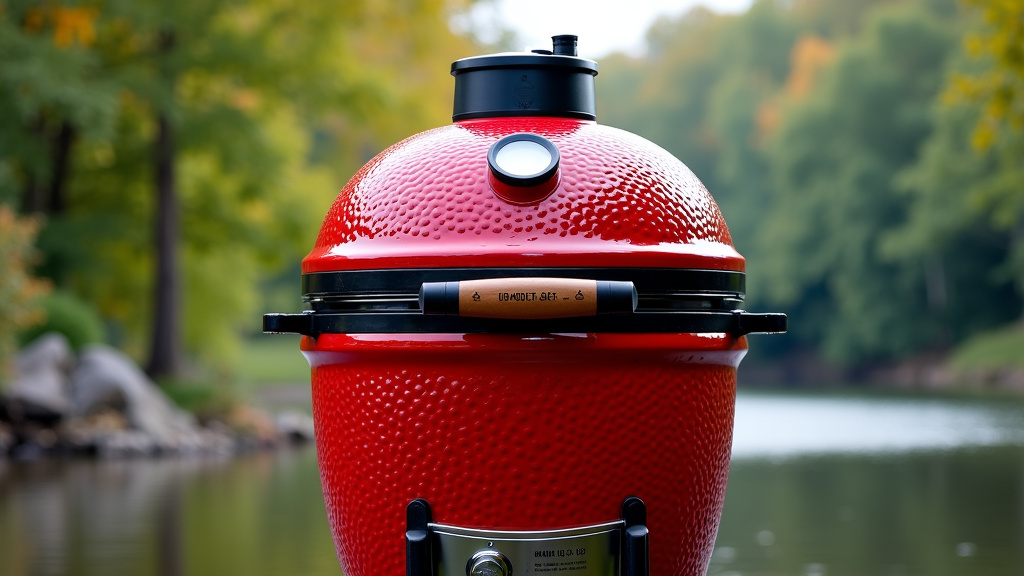
A kamado grill is a thick-walled ceramic cooker designed for versatile outdoor cooking, excelling at grilling, smoking, roasting, and baking. Its unique design allows it to retain heat and moisture exceptionally well, providing consistent cooking temperatures and juicy results. We found that these grills are famous for their egg-like shape and ceramic material.
You can use a kamado grill for everything from sizzling steaks to slow-smoked brisket, or even baking pizzas. Its roots trace back thousands of years, with modern versions offering precise temperature control and remarkable fuel efficiency. Many people love them for their ability to deliver restaurant-quality food right in their backyard.
- Kamado grills are ceramic cookers.
- They are shaped like an egg.
- You can grill, smoke, roast, or bake in them.
- They hold heat and moisture very well.
- They are efficient with charcoal.
Ready to discover if a kamado grill is the right fit for your outdoor cooking adventures? Let’s dive deeper and explore everything about these amazing cooking devices.
Understanding the Kamado Grill
A kamado grill is primarily a ceramic cooking vessel. It looks like an egg and holds heat incredibly well. This design allows you to cook in many different ways, from searing to slow roasting. We found that its unique material and shape are what make it special.
Think of it as a super-efficient outdoor oven. Unlike thin metal grills, a kamado grill keeps its heat locked inside. This means your food cooks evenly and stays moist. It’s a true workhorse for your backyard cooking adventures.
A Glimpse into Kamado History
The idea behind the kamado isn’t new at all. In fact, it’s thousands of years old. These types of clay pots were first used in China. People cooked food in them with wood fires.
Later, the design made its way to Japan. There, it evolved into what was called a “mushikamado.” This version was used to steam rice for ceremonies. We found that the basic principles of heat retention carried over to modern designs.
After World War II, American soldiers brought these cooking traditions home. They saw how well these ceramic cookers worked. This sparked the development of the modern kamado grill we know today. It’s a rich history for such a popular cooker.
Kamado Grill vs. Other Grills
You might wonder what sets a kamado apart. It’s a fair question! Most grills are made of thinner metal. Kamados use thick ceramic walls. This makes a huge difference in performance.
Let’s look at how it stacks up against other popular types of grills.
| Feature | Kamado Grill | Gas Grill | Charcoal Kettle Grill |
|---|---|---|---|
| Material | Thick Ceramic | Thin Metal | Thin Metal |
| Heat Retention | Excellent | Good | Fair |
| Fuel Type | Lump Charcoal | Propane/Natural Gas | Charcoal Briquettes/Lump |
| Temperature Control | Precise, Stable | Good, Instant | Moderate, Fluctuates |
| Versatility | High (Grill, Smoke, Bake, Roast) | Good (Grill, Roast) | Good (Grill, Smoke) |
| Moisture Retention | Excellent | Fair | Good |
| Fuel Efficiency | Very High | Moderate | Moderate |
| Flavor Profile | Smoky, Deep | Clean, Less Smoky | Classic BBQ Smoke |
As you can see, the kamado offers a range of benefits over other types. Its ceramic body is the key. Are you ready for some next-level flavor?
The Science Behind the Sizzle
What makes a kamado grill so good at cooking? It’s all about the materials and design. The science is simple but very effective. Thinking about it this way might help you appreciate it even more.
The Magic of Ceramic
Kamado grills are usually made from a special type of ceramic. This ceramic is very dense. It acts like an excellent insulator. This means it holds heat in and keeps cold out.
When you light your charcoal, the ceramic walls absorb that heat. Then, they radiate it back into the cooking chamber. This creates a very even and stable cooking environment. It’s like a scientific marvel in your backyard.
This heat retention also means less charcoal is needed. Your kamado can cook for hours on a single load of fuel. We found that many users appreciate this fuel efficiency over time.
Maximizing Moisture Retention
Many grills can dry out your food. Not a kamado! The thick walls and tight seal keep moisture locked in. When food cooks, moisture turns to steam. This steam then circulates around your food. It helps to keep everything juicy and tender.
Imagine your brisket or chicken staying incredibly moist. This benefit is a huge reason why many chefs prefer kamado grills. It’s almost like a hidden superpower for your food.
Mastering Kamado Cooking Techniques
You can do so much more than just grill on a kamado. Its versatility is truly one of its best features. Once you get the hang of it, you might never use another cooking method. Are you ready to expand your cooking horizon?
Grilling and Searing
Yes, you can grill! Kamados can reach very high temperatures, well over 700°F (370°C). This makes them perfect for searing steaks. That beautiful crust? You can get it here.
Just add more charcoal and open the vents. The heat quickly builds up. Your burgers and steaks will have amazing sear marks and a fantastic flavor. It’s a basic technique, but elevated.
Low-and-Slow Smoking
Smoking is where kamados really shine. Their superior temperature control is ideal for long cooks. You can set your grill to a precise low temperature, like 225°F (107°C). It will hold that temp for hours with minimal adjustments.
This steady heat makes for perfect smoked ribs, briskets, and pork butts. Just add some wood chunks for that classic smoke flavor. The results are truly incredible, often better than dedicated smokers.
Roasting and Baking
Remember how we said it’s an outdoor oven? You can roast whole chickens, turkeys, or large cuts of meat. The kamado’s ability to maintain a consistent temperature makes it perfect for roasting. Plus, you get a subtle hint of smoke flavor.
And baking? Oh, yes! You can bake bread, casseroles, and even pizzas. Many pizza lovers swear by kamados for their crust. The intense, even heat creates a perfectly crispy base. What will you bake first?
Easy Temperature Control
Controlling the temperature on a kamado involves two main vents. There’s a bottom draft door and a top vent cap. These regulate airflow to the charcoal. More air means higher temperatures. Less air means lower temperatures.
It takes a little practice to get it just right. Think of it like learning to drive a car; you get better over time. But once you master it, you’ll have unrivaled control over your cooking environment. Many users find it surprisingly simple after a few uses.
Is a Kamado Grill Right for You?
After learning all this, you might be asking yourself, “Should I get one?” It’s a big decision, and these grills are an investment. Let’s think about who benefits most from a kamado grill. We found that they aren’t for everyone, but they are great for many.
The Ideal Kamado Owner
You might be a great candidate for a kamado grill if you:
- Enjoy diverse cooking methods: You want to grill, smoke, roast, and bake, all on one device.
- Value exceptional flavor: You crave juicy meats and food with a rich, smoky taste.
- Appreciate efficiency: You want a grill that uses less fuel and holds heat for a long time.
- Like precise control: You want to set and maintain specific temperatures for perfect results.
- Are willing to learn: There’s a slight learning curve, but the rewards are huge.
- Have patience for results: Kamados excel at slow cooking, which takes time.
If these points resonate with you, a kamado grill could be your next favorite outdoor cooking tool. It often becomes a centerpiece for many backyard chefs.
Considerations Before Buying
While kamados are fantastic, they do have a few points to consider. They are typically heavier than other grills due to their ceramic build. This means they are less portable. Will you be moving it often?
They can also be more expensive upfront. However, many owners say the long-term benefits and durability make them worth it (Consumer Reports). Keep this in mind as you make your decision. Good tools are often a good investment.
Finally, temperature changes take a bit longer. Because of the ceramic, heating up and cooling down isn’t instant. But once it’s at temp, it’s incredibly stable. Are you okay with waiting a little longer for superior results?
Conclusion
You’ve seen how a kamado grill stands apart from other cooking methods. From its ancient origins to its modern design, it offers a unique blend of tradition and advanced cooking performance. We found that its ceramic construction ensures unmatched heat and moisture retention, giving you incredibly juicy and flavorful results whether you’re smoking, grilling, roasting, or baking.
While it represents an investment and a slight learning curve, the versatility and delicious food it produces can transform your outdoor cooking experience. If you’re ready to elevate your culinary creations and enjoy a cooking tool that does it all, a kamado grill might be your perfect match. Discover what amazing meals you can create!
Frequently Asked Questions
What kind of fuel does a kamado grill use?
Kamado grills primarily use lump charcoal. This natural, additive-free fuel burns cleaner and hotter than briquettes, which is perfect for kamado cooking. Its irregular shape also allows for better airflow.
Are kamado grills difficult to clean?
Cleaning a kamado grill is generally straightforward. The high heat can often burn off food residue from the grates. For the ceramic interior, a good burn-off cycle helps clean it. We found that minimal effort is usually needed for maintenance.
Can I leave my kamado grill outside all year round?
Yes, kamado grills are built to withstand the elements thanks to their durable ceramic construction. However, we recommend using a protective cover to keep it clean and extend its lifespan. This also helps protect against moisture and debris.
How long does it take for a kamado grill to heat up?
Heating a kamado grill to your desired temperature typically takes about 20-30 minutes. The thick ceramic needs time to absorb and radiate heat evenly. Once it’s up to temperature, it holds that heat for a very long time.
Are kamado grills safe to use on a wooden deck?
Kamado grills generate significant heat but are designed to keep most of it contained. However, we always recommend placing your kamado grill on a non-combustible surface, such as a grill mat or concrete pavers, for safety. This protects your deck from accidental heat exposure or errant embers.