What Is a Gravity Fed Smoker?
A gravity fed smoker is a charcoal smoker that feeds fuel by weight. Charcoal sits in a tall hopper above a firebox, and ash and burned fuel drop away while fresh charcoal falls in to keep the fire going.
On this page (10 sections)
- How does a gravity fed smoker work?
- What parts make up a gravity fed smoker?
- Why do cooks choose a gravity fed smoker?
- How is a gravity fed smoker different from a pellet smoker?
- How is a gravity fed smoker different from an offset smoker?
- What does reverse flow add to a gravity fed smoker?
- What should you check before you buy a gravity fed smoker?
- How do you run a gravity fed smoker for a long cook?
- What are the downsides of a gravity fed smoker?
- Which gravity fed smoker style fits your cooking?
A gravity fed smoker is a charcoal smoker that feeds fuel by weight. Charcoal sits in a tall hopper above a firebox, and ash and burned fuel drop away while fresh charcoal falls in to keep the fire going.
That simple idea is the core of the design. If you understand the hopper, the fire chamber, and the airflow path, you can judge most gravity fed models without learning a new language.
How does a gravity fed smoker work?
A gravity fed smoker works because charcoal is heavy enough to fall down a chute but light enough to move when the fuel below burns away. The hopper holds a large supply above the fire, so you load once and let gravity do the feeding.
Heat rises from the fire chamber into the cooking chamber. A fan, damper, or both can control how much air reaches the fire and how fast heat and smoke move through the food area.
Many modern gravity fed smokers add electronics for temperature control. A controller can speed up or slow down a fan to hold a target temperature, which makes long cooks more consistent than a simple charcoal cabinet.
What parts make up a gravity fed smoker?
The hopper is the tall tube or box that stores charcoal above the fire. Its size sets how long you can cook before you need to refill, and its shape helps keep charcoal moving down in a steady stream.
The fire chamber sits below the hopper and holds the burning charcoal. Ash can fall into a pan or ash chamber below, so the fire does not choke on its own waste.
The cooking chamber holds racks, grates, or shelves for food. Heat and smoke pass through this area, often from below or from a side inlet, depending on the model.
Controls vary by design. Some use a simple damper and thermometer, while others use a fan, digital controller, and probes.
If you want set-and-forget cooking, check what controls you get and how they power the fan.
Why do cooks choose a gravity fed smoker?
Cooks choose a gravity fed smoker for long burns with less tending. A full hopper can feed the fire for hours, so you can focus on food prep and sides instead of adding charcoal every hour.
Charcoal flavor is another reason. Some pitmasters prefer the smoke and heat character of charcoal over other fuels, and gravity feed lets them keep that character with steadier temperature control.
Capacity also matters. Vertical cooking chambers can hold racks of ribs, chickens, or multiple briskets in a smaller footprint than a wide offset barrel.
For shoppers comparing fuel types, our guide to a gravity fed smoker vs pellet smoker breaks down the trade-offs in more detail.
How is a gravity fed smoker different from a pellet smoker?
A gravity fed smoker burns charcoal, while a pellet smoker burns compressed wood pellets fed by an auger. That fuel difference changes flavor, heat response, and how you refill the cooker.
Pellet smokers are often praised for easy fuel changes because you can swap pellet types for different wood flavor. Gravity fed smokers give you charcoal flavor and a large charcoal supply, but you cannot change wood flavor as quickly.
Both types can offer strong temperature control. The difference is mainly in fuel, smoke character, and how you like to manage the cook.
How is a gravity fed smoker different from an offset smoker?
A gravity fed smoker feeds charcoal automatically, while an offset smoker needs you to manage the firebox by hand. With an offset, you add fuel and adjust dampers to keep heat and smoke steady.
That manual control is part of the appeal for offset fans. They can shape the fire, the smoke, and the cooking pace moment by moment.
Gravity fed smokers trade some of that manual control for consistency and ease. You still manage fuel quality, airflow, and food placement, but you do not need to stoke the fire as often.
What does reverse flow add to a gravity fed smoker?
Reverse flow adds a baffle and channel path that guide heat and smoke in a set route. In a gravity fed cooker, that can help even out hot spots across the cooking chamber.
A reverse flow gravity smoker pushes heat down or across a plate before it rises to the food. That path can calm harsh direct heat and spread smoke more evenly.
Not every gravity fed smoker uses reverse flow. Some send heat more directly upward, which can cook faster in spots but may need more rotation or rack management.
What should you check before you buy a gravity fed smoker?
Check hopper capacity first because it sets your longest hands-off cook. A larger hopper means more charcoal and fewer refills, but it also means a taller or heavier cooker.
Check the cooking chamber size against the food you cook most often. Measure your usual brisket, pork shoulder, or full rack of ribs, and confirm that racks or shelves will hold them with room for airflow.
Check controls and power needs. Fan-driven models need electricity, so confirm outlet access, battery options, and what happens if power fails mid-cook.
Check ash handling and clean-out access. A design that traps ash can restrict airflow and make clean-up harder, so look for a clear ash pan or chamber.
For shoppers ready to compare specific models, our roundup of best gravity fed charcoal smokers shows the current options.
What is a good starter setup for learning gravity feed cooking?
A good starter setup is a vertical charcoal smoker with a thermometer, a water pan, and enough rack space for ribs and chicken. You can learn fire management and smoke control without a complex controller at first.
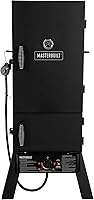
The Masterbuilt 30-Inch Dual Fuel Propane & Charcoal Vertical Smoker has 730 sq. in. of cooking space on 4 racks. It also has a temperature gauge, push-button ignition, and a porcelain-coated wood chip tray and water pan.
This model is not a true gravity fed smoker, but it helps many beginners learn vertical smoking, rack use, and temperature control.
Who should choose the Oklahoma Joe's Canyon Combo?
Choose the Oklahoma Joe's Canyon Combo if you want more cooking space and a charcoal side for low-and-slow cooks. It has 1,031 sq. in. of total cooking area, with 750 sq. in. in the primary chamber and 281 sq. in. on the firebox grate.
The Oklahoma Joe's Canyon Combo Dual Fuel 3-Burner has a 36,000 BTU propane side and a charcoal side for indirect smoking. It also has dual lid-mounted temperature gauges and a removable firebox ash pan.
This combo suits cooks who grill often and smoke on weekends. A dedicated gravity fed smoker will usually give simpler long-cook fuel feeding.
Who should choose the Dyna-Glo Wide Body Vertical Offset?
Choose the Dyna-Glo Wide Body Vertical Offset if you want a large charcoal chamber and vertical rack space. It has 1,890 sq. in. of total cooking space across 6 height-adjustable cooking grates.
The Dyna-Glo DGO1890BDC-D has a porcelain-enameled steel charcoal chamber and a sliding, removable steel ash pan. Its offset design keeps direct heat away from food, and a built-in thermometer shows a smoke zone for temperature guidance.
This model needs more manual charcoal management than a gravity fed smoker.
How do you run a gravity fed smoker for a long cook?
Load your hopper before you start and confirm you have enough charcoal for the full cook. That one step prevents most mid-cook fuel problems.
Light the fire according to the maker’s directions and let the chamber stabilize before you add food. Add food when the chamber reaches your target temperature, not while the fire is still climbing fast.
Keep the door closed as much as you can. Each opening drops the chamber temperature and lets smoke escape, so the controller or damper has to work harder to recover.
Use a probe in the thickest part of the meat and another probe near the food level. Two readings help you see both the cook progress and the chamber conditions.
If you plan to use a specific brand, read how to use Masterbuilt Gravity Series 800 before your first cook.
What are the downsides of a gravity fed smoker?
A gravity fed smoker still burns charcoal, so you manage ash, charcoal quality, and clean-out. It is easier than a fully manual offset, but it is not a no-maintenance cooker.
Power needs can also matter. Fan and controller models need electricity, and a power loss can hurt temperature control during a long cook.
Size and weight are worth checking too. Large hoppers and steel chambers can be heavy, and tall models need space for loading and moving.
Flavor control is another trade-off. Charcoal gives a distinct smoke, but you cannot change wood flavor as fast as you can with pellets.
Which gravity fed smoker style fits your cooking?
Pick a standard gravity fed smoker if you want charcoal flavor, long burns, and steady control. It fits briskets, pork shoulders, ribs, and chicken for cooks who like charcoal but want less tending.
Pick a reverse flow gravity smoker if you cook large loads and want more even heat across racks. The extra airflow path can help when the chamber is full.
Pick an offset or traditional charcoal smoker if you enjoy manual fire management. That path gives you more direct control and often a simpler machine.
For most readers asking what is a gravity fed smoker, the answer is simple: it is a charcoal smoker that feeds itself by gravity.
Frequently asked questions
What is a gravity fed smoker?
It is a charcoal smoker with a tall hopper above the fire chamber. Gravity pulls fresh charcoal down as burned fuel and ash fall away, so the fire can run for hours with less tending.
Many models add a fan and controls to set and hold a target temperature.
How is a gravity fed smoker different from a pellet smoker?
A gravity fed smoker burns charcoal that falls from a hopper, while a pellet smoker feeds wood pellets by auger. Charcoal gives a different smoke and heat profile, and pellets give easy flavor changes by swapping pellet types.
Control systems can feel similar on both kinds of cooker.
Do I need to add charcoal during a long gravity fed cook?
Often you can load a full hopper at the start and cook for many hours without adding fuel. The exact time depends on hopper size, cooking temperature, wind, and how often you open the door.
Check the hopper level before a long cook and during the first use.
Are gravity fed smokers better than offset smokers?
They suit different cooks. Gravity fed smokers reduce tending because charcoal feeds itself, while offset smokers give you manual control of the fire and smoke.
If you want steady heat with less work, gravity fed designs often fit better.