What Is a Reverse Flow Gravity Smoker?
A reverse flow gravity smoker combines a gravity-fed charcoal chamber with reverse-flow airflow. Charcoal feeds heat downward while smoke travels under a baffle, then rises through the cooking chamber.
On this page (7 sections)
A reverse flow gravity smoker combines gravity-fed fuel delivery with reverse-flow cabinet airflow. Charcoal feeds downward into the fire, while heat and smoke travel under a baffle before rising through the cooking chamber.
The two terms describe different parts of the smoker. Gravity flow explains how fuel reaches the fire.
Reverse flow explains how heat and smoke move around the food.
That split matters when you shop or compare designs. One part is about fuel handling, and the other part is about the heat path.
A gravity-fed chamber holds charcoal above the fire area. As the lower pieces burn down, more fuel drops into place without opening the smoker to add coal by hand.
The reverse-flow baffle then changes what happens next. Instead of letting the hottest air hit food directly, it sends heat low across the cabinet and back up toward the exhaust.
This pairing can suit cooks who want charcoal flavor with fewer mid-cook interruptions. You still need to manage airflow, watch temperatures, and keep the fire clean.
It also helps to set expectations before the first cook. The system adds control, but it is not set-and-forget.
You will learn how the intake, exhaust, and baffle work together over time. Small changes can shift both heat and smoke, so patience matters early on.
Used well, the design gives you a steady, indirect cook for foods that need low heat. It rewards a calm approach rather than constant adjustments.
How does a reverse flow gravity smoker work?
A reverse flow gravity smoker uses a vertical charcoal path and a baffle that redirects heat before it reaches the food. This setup can support long cooks with fewer fuel adjustments than a basic offset smoker.
Charcoal sits above or near the fire area in a tall chamber. As the lower fuel burns, gravity moves more charcoal toward the fire.
Airflow controls help manage the burn rate.
The hot gases then move through a passage beneath the cooking area. The baffle sends heat and smoke across the lower part of the chamber before the flow rises toward the exhaust.
That route can reduce the direct blast of heat from the fire. It doesn't remove the need to manage vents, fuel, temperature, or smoke.
What does gravity-fed mean?
Gravity-fed means charcoal moves toward the fire as lower fuel burns. The vertical fuel chamber acts as a reserve, so you can load charcoal before a cook and manage the fire with airflow.
A gravity-fed smoker isn't automatically a reverse flow smoker. Some gravity-fed designs send heat directly into the cooking chamber, while others combine the fuel system with a reverse-flow plate or channel.
For a broader explanation, see what is a gravity fed smoker. If you are comparing fuel systems, our guide to gravity fed smoker vs pellet smoker covers the main differences.
A gravity-fed system can suit readers who want charcoal flavor but prefer a more contained fuel path. It still needs a clean fire, steady airflow, and regular temperature checks.
What does reverse flow mean?
Reverse flow means heat and smoke travel away from the fire before turning back through the cooking chamber. A steel baffle or plate sits between the fire and the food to guide that path.
The baffle can help spread heat across the chamber instead of sending the hottest air straight toward one area. The design also keeps the fire separated from the cooking surface.
Reverse flow does not mean the smoke reverses direction throughout the entire smoker. It describes the route from the firebox or heat source, under the baffle, and upward toward the exhaust.
Our guide to what is a reverse flow smoker explains the airflow idea without the gravity-fed fuel system. For a different design, compare the features found in best reverse flow offset smoker options.
What are the benefits of combining both systems?
The combination can offer charcoal fuel control, indirect heat, and a long cooking path in one smoker. It may suit brisket, pork shoulder, ribs, and other foods that need steady low heat.
Gravity feeding reduces the need to add charcoal piece by piece during a long cook. Reverse flow helps move heat across the chamber before it reaches the food.
The trade-off is that the smoker still depends on correct airflow. A blocked intake, excess ash, wet fuel, or frequent door opening can affect the burn.
The design can also take more time to understand than a simple grill. You need to learn how the charcoal chamber, intake, exhaust, and baffle respond together.
For daily use, the benefit shows up in routine. You can load fuel before the cook, let the chamber settle, and focus on food placement and temperature checks.
That routine suits weekend cooks who plan long sessions. It can also suit beginners who want structure, as long as they are willing to learn vent control.
The reverse-flow path adds another layer of practical value. Heat spreads under the food first, which can reduce harsh hot spots near the fire side.
Smoke also takes a longer route, so flavor builds past the food instead of rushing out the stack. That can help with bark and aroma on slower cooks.
Still, the system has limits you should weigh. More parts mean more cleaning, more checks, and more places for ash or moisture to slow the fire.
Set-up also asks for care. Keep the smoker level and outdoors, use dry charcoal, and let it stabilize before food goes in.
A short learning period is normal with this style. Once you know how your unit responds, the combined system can feel steady and repeatable.
Which smoker styles should you compare?
Choose a smoker based on the fuel control and airflow pattern you want, not just the name on the door. A true gravity-fed reverse-flow model may be less common than separate gravity-fed, vertical, and offset designs.
The best gravity fed charcoal smokers are worth comparing if your priority is charcoal feeding with controlled heat. If you want a familiar brand and a propane option, review the best masterbuilt charcoal smoker choices.
Who may prefer a dual-fuel vertical smoker?
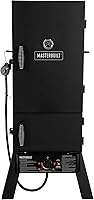
A dual-fuel vertical smoker can suit someone who wants propane or charcoal in a compact upright cabinet. The Masterbuilt 30-Inch Dual Fuel Propane & Charcoal has 4 chrome smoking racks and 717 square inches of cooking space.
It includes a stainless steel burner, type 1 regulator and hose, push-button ignition, a porcelain-coated wood chip tray, and a water pan. Its locking door has a built-in temperature gauge and cool-touch wire handle.
This is not a gravity-fed reverse-flow smoker. It is a vertical dual-fuel option for readers who want to switch between propane and charcoal rather than load a gravity chute.
Who may prefer a charcoal and propane combo?
The Oklahoma Joe's Canyon Combo suits cooks who want a charcoal smoker and a 3-burner propane grill in one unit. It has 750 square inches of primary cooking space and a 281 square inch firebox grate.
Its charcoal side uses indirect heat with charcoal and hardwood splits or chunks. Adjustable firebox and smokestack dampers help manage smoke flow, while dual lid-mounted temperature gauges show temperatures in the smoker and grill sections.
The propane side provides 36,000 BTUs across 3 burners. Porcelain-coated cast-iron grates, a removable firebox ash pan, and heavy-gauge steel are part of its stated design.
This combo is an offset-style alternative, not a gravity-fed reverse-flow cabinet. It makes sense when grilling space matters as much as smoking space.
Who may prefer a wide vertical offset charcoal smoker?
The Dyna-Glo DGO1890BDC-D suits cooks who want a large vertical charcoal chamber with offset heat. It has 1,890 square inches of total cooking space across 6 height-adjustable grates, with a 25-pound capacity per grate.
Its porcelain-enameled steel charcoal chamber helps keep briquettes stacked tightly. A sliding removable steel ash pan supports ash management during longer cooks.
The vertical design uses rising heat, while the offset layout keeps direct heat away from the food. An adjustable smoke-stack flue and built-in stainless steel thermometer provide additional airflow and temperature controls.
This model is an offset charcoal smoker rather than a gravity-fed reverse-flow smoker. Its large capacity may suit batch cooking, but its charcoal fire still needs active management.
How should you run one safely?
Start with the smoker's instructions, a clean fire, and a reliable temperature plan. Keep the unit on a stable outdoor surface with safe clearance from buildings, railings, and dry materials.
Use the correct fuel and avoid blocking the intake or exhaust. Let the smoker reach a stable cooking temperature before adding food, and make small vent changes instead of making several adjustments at once.
Keep an eye on the fire during the cook. The USDA's safe minimum internal temperatures are a separate check from the smoker's air temperature.
Ash can restrict airflow, especially in a gravity-fed system. Let the smoker cool fully before removing ash, and keep charcoal residue away from combustible storage areas.
Is a reverse flow gravity smoker right for you?
A reverse flow gravity smoker is a good fit if you want charcoal-fed fuel delivery and indirect heat guided through a baffle. It can reduce repeated fuel loading while keeping the cook centered on charcoal and wood smoke.
Choose a gravity-fed model when fuel feeding is your main concern. Choose a reverse-flow offset when airflow direction and indirect heat matter more.
Choose the Masterbuilt for dual-fuel vertical cooking, the Oklahoma Joe's for smoking plus grilling, or the Dyna-Glo for a large vertical charcoal setup.
The key decision is simple: pick gravity feeding for fuel convenience, reverse flow for the heat path, and a combined design only when you want both systems in the same smoker.
Frequently asked questions
What is a reverse flow gravity smoker?
A reverse flow gravity smoker combines two ideas: a gravity-fed charcoal system and reverse-flow heat movement. Charcoal sits in a vertical chamber and feeds the fire as it burns, while a baffle directs hot air and smoke under the cooking chamber before they rise around the food.
Is a reverse flow smoker the same as a gravity-fed smoker?
No. A gravity-fed smoker describes how fuel reaches the fire, while reverse flow describes how heat and smoke travel through the cabinet.
A smoker can use gravity feeding without reverse flow, or reverse flow without a gravity-fed charcoal chute.
Does reverse flow make a smoker cook evenly?
Reverse flow can spread heat and smoke across the cooking chamber by making the airflow travel beneath the food before rising. Results still depend on the baffle design, fuel control, airflow settings, weather, and how often you open the door.
Can you use wood in a reverse flow gravity smoker?
Use only the fuel the smoker is designed to handle. Gravity-fed charcoal smokers may use wood chunks with charcoal, while some dual-fuel models also support propane.
Follow the smoker's instructions and keep fuel away from unsafe surfaces.