How to Use a Masterbuilt Gravity Series 800
To use the Masterbuilt Gravity Series 800, load charcoal in the gravity hopper, set the controller, light it, and let the fan feed the fire to hold your target temperature. You manage time, temperature, and fuel level instead of constant damper tweaks.
On this page (12 sections)
- What makes a Gravity Series 800 different from a regular smoker?
- Where should you set up a Gravity Series 800 before you light it?
- How do you load charcoal and set the controls for startup?
- How do you light a Gravity Series 800 and let it stabilize?
- How do you cook low and slow a brisket or pork shoulder on it?
- How do you grill at higher heat and manage flare-ups?
- How do you add fuel, water, and wood flavor without ruining the cook?
- How do you shut down, clean, and store a Gravity Series 800?
- How does it compare with other smoker styles for everyday use?
- What mistakes should you avoid with a Gravity Series 800?
- How do you decide if a Gravity Series 800 fits your cooking style?
- How do you master how to use the Masterbuilt Gravity Series 800 over time?
To use the Masterbuilt Gravity Series 800, load charcoal in the gravity hopper, set the controller, light it, and let the fan feed the fire to hold your target temperature.
You manage time, temperature, and fuel level instead of constant damper tweaks.
This guide covers setup, startup, cooking, and care in plain steps.
What makes a Gravity Series 800 different from a regular smoker?
The Gravity Series 800 is a gravity-fed charcoal smoker, not an offset or a pellet grill.
Charcoal sits in a tall hopper above the fire, and gravity drops it down as the lower layer burns.
A fan and controller then feed air to keep the burn steady.
That setup is why a what is a gravity fed smoker explainer helps before your first cook.
You set a target, and the system works to hold it.
There is no large firebox to tend by hand.
You still need fuel, water, and food timing, but you do not need to rebuild the fire every hour.
The trade-off is more parts and electronics than a simple vertical smoker.
Where should you set up a Gravity Series 800 before you light it?
Set it up on level ground, outdoors, away from walls, fences, and low branches.
Give the hopper, doors, and smoke stack room to open and vent.
Place it where you can plug it in without a cord stretched across a walkway.
Check the cord and outlet before you load fuel, because the controller and fan need power to run.
Keep a thermometer, tongs, towels, and fuel close by.
You will use them less often than on an offset, but you will still check food and manage the hopper.
Do not use it in a garage or under a covered porch.
Charcoal burning creates carbon monoxide and heat, so outdoor airflow matters for safety.
How do you load charcoal and set the controls for startup?
Load dry charcoal in the hopper, close the lid fully, and set your target temperature before you light it.
Check the manual for the exact hopper fill line and lighting steps for your model version.
Use the charcoal type your manual allows.
Dry fuel burns more predictably than damp fuel, and wet bags stored outdoors can slow your startup.
Set the controller to your cooking target, not a guess.
Food at 225 F, 275 F, and 350 F needs different lead times, so pick the temp you plan to cook at before you light.
Confirm that grates, grease tray, and water pan parts are in place.
A missing tray can change heat flow and make cleanup harder after the cook.
How do you light a Gravity Series 800 and let it stabilize?
Light it as the manual directs, close the doors, and wait for the controller to reach and hold your set temperature.
Do not load food into a chamber that is still swinging widely.
Startup can take time, because thick steel, grates, and the food chamber all need heat.
Use that time to trim meat, mix rub, or set out sides.
Watch the trend, not just the number.
A rising temp that slows near your target is normal, while a falling temp after lighting can point to low fuel or a lid not closed fully.
Once the temp holds steady for a short period, the chamber is ready.
That steady window is when you add food, because it avoids a sudden drop that slows cooking.
How do you cook low and slow a brisket or pork shoulder on it?
Cook low and slow by setting the controller, adding food after the chamber stabilizes, and checking doneness by tenderness and internal temp.
The gravity feed holds heat while the meat does the work.
Put larger cuts where heat flows well and space them so smoke and air move between pieces.
Crowding still matters, even with a steady fan.
Close the lid promptly after each check.
Every open door drops chamber temp, and the controller then has to feed more air to recover.
Plan for rest time after cooking.
Wrapped or rested meat often slices and holds better, and rest time gives you a buffer if the cook finishes early.
If you want to compare this style with other Masterbuilt builds, our list of best Masterbuilt charcoal smokers outlines how capacity and fuel choice change the cook.
How do you grill at higher heat and manage flare-ups?
Grill at higher heat by raising the set temp, preheating with grates in place, and keeping fatty drips away from direct flame paths.
Higher targets need a longer preheat than low and slow cooks.
Fat drips can still flare, because charcoal heat is intense.
Move food to a cooler spot, close the lid for a moment, and avoid adding more fuel until the flare passes.
Use a two-zone setup when you can.
Sear over stronger heat, then move food to a gentler zone to finish without burning the outside.
Clean grates before a high-heat cook.
Old residue burns faster at high temp and can stick to new food.
What should you do when the temp drops during a cook?
A temp drop often means the hopper is low, the lid is open, or the fan is working against a sudden cold load.
Check fuel first, then doors, then food load.
Add charcoal as the manual allows, and give the controller time to respond.
If the temp keeps falling, check for a tripped outlet or a loose power connection.
Electronics do the feeding here, so power matters more than on a plain offset.
Do not keep opening the lid to chase the number.
That adds cold air and makes recovery slower.
How do you add fuel, water, and wood flavor without ruining the cook?
Add fuel before the hopper runs low, and add wood or water only according to your manual and recipe plan.
Late additions cause bigger swings than planned ones.
Charcoal itself gives smoke flavor in a gravity-fed design.
If you use a water pan, fill it with hot water when possible.
Cold water pulls chamber temp down and forces the fan to work harder.
Keep a simple log of fuel level, set temp, and food times.
That log helps you repeat a good cook and spot why a later cook ran different.
How do you shut down, clean, and store a Gravity Series 800?
Shut down by following the manual power-off steps, letting the fire die out fully, and waiting until parts are cool before deep cleaning.
Hot charcoal and electronic parts need care.
Remove grates and trays, scrape residue, and empty ash only when it is safe to handle.
Ash storage should follow local fire safety guidance.
Wipe the chamber and check seals, cords, and hopper parts for damage.
Store it dry and covered when not in use.
Moisture hurts charcoal, steel, and electronics over time.
How does it compare with other smoker styles for everyday use?
It sits between a pellet grill and a traditional offset in daily use.
You get charcoal flavor and set-and-hold control, but you still manage charcoal fuel and ash.
A plain vertical smoker can be simpler and lighter.
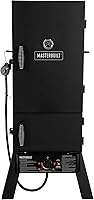
The Masterbuilt 30-Inch Dual Fuel Propane & Charcoal listed above gives you 730 sq in of cooking space, 4 smoking racks, push-button ignition, and a built-in temperature gauge in a vertical cabinet.
A combo unit suits mixed cooking better.
The Oklahoma Joe's Canyon Combo gives you 1031 sq in of cooking area, a 750 sq in primary space, and a 36,000 BTU 3-burner propane side for fast grilling after a smoke.
A large offset suits active fire managers.
The Dyna-Glo Wide Body Vertical Offset gives you 1890 sq in of cooking space, 6 height-adjustable grates, and an offset charcoal chamber, with no fan or controller in the loop.
What mistakes should you avoid with a Gravity Series 800?
Avoid lighting food too early, running the hopper low, and treating the gauge as the only check.
The controller helps, but food still needs eyes and a thermometer.
Do not trust one spot in the chamber.
Check temps in more than one cut, especially thick pieces and pieces near the heat path.
Do not overload the grates.
Gravity feed holds temp well, but crowded food still cooks unevenly and can miss smoke.
Do not skip the manual for model-specific steps.
Startup, fuel type, and shutdown steps can vary, and the manual is the authority for your unit.
How do you decide if a Gravity Series 800 fits your cooking style?
It fits weekend cooks who want charcoal flavor with fewer fire tending sessions.
If you cook brisket, pork, ribs, and chicken often, set-and-hold control saves time.
It may not fit if you want the lowest cost, the lightest smoker, or a fully manual fire.
A simple vertical or offset can cost less and travel easier.
For a wider view of gravity designs, see our guide to best gravity fed charcoal smokers.
That roundup helps you compare capacity, fuel, and control style before you choose.
How do you master how to use the Masterbuilt Gravity Series 800 over time?
You master it by repeating one set temp, one fuel plan, and one food plan until you know your unit.
Change one variable at a time, and write down what changed.
Start with a forgiving cook, such as pork shoulder or chicken thighs.
Those foods teach you startup, hold, and rest timing without the pressure of a fast overcook.
Then add a longer brisket or a mixed load.
You will learn how hopper level, door openings, and food mass affect recovery.
If you use a reverse flow design next, compare the airflow path first.
Our explainer on what is a reverse flow gravity smoker helps you see how heat and smoke travel differently.
That steady practice is the core of learning how to use Masterbuilt Gravity Series 800 cooks with confidence.
Save your notes, keep fuel dry, and let the controller do the constant work while you focus on food.