Weber Searwood vs Camp Chef Woodwind Pro: Which Is Better? (November 2026)
Choose the Weber Searwood if searing and direct heat matter most, and choose the Camp Chef Woodwind Pro if smoke control and low-and-slow cooking matter most. In this weber searwood vs camp chef woodwind pro comparison, the right pick depends on how you cook most often, not on which name you know best.
On this page (13 sections)
- Weber Searwood vs Camp Chef Woodwind Pro at a glance
- Why searing design matters in the weber searwood vs camp chef woodwind pro choice
- How smoke control decides the winner for low-and-slow cooks
- Cooking space and crowd size for each platform
- Temperature range and how high each grill really needs to go
- Smoke flavor, pellets and fuel choice
- Control features, probes and WiFi for busy cooks
- Cleanup, drip pans and grease management
- Setup, power, storage and backyard fit
- Who should buy the Weber Searwood
- Who should buy the Camp Chef Woodwind Pro
- How we compared these two pellet grill platforms
- The verdict on weber searwood vs camp chef woodwind pro
Choose the Weber Searwood if searing and direct heat matter most, and choose the Camp Chef Woodwind Pro if smoke control and low-and-slow cooking matter most. In this weber searwood vs camp chef woodwind pro comparison, the right pick depends on how you cook most often, not on which name you know best.
We compared the two platforms around searing, smoke control, cooking space, cleanup and daily use. Both are pellet grills, so both use wood pellets for fuel and both need electric power.
The difference is emphasis.
The Searwood leans toward grilling and searing. The Woodwind Pro leans toward smoking and temperature control.
That split shapes every other choice in this guide.

Weber Searwood vs Camp Chef Woodwind Pro at a glance
The Searwood wins for searing, while the Woodwind Pro wins for smoke control. That one split explains most of the trade-offs below.
| Point | Weber Searwood | Camp Chef Woodwind Pro |
|---|---|---|
| Best at | Searing and grilling | Smoking and low-and-slow cooking |
| Heat focus | Higher-heat finishing | Steady low-temperature control |
| Smoke focus | Good, but secondary | Stronger smoke control |
| Cleanup | Check drip system for your model | Check drip pan fit for your model |
| Best buyer | Steak and burger cooks | Brisket, ribs and pork butt cooks |
Use this table as a starting point, then read the sections below. Your cooking habits matter more than a single feature list.
We also looked at how each choice fits a real backyard. Space, storage, fuel, power and cleaning time all affect whether you use the grill each week.
Why searing design matters in the weber searwood vs camp chef woodwind pro choice
Pick the Searwood if a good sear matters to you, since direct heat is its main strength. Pellet grills can grill, but searing is where designs differ most.
A sear creates crust and caramelized flavor on steaks, burgers, chops and vegetables. That crust needs high heat close to the food.
Low-and-slow smoking uses the opposite approach, with gentle heat and steady smoke.
The Searwood design puts more focus on that high-heat finish. You should get a better crust on a ribeye or smash burger than you would from a platform built mainly for smoking.
The Woodwind Pro can still cook steaks and burgers. It will just take longer to reach searing heat, and the finish may be less crisp.
If you eat steak twice a week, that gap matters.
Think about your normal week before you choose. Frequent steak cooks should bias toward the Searwood.
Frequent brisket cooks should bias toward the Woodwind Pro.
How smoke control decides the winner for low-and-slow cooks
Pick the Woodwind Pro if you smoke brisket, ribs and pork butt often, since smoke control is its main strength. Clean smoke at low heat is hard to hold for hours.
Good smoke control means steady temperature, clean fuel burn and enough smoke flavor without bitter taste. That matters most on large cuts that cook for 8 to 12 hours.
The Woodwind Pro platform is built around that task. Its controls and smoke settings help you hold a low temperature while pellets burn for flavor.
The Searwood can smoke too, and it will handle ribs and chicken well. Its focus on searing means smoke control is more of a secondary strength.
A useful test is to list the last 10 outdoor meals you cooked. If 7 of them were long smokes, the Woodwind Pro fits your habits better.
If 7 of them were steaks, burgers and chicken at high heat, the Searwood fits better. Choose for your real menu, not your ideal menu.
Cooking space and crowd size for each platform
Choose by the largest meal you cook on a normal month, not by the biggest party you hope to host. Extra space helps, but unused space still needs fuel and cleaning.
Both platforms offer family-sized cooking areas. The exact square inches vary by model, so check the model you plan to buy.
More space lets you cook multiple racks of ribs, several chickens or a brisket plus sides. It also lets you leave gaps between foods for better airflow.
Less space forces you to cook in batches. That can work for weeknight meals, but it slows down a weekend cook.
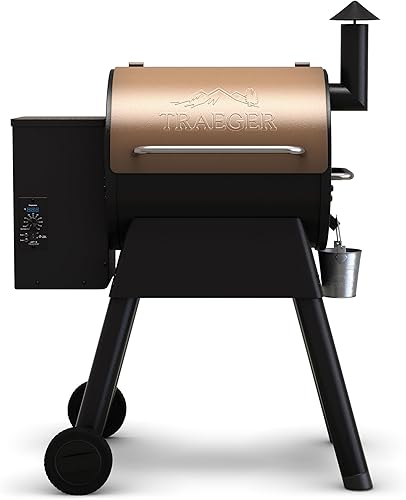
For a compact option, the Traeger Pro 22 Wood Pellet Grill offers 572 sq in of cooking space. Traeger says that space fits up to 24 burgers, 5 racks of ribs or 4 whole chickens.
For a larger option, the Traeger Woodridge Pro Wood Pellet Grill offers 970 sq in of cooking space. Traeger says that size fits up to 7 chickens, 9 rib racks or 7 pork butts.
Measure your patio before you order. A large grill needs room to open, move around and store safely.
Temperature range and how high each grill really needs to go
Most pellet cooks need steady heat from about 180°F to 450°F, with higher heat for searing. That range covers smoking, roasting, baking and grilling.
Low temperatures suit brisket, pork butt and ribs. Mid temperatures suit chicken, vegetables and baked foods.
High temperatures suit burgers, steaks and pizza.
The Traeger Pro 22 runs from 180°F to 450°F. That range handles most family cooks, and the 450°F top is fine for burgers and chicken.
The Traeger Woodridge Pro runs from 180°F to 500°F. The extra heat helps with searing and roasting, but it still will not match a gas grill.
When you compare the Searwood and Woodwind Pro, check the top temperature for the exact model. A higher top helps with searing, but steady control matters more for long smokes.
Wind, outside temperature and a full hopper all affect real heat. No pellet grill holds a perfect number all day, so judge control by consistency.
Smoke flavor, pellets and fuel choice
Pellet choice affects flavor more than most new buyers expect. Wood pellets give you flavor, heat and fuel in one material.
Oak, hickory, mesquite and fruit woods each give a different smoke character. Mild woods suit chicken and fish.
Stronger woods suit beef and pork.
The Pro 22 uses an 18 lb hopper. That size supports long cooks without constant refills, and it has a clean-out door for flavor swaps.
The Woodridge Pro adds Super Smoke Mode and a digital pellet sensor. Super Smoke Mode adds extra wood-fired flavor at low temperatures.
For the Searwood and Woodwind Pro choice, ask how easy it is to swap pellet flavors. Easy swaps help you match the wood to the food.
Store pellets in a dry place. Damp pellets burn poorly and can leave weak smoke and uneven heat.
Control features, probes and WiFi for busy cooks
WiFi and probes help most on long cooks, and matter less for quick grilling. They reduce lid openings and let you check food from inside the house.
A built-in meat probe lets you monitor internal temperature without opening the lid. That helps keep heat and smoke steady.
The Pro 22 includes 2 wired meat probes. That lets you track 2 cuts at once, which helps when you cook different foods together.
The Woodridge Pro adds WiFIRE connectivity and a digital pellet sensor. You can monitor the grill, track pellet levels and use Keep Warm Mode from the app.
For the Woodwind Pro, app control and smoke settings are a core part of its appeal. They suit cooks who run long briskets and want to check temps from the couch.
For the Searwood, focus on how fast it reaches searing heat and how easy the controls are to use. Quick grilling needs simple, direct control.
Cleanup, drip pans and grease management
Cleanup is easier when the drip system fits your exact grill and you change it often. Grease management affects flavor, safety and grill life.
Pellet grills catch drippings on a drip pan or baffle. That part spreads heat and protects food from direct flame.
It also collects fat that would flare up or smoke heavily.
The BMMXBI Drip Pan Heat Baffle for Camp is a stainless steel replacement sized at 31 3/5 x 15 1/2 x 4 in. It fits listed Camp Chef 36 Series models, including the Woodwind Pro 36.
Check your exact model and size before you order. BMMXBI says to confirm size and model first, and that advice applies to any replacement part.
Line the pan as the manual allows, or clean it after each cook. A clean drip system means less heavy smoke and fewer flare-ups.
Ash and grease also need safe disposal. Let ash cool fully before you move it to a metal container.
Setup, power, storage and backyard fit
Both grills need a level spot, outdoor power and room to open the lid safely. Setup is simple, but space planning is not optional.
Pellet grills use corded electric power. You will need an outdoor outlet or a suitable extension setup that follows the manual.
The Pro 22 measures 27 in deep, 41 in wide and 49 in high. Its sawhorse chassis, side lift bar and large wheels help you move it.
The Woodridge Pro measures 27 in deep, 67 in wide and 47 in high, and it weighs 174 pounds. That size needs a wider patio and more help to move.
Before you buy the Searwood or Woodwind Pro, mark the footprint with tape. Add room for the open lid, a side shelf and space to stand while you load food.
Store the grill under a cover when it is not in use. Rain and damp air shorten the life of steel parts and pellet fuel.
Who should buy the Weber Searwood
Buy the Searwood if you grill steaks, burgers and chicken more than you smoke large cuts. It suits cooks who want one grill for high-heat finishing.
You will like the Searwood if you cook weeknight meals that finish in under an hour. Burgers, chops, chicken pieces and vegetables all benefit from direct heat.
You will also like it if you host friends for grilled dinners. A better sear makes a bigger difference at a cookout than for a solo brisket.
Skip the Searwood if most of your cooking is low-and-slow. A brisket cook who smokes every weekend will use the Woodwind Pro's strengths more often.
Skip it too if you want the strongest smoke control for long cooks. You can smoke on the Searwood, but that is not its main design goal.
Who should buy the Camp Chef Woodwind Pro
Buy the Woodwind Pro if you smoke brisket, ribs and pork butt on a regular schedule. It suits cooks who value steady smoke over fast searing.
You will like the Woodwind Pro if you run overnight or all-day cooks. Smoke control, steady heat and app monitoring help on those long sessions.
You will also like it if you cook for a crowd. Larger smoking sessions often include several cuts that need space and time.
Skip the Woodwind Pro if you mostly grill steaks and burgers. You will spend more time waiting for searing heat than you need to.
Skip it if you want the fastest weeknight grill. A smoker-first platform is less direct for quick, high-heat meals.
Our best Camp Chef smoker guide can help you narrow the Camp Chef range. It breaks down which models suit smoking, grilling and mixed use.
How we compared these two pellet grill platforms
We compared specs, features and buyer patterns against what each grill is built to do. Our score weighs specs, features and buyer feedback against what you're shopping for.
We checked temperature range, cooking space, smoke controls, searing design, cleanup parts and app features. We also looked at how each platform fits family cooks and crowd cooks.
We did not test these grills. We researched what each brand says, what the specs show and what owners often mention.
That research approach means you should still check the exact model before you buy. Weber and Camp Chef sell several sizes, and features can vary by model.
If you want another close comparison, read our Traeger Ironwood vs Camp Chef Woodwind Pro guide. It helps if Traeger is also on your short list.
The verdict on weber searwood vs camp chef woodwind pro
Pick the Searwood for searing and the Woodwind Pro for smoking, and you will choose well either way. The best pick is the one that matches your normal menu.
If you grill steaks and burgers most weeks, buy the Weber Searwood. Its searing focus will show up at every cookout.
If you smoke brisket, ribs and pork butt most weeks, buy the Camp Chef Woodwind Pro. Its smoke control will show up on every long cook.
If you are torn, count your last 10 outdoor meals. Let that count break the tie, since it reflects how you really cook.
Next, measure your space and check the exact model size. Then pick the grill you will use often, not the one with the longest feature list.
Frequently asked questions
Is the Weber Searwood or Camp Chef Woodwind Pro better for searing?
The Weber Searwood is the better pick for searing because its design focuses more on direct heat and high-temperature finishing. The Camp Chef Woodwind Pro is better for smoke control and low-and-slow cooking, so choose by the food you cook most often.
Which is better for smoking brisket and ribs?
The Camp Chef Woodwind Pro usually suits long smoking sessions better because smoke control is its strength. The Searwood can smoke well too, but its searing focus means you trade some low-temperature smoke control for grilling performance.
Can a pellet grill sear like a gas grill?
A pellet grill can finish steaks and burgers at high heat, but it will not match a gas grill's instant sear. Check the maximum temperature and searing design for the exact model, and plan on a short rest after high-heat cooking.
What should you check before buying a Woodwind Pro drip pan?
Measure your grill and confirm the model series before you order a replacement part. A Camp Chef 36 Series drip pan must match your exact grill size, and the wrong dimensions will not sit correctly under the grates.
Do you need WiFi control on a pellet grill?
WiFi control is helpful if you cook long briskets or pork butts and want to check temps from inside. It is less important for burgers and steaks, which finish quickly and need your attention at the grill.