How to Cure and Smoke Bacon
To cure and smoke bacon at home, cure pork belly with a measured cure, refrigerate it for several days, rinse and rest it, then smoke it low until it reaches 152°F. Slice it cold, cook it before serving, and refrigerate or freeze the finished bacon.
On this page (9 sections)
- What cut of pork works best for homemade bacon?
- How do you cure pork belly safely?
- What temperature and time should you use for smoking bacon?
- Can you smoke cure bacon in an electric smoker?
- How do you slice, cook, and store homemade bacon?
- What mistakes ruin homemade bacon most often?
- How does bacon smoking compare with other pork cooks?
- Do you need a book or guide for curing and smoking bacon?
- How should you plan your first batch of homemade bacon?
To cure and smoke bacon at home, cure pork belly with a measured cure, refrigerate it for several days, rinse and rest it, then smoke it low until it reaches 152°F. Slice it cold, cook it before serving, and refrigerate or freeze the finished bacon.
Bacon is a cured pork product, not just smoked pork belly. The cure protects flavor and safety during the long, low smoke.
The smoke adds flavor, but it does not replace the cure. You need pork belly, curing salt, kosher salt, sugar, spices, a scale, a clean container, a smoker, and refrigerator space for a whole belly.
What cut of pork works best for homemade bacon?
Skinless pork belly, about 1 to 2 inches thick, works best for most home bacon. Look for even fat and meat layers, because that gives slices that crisp well and stay juicy.
Skin-on belly can work, but you will remove the skin before slicing. Skinless belly saves that step and gives cleaner slices.
Very thick belly cures more slowly and the center can lag.
You can cure pork loin for Canadian-style bacon, but that is leaner and dries out faster. For classic streaky bacon, pork belly is the right cut.
Ask a butcher for a full side and trim the ends square. A square piece cures and smokes more evenly and slices with less waste.
Keep the meat cold while you trim and save trimmings for burgers or beans.
How do you cure pork belly safely?
Use a tested recipe with weighed curing salt, keep the belly at 38°F or below, and cure it for 5 to 7 days. Dry curing is simpler for most home cooks.
For dry cure, mix kosher salt, sugar, curing salt, and spices. Coat every surface, refrigerate the belly, and flip it daily.
For wet cure, dissolve the cure in water, submerge the belly, weight it under the liquid, and refrigerate it for the full recipe time. Use the salt type and weight in the recipe, since crystal size differs.
Cure #1 is standard for bacon smoked to 152°F. It contains sodium nitrite and is dyed pink.
Cure #2 contains sodium nitrate and is for dry cured meats, so do not use it for bacon. Never use more or less cure than the recipe calls for, and weigh curing salt in grams, never guess.
How do you know the cure has worked?
The belly should feel firm, smell clean, and show cure contact on all surfaces after the cure time. A fully cured belly holds its shape better than fresh pork belly.
Look for even color through the meat. Pale patches can mean the cure missed a spot.
If you find a spot with no cure contact, discard that piece rather than guess.
After curing, rinse the belly briefly under cold water and pat it dry. Rest it uncovered in the refrigerator for 12 to 24 hours.
That rest dries the surface and helps smoke stick.
Meathead: The Science of Great Barbecue and Grilling is a 400-page illustrated book by Meathead Goldwyn with Greg Blonder. It covers food, fire, heat, and smoke, including dry brining, salt behavior, and thermometer use.
The book measures 8.2 x 1.3 x 10.1 inches and weighs 2.86 pounds. It was published on May 10, 2016 by Harvest.
Read the chapters on salt and brining before your first cure. They explain why salt penetrates meat but many spices do not.
What temperature and time should you use for smoking bacon?
Smoke cured pork belly at about 200°F until the center reaches 152°F. For a whole belly, that often takes 2 to 4 hours.
Thin pieces finish faster and thick pieces need more time.
Let the belly sit at room temperature for 30 to 60 minutes before smoking. That helps it cook more evenly.
Do not leave raw cured meat out longer than that.
Use mild wood such as hickory, maple, apple, or cherry. A clean, thin smoke gives flavor without bitterness.
Heavy smoke can turn bacon acrid during a long cook.
If you enjoy sausage and cured meats, our guide to the Best Smoker For Sausage can help you compare smokers for steady low heat. Bacon needs the same steady heat.
Keep the smoker stable and place a thermometer probe in the thickest part of the belly.
Can you smoke cure bacon in an electric smoker?
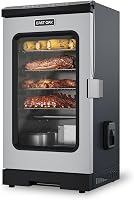
Yes, an electric smoker works well for bacon because it holds steady low heat for a long cook. That steady heat matters more than the smoker brand for this job.
Put the belly on a rack so smoke reaches all sides. Leave space between pieces if you smoke more than one belly.
Crowding blocks smoke flow and creates cool spots.
Use a water pan if your smoker has one. The water helps keep the air moist and catches drips.
It does not cure the meat, but it can reduce drying at the edges.
Our picks for the Best Electric Smoker For Sausage Making show features to look for in a steady low-heat cooker. For bacon, look for a reliable low temperature range, a good probe thermometer, and enough rack space for a flat belly.
This guide uses hot smoking to 152°F, not cold smoking.
How do you slice, cook, and store homemade bacon?
Chill the smoked belly until it is firm, slice it thin, then cook the slices before serving. Cold meat slices cleanly and gives you even strips.
Wrap the smoked belly tightly and refrigerate it for at least 4 hours, or freeze it for 1 hour. Slice with a sharp knife, a mandoline, or a meat slicer at about 1/8 to 1/4 inch thick.
Cook slices in a cold skillet over medium heat. Starting in a cold pan lets the fat render slowly.
Turn the slices once or twice and stop when they are crisp at the edges but not burned.
You can also bake bacon on a rack over a sheet pan at 400°F. Store raw sliced bacon in an airtight container in the refrigerator and use it within about 7 days.
For longer storage, freeze flat packs with parchment between layers and label each package with the date.
What mistakes ruin homemade bacon most often?
The most common mistakes are guessing cure amounts, curing in a warm refrigerator, and slicing warm meat. Each one can hurt safety, flavor, or texture.
Guessing cure amounts is the biggest risk. Curing salt is not seasoning salt.
Weigh it every time with a scale that reads in grams, even if you have made the recipe before.
A refrigerator above 38°F can let meat sit in the danger zone during a long cure. Use a fridge thermometer if your dial is not reliable.
Keep the belly on a low shelf, away from the door.
Slicing warm meat gives ragged slices that fall apart in the pan. Chilling firms the fat and the meat.
Using too much smoke is another common problem, so thin the smoke if it smells sharp. Skipping the rest after curing also hurts, because a wet surface steams instead of taking smoke.
How does bacon smoking compare with other pork cooks?
Bacon needs a cure before smoking, while ribs and other pork cuts do not. That cure is the key difference.
Ribs get flavor from rub, smoke, and time. Bacon gets flavor from cure, smoke, and time.
You can learn about low and slow pork from our guide to How to Smoke Ribs?, but do not skip the cure step for bacon.
Temperature control also matters for ribs, and the same lesson helps with bacon. Our guide to What Is the Best Temperature to Smoke Ribs? explains why steady heat matters for tender pork.
Wood choice changes flavor in both cooks. For sausage, we break down What Is the Best Wood for Smoking Sausage? and how wood strength changes the result.
Bacon pairs well with those mild woods, but it needs less intensity because the cure already adds depth.
Do you need a book or guide for curing and smoking bacon?
A clear reference helps, especially for salt science and thermometer use. Bacon is forgiving in some ways, but cure ratios and food safety rules are not areas to improvise.
Meathead: The Science of Great Barbecue and Grilling explains why dry brining works, how salt moves through meat, and why digital thermometers matter. Those ideas apply directly to bacon, even though the book is broader than bacon alone.
The book blends chemistry, physics, and meat science with more than 100 tested recipes. It also covers how to calibrate and tune a grill or smoker.
That can help if your smoker runs hot or cold during a long bacon cook.
It is a 400-page illustrated guide in English, published by Harvest. The ISBN 10 is 054401846X and the ISBN 13 is 978-0544018464.
Keep the book near your prep area and mark the pages on salt, brining, and thermometers.
How should you plan your first batch of homemade bacon?
Pick a tested recipe, weigh every ingredient, and set aside a full week for curing, smoking, chilling, and slicing. That plan keeps the first batch calm and safe.
Day one is shopping and trimming. Buy skinless pork belly, cure #1, kosher salt, sugar, and spices.
Trim the belly, mix the cure, coat the meat, and refrigerate it.
Days two through six are curing. Flip the belly daily and check that the cure stays in contact with all surfaces.
Keep the refrigerator at 38°F or below. Use the time to clean your smoker and check your thermometer.
The day after curing, rinse the belly, pat it dry, and rest it uncovered in the refrigerator. The next day, smoke it at about 200°F to 152°F.
Chill it until firm, slice it, and cook a few slices to check flavor.
If the bacon is too salty, reduce salt slightly next time, but never reduce curing salt below the recipe amount. Write down cure weights, cure time, wood, smoke time, and final temperature.
That log turns your first batch into a recipe you can repeat and improve.
Frequently asked questions
How long does it take to cure bacon at home?
Most dry-cured and wet-cured bacon needs about 5 to 7 days in the refrigerator, depending on thickness, cure method, and salt contact. Thicker pieces and uneven coatings can need more time, so follow a tested recipe and turn or flip the meat as directed.
After curing, rinse lightly, rest the belly, then smoke it before slicing.
How long do you smoke bacon?
Smoke bacon at about 200°F until the center reaches 152°F, which often takes 2 to 4 hours for a whole belly. Thickness, starting temperature, and smoker load change the time, so use a thermometer rather than the clock alone.
Chill the smoked belly before slicing so the slices hold together.
Can you cure bacon without curing salt?
You can make uncured-style bacon with salt and spices, but it will not match cured bacon for color, flavor, or shelf life. Cure #1 with sodium nitrite is the standard for smoked bacon that reaches 152°F, and it must be weighed precisely.
Never guess the amount, and do not use cure #2 for bacon.
How do you store homemade bacon?
Refrigerate sliced bacon in an airtight container or sealed bag and use it within about a week, or freeze it for longer storage. Keep raw cured bacon cold and separate from ready-to-eat foods until it is cooked.
Label each package with the date so older bacon gets used first.