How Do You Know When Smoked Meat Is Done?
On this page (3 sections)
Knowing when smoked meat is done depends mostly on its internal temperature. You need an accurate meat thermometer to confirm it has reached the USDA-recommended safe temperature for your specific cut of meat. This is the most reliable way to know when smoked meat is done.
Many pitmasters also look for visual cues like bark formation and texture, but temperature is king for safety and tenderness. We found that relying solely on cook time or appearance can lead to undercooked or overcooked results. Nobody wants dry BBQ!
- Check internal temperature with a thermometer.
- Different meats need different finished temperatures.
- Visual cues are secondary to temperature readings.
- Don’t rush the rest period after smoking.
Let’s walk through exactly how to know your smoked meat is perfectly cooked, safe, and delicious every time.
Mastering the Art of Knowing Your Smoked Meat Is Finished
The secret to perfectly smoked meat is knowing precisely when it’s done. It’s a dance between science and art, where temperature leads the way.
Why Temperature Is Your Best Friend
Think of your meat thermometer as your most trusted companion in the smokehouse. It’s the only reliable way to measure internal temperature. Relying solely on cooking time can be misleading. Many factors affect cooking time, including meat thickness, smoker temperature fluctuations, and even humidity.
We found that visual cues alone are not enough to guarantee safety or ideal tenderness. Color can be deceiving. A brisket might look done but still be raw inside. That’s why temperature is king.
The Science Behind Safe Temperatures
The USDA provides clear guidelines for safe internal temperatures for different meats. These temperatures kill harmful bacteria, making your food safe to eat. For example, poultry needs a higher temperature than beef. We found that adhering to these guidelines prevents foodborne illness (USDA).
Don’t just cook to “done” — cook to safe and delicious. Your thermometer helps you hit that sweet spot every time.
Essential Tools for Accurate Temperature Readings
You’ll need the right gear to get those crucial temperature readings. A good thermometer is an investment in your BBQ success. Which kind should you choose?
Probe Thermometers vs. Instant-Read Thermometers
There are two main types you’ll want to consider. A probe thermometer stays in the meat during the entire cook. It often connects to a unit outside the smoker, letting you monitor temperatures without opening the lid. This is great for long smokes.
An instant-read thermometer gives you a quick reading in seconds. You use it to spot-check different areas of the meat. We found that having both offers the best of both worlds. Use the probe for monitoring and the instant-read for quick confirmation in various spots.
Target Internal Temperatures for Common Smoked Meats
Different meats require different finishing temperatures for both safety and optimal texture. Here’s a quick guide to help you out.
| Meat Type | Minimum Safe Temp | Recommended Target Temp |
|---|---|---|
| Pork (Pulled Pork, Ribs) | 145°F (63°C) | 195-205°F (91-96°C) for tenderness |
| Beef (Brisket, Short Ribs) | 145°F (63°C) | 195-205°F (91-96°C) for tenderness |
| Chicken/Turkey | 165°F (74°C) | 165°F (74°C) throughout |
| Fish | 145°F (63°C) | 145°F (63°C) |
| Sausage (Ground Meat) | 160°F (71°C) | 160°F (71°C) |
Remember, the “Recommended Target Temp” for pork and beef brisket is often higher than the minimum safe temperature. This is because these cuts need to cook longer to break down connective tissue, making them incredibly tender.
Always insert your thermometer into the thickest part of the meat, avoiding bones. Bones conduct heat differently, giving you an inaccurate reading. We found this to be a common mistake for beginners.
Beyond Temperature: The Feel Test and Visual Cues
While temperature is primary, experienced pitmasters also use other indicators. These are secondary checks, offering additional confidence.
The Probe Test for Tenderness
For large cuts like brisket or pork shoulder, the “probe test” is a game-changer. Once your meat reaches the target temperature range (e.g., 195-205°F for brisket), insert your thermometer probe into different parts of the meat. It should slide in with very little resistance, like putting a hot knife through butter. Many experts say this is the sign of perfectly rendered collagen.
If you feel resistance, the meat needs more time. This is often called the “stall” if it happens earlier in the cook. Don’t rush it. Patience is key here.
Bark Formation and Color
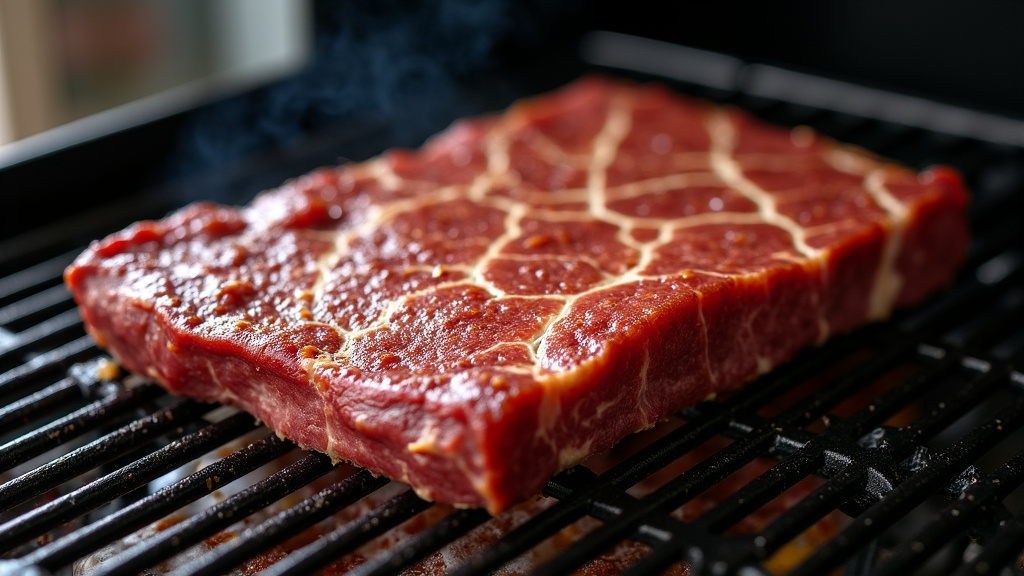
The “bark” is that delicious, dark, crunchy crust on the outside of your smoked meat. It’s a combination of rendered fat, spices, and smoke. While not an indicator of doneness, a well-formed bark shows a successful low-and-slow cook. We found that a deep, mahogany color is generally what you’re looking for.
However, don’t confuse dark bark with burnt meat. A burnt taste comes from too much heat, not necessarily just color.
The Importance of Resting Your Meat
You’ve hit your target temperature. Great! But don’t slice into it just yet. The rest period is just as important as the cook itself.
During the rest, the muscle fibers relax, and the juices redistribute evenly throughout the meat. If you cut it too soon, those precious juices will spill out, leaving you with dry meat. We found that this step makes a huge difference in the final texture and moisture.
- Tent with foil: Loosely cover the meat with foil.
- Resting time: 20 minutes for smaller cuts, 1-2 hours for large briskets.
- Carryover cooking: The internal temperature can rise another 5-10°F during the rest.
- Keep it warm: You can place resting meat in a warm (not hot) oven or cooler.
Troubleshooting: What If My Meat Isn’t Done?
It happens to the best of us. You check the temperature, and it’s not quite there. Don’t panic!
If you’re still below your target temperature, simply put it back in the smoker. Close the lid and let it continue cooking. Resist the urge to constantly check. Every time you open the smoker, you lose heat, extending the cooking time. We found that patience pays off here.
If you’re close but it’s taking forever, consider wrapping the meat in butcher paper or foil. This helps push through the “stall” and speeds up the final cook. This method is often called the “Texas Crutch.”
Your Smoked Meat Doneness Checklist
Before you pull that beautiful piece of meat off the smoker, run through this quick checklist:
- Is the internal temperature at or above the USDA-recommended safe point?
- Have you reached the desired tenderness temperature for cuts like brisket or pork shoulder?
- Does an instant-read thermometer slide in easily through the thickest parts?
- Is the bark well-formed and visually appealing?
- Have you accounted for the important rest period after cooking?
By following these steps, you’ll be well on your way to consistently perfect, safe, and incredibly delicious smoked meats.
Conclusion
You’ve seen how essential temperature is when smoking meat. Your reliable thermometer is your best tool for ensuring both safety and delicious tenderness. We found that trusting your thermometer, understanding target temperatures, and allowing for a proper rest period are non-negotiable steps for BBQ success.
Forget the guesswork and embrace the science. By consistently applying these principles, you’ll produce perfectly smoked meat every single time. Grab your thermometer, fire up that smoker, and confidently create your next mouth-watering masterpiece.
Frequently Asked Questions
What if my smoker’s thermometer is inaccurate?
Many built-in smoker thermometers are not very accurate. We found it’s best to use an independent, high-quality probe thermometer placed near your meat. This gives you a true reading of the ambient temperature your meat is experiencing.
Can I use an air fryer to finish meat that isn’t done after smoking?
While an air fryer can heat food, it’s not ideal for finishing smoked meat if it’s significantly undercooked. It cooks quickly and can dry out the meat. We recommend putting it back in the smoker or even a conventional oven at a low temperature to gently bring it up to target.
How do I know if my meat is overcooked?
Overcooked meat will often feel dry and fall apart too easily, almost mushy, rather than having a pleasant pull-apart texture. The best way to prevent this is by monitoring your internal temperature carefully and pulling the meat off the heat as soon as it hits your target.
Is it safe to eat smoked meat that is pink inside but has reached the correct temperature?
Yes, especially with cuts like pork shoulder or brisket. The smoke itself can create a “smoke ring,” which is a pink band just under the surface, even when the meat is fully cooked and safe. This is a desirable effect, not a sign of undercooking, as long as the internal temperature is correct.
My meat hit the target temperature quickly. Is it still done?
If your meat reached the target internal temperature much faster than expected, it might mean your smoker was running hotter than you thought. As long as the thermometer confirms the correct internal temperature throughout the thickest part, it is technically done and safe to eat. However, faster cooks sometimes result in less tender meat or less smoke flavor development.