Do You Need a Meat Thermometer for Smoking?
On this page (7 sections)
Yes, you absolutely need a meat thermometer for smoking meat effectively. It’s the single most important tool to ensure your food is safe and perfectly cooked. Relying on guesswork can lead to under-cooked or over-cooked meat, spoiling your efforts.
Smoking meat is a low-and-slow process, making temperature monitoring critical. You need to track both the smoker’s temperature and the internal temperature of your meat. This helps you hit that ideal doneness every time without fail.
- A meat thermometer is essential for food safety.
- It ensures your smoked meat is perfectly cooked.
- You need to monitor both smoker and meat temperatures.
- Guesswork often leads to disappointing results.
- It’s the most important tool for smoking success.
Let’s dive into why a good meat thermometer is non-negotiable for your smoking adventures and what kind you should consider.
Why Temperature Monitoring is Crucial for Smoked Meats
You’ve likely heard that smoking meat is all about “low and slow.” But what does that really mean for your food? It means precision is key. Without knowing the exact temperature inside your smoker and, more importantly, inside your meat, you’re flying blind.
We found that many common issues, like dry, tough meat or meat that’s undercooked in the middle, stem directly from poor temperature control. It’s like baking a cake without knowing your oven’s true temperature or checking if the cake is done.
The Science of Safe Eating
Food safety is not just a suggestion; it’s a critical component of cooking. When you smoke meat, you’re working with raw proteins that can harbor bacteria. Heating these proteins to the correct internal temperature kills harmful pathogens. This makes your food safe to eat.
The U.S. Department of Agriculture (USDA) provides clear guidelines for safe minimum internal temperatures for various meats. For example, poultry needs to reach 165°F, while pork needs 145°F. Hitting these numbers consistently is vital. A meat thermometer is your only way to verify these temperatures.
Without a thermometer, you’re guessing, and guessing with food safety can lead to serious health risks for you and your loved ones. Nobody wants to end a delicious BBQ with a trip to the emergency room.
Achieving Perfect Doneness Every Time
Beyond safety, a meat thermometer is your secret weapon for incredible flavor and texture. Think about that perfectly tender brisket or juicy pulled pork. These results don’t happen by accident. They are the product of meticulous temperature management.
Each type of meat has an ideal “done” temperature that maximizes its tenderness and juiciness. Go too low, and it’s undercooked and tough. Go too high, and it becomes dry and stringy. Your thermometer helps you nail that sweet spot.
We found that even experienced pitmasters rely on thermometers because they understand the subtle nuances of meat cooking. It removes the guesswork and brings consistency to your cooks. You want to replicate success, right?
Understanding the Different Thermometers You’ll Need
When it comes to smoking, you don’t just need “a” thermometer; you need the right tools for the job. Often, this means more than one type. Each serves a distinct purpose in your smoking process.
Think of it like a mechanic’s toolbox – different wrenches for different nuts. Your smoking success depends on having the right temperature-monitoring gadgets.
Probe Thermometers for Meat Temperature
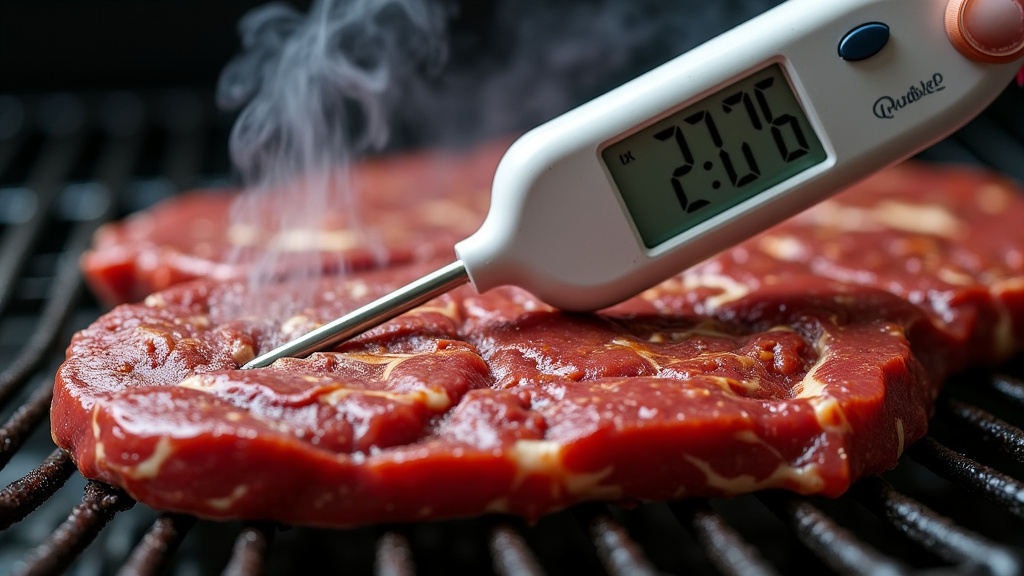
These are perhaps the most essential for smoking. A probe thermometer uses a thin, metal probe that you insert directly into the thickest part of your meat. The other end connects to a digital display that shows the internal temperature in real-time.
Many models come with long cables, allowing you to keep the display outside the smoker. This means you can monitor your meat’s progress without opening the lid. Opening the lid lets out precious heat and smoke, which you want to avoid.
We found that wireless probe thermometers offer even more convenience. You can monitor your meat’s temperature from your phone while you relax or prepare side dishes. It’s like having a personal temperature assistant.
Smoker Thermometers for Ambient Temperature
Your meat thermometer tells you about the meat. But what about the heat surrounding it? That’s where a good smoker thermometer comes in. Most smokers come with a built-in thermometer on the lid.
However, we found that many built-in gauges can be inaccurate, sometimes off by 20-50 degrees. This inaccuracy can severely impact your cook. An inaccurate smoker temperature means your meat might cook faster or slower than expected.
An external, high-quality smoker thermometer can be placed near your meat on the grates. This gives you a more accurate reading of the actual cooking temperature at meat level. Many experienced smokers will tell you this distinction is crucial.
Comparing Smoker Thermometers
| Type of Thermometer | Description | Pros | Cons |
|---|---|---|---|
| Built-in Analog | Comes with most smokers, usually on the lid. | Convenient, always there. | Often inaccurate, measures lid temp not grate temp. |
| Remote Probe (Ambient) | Probe placed on grate, sends data to display. | Highly accurate, measures at grate level. | Requires careful probe placement, adds another cable. |
| Infrared (Spot Check) | Measures surface temperature quickly. | Fast, great for griddle or pan temps. | Only measures surface, not air temp or internal meat temp. |
As you can see, each type has its place. For serious smoking, a reliable remote probe for ambient temperature is a definite upgrade over the standard built-in gauge.
Features to Look for in a Good Meat Thermometer
Not all meat thermometers are created equal. To get the most out of your smoking efforts, you’ll want a thermometer that offers certain features. It’s an investment that will pay off in delicious results.
- Accuracy: This is non-negotiable. Look for thermometers with a +/- 1°F accuracy rating. We found many reputable brands maintain this standard.
- Fast Read: Especially for instant-read thermometers, you want a reading in 2-3 seconds. This reduces heat loss from opening your smoker.
- Durability: Smoking involves heat, smoke, and sometimes moisture. Choose a thermometer built to withstand these conditions. Stainless steel probes are a good start.
- Probe Length: Long enough probes ensure you can reach the center of large roasts without burning your hand.
- Temperature Range: Ensure it covers the typical smoking range (around 200°F – 300°F for ambient, up to 200°F+ for internal meat temps).
- Alarms/Timers: Many thermometers offer programmable alarms that alert you when your meat reaches its target temperature. This is incredibly useful for long cooks.
- Wireless Connectivity: Bluetooth or Wi-Fi models allow you to monitor temperatures from a distance. This is a game-changer for convenience.
Using Your Thermometer for Smoking Success
Having a thermometer is one thing; knowing how to use it is another. Proper technique ensures you get the most accurate readings and the best results.
Always insert your meat probe into the thickest part of the meat, avoiding bones. Bones conduct heat differently and can give you a false high reading. For poultry, place it in the thigh. For roasts, aim for the center.
For ambient smoker temperature, if you’re using a separate probe, place it on the grate right next to your meat. This tells you what temperature your food is actually experiencing. This placement is often different from the built-in lid thermometer.
The Importance of “The Stall”
If you’ve spent any time smoking, you’ve probably heard of “the stall.” This is a period during a long cook (like brisket or pork butt) when the internal temperature of the meat seems to stop rising, sometimes for hours.
We found that the stall is caused by evaporative cooling. As moisture evaporates from the surface of the meat, it cools the meat, similar to how sweat cools your body. Without a thermometer, you might panic, thinking your smoker isn’t working or that something is wrong.
Your meat thermometer helps you monitor the stall and understand it’s a natural part of the process. You can trust your thermometer and avoid constantly opening the lid, which only prolongs the stall. Patience is a virtue, and your thermometer helps you practice it.
A Quick Checklist for Thermometer Use
Ready to make your next smoked masterpiece? Here’s a quick checklist to ensure you’re set up for success with your thermometers:
- Did I calibrate my thermometer (if applicable) for accuracy?
- Is the meat probe inserted into the thickest part, away from bone?
- Is my ambient smoker probe placed at grate level, near the meat?
- Have I set my target internal temperature alarms?
- Are batteries fresh or devices fully charged?
- Do I have an instant-read thermometer for quick spot checks?
Following these steps will help you monitor your cook with confidence. You’ll avoid overcooking, prevent undercooking, and serve up consistently delicious, safe, smoked meats.
Conclusion
You’ve seen that a meat thermometer isn’t just a gadget; it’s a fundamental tool for smoking success. It ensures your food is safe and perfectly cooked, taking the guesswork out of the equation. Monitoring both meat and smoker temperatures allows you to consistently create delicious results.
Stop settling for dry or undercooked meat. Invest in a reliable meat thermometer (or two!) and learn to use it properly. This simple step will elevate your smoking game and bring much more enjoyment to your BBQ endeavors. Your taste buds will thank you.
Frequently Asked Questions
Can I really trust the built-in thermometer on my smoker?
Most built-in smoker thermometers are not very accurate. They often read the temperature at the lid, which can be vastly different from the grate level where your meat sits. We recommend using a separate, high-quality ambient probe for accurate readings.
What’s the difference between an instant-read and a leave-in thermometer?
An instant-read thermometer gives a quick temperature reading when inserted, perfect for spot checks. A leave-in (or probe) thermometer stays in the meat throughout the cook, monitoring internal temperature continuously. You need both for optimal smoking.
My meat temperature stopped rising for hours. What’s happening?
This is likely “the stall,” a natural phenomenon caused by evaporative cooling. As moisture evaporates from the meat’s surface, it cools the meat. Your thermometer helps you identify this and understand it’s part of the low-and-slow process, so just keep smoking!
How do I clean my meat thermometer probes?
After each use, simply wipe the probes clean with hot, soapy water. Be careful not to submerge the digital display or wiring in water. Proper cleaning prevents cross-contamination and keeps your thermometer working correctly.
Are expensive meat thermometers worth the cost?
For smoking, yes. More expensive thermometers generally offer better accuracy, faster readings, greater durability, and useful features like wireless connectivity or alarms. This investment pays off in more consistent, safer, and tastier smoked meats.