
Why Is My Offset Smoker Running Hot on One Side?
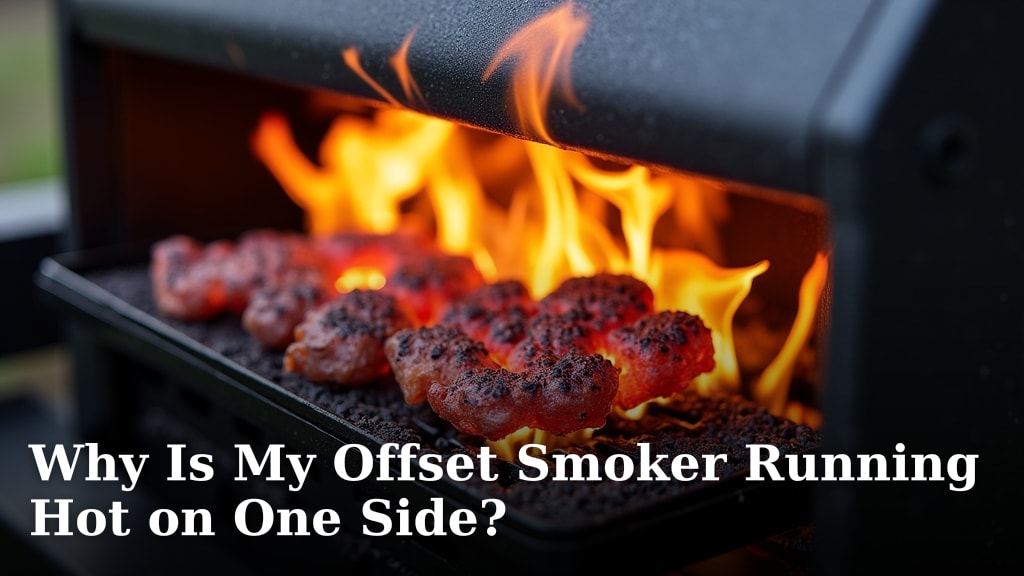
Why is your offset smoker running hot on one side? Well, your offset smoker is running hot on one side primarily because of uneven airflow and heat distribution within the cooking chamber. This often happens due to how the firebox connects to the main cooking area, creating a hot spot closer to the heat source.
You’re not alone if you’ve noticed this common issue. Many pitmasters face the challenge of temperature differences in their smokers. It can make consistent cooking a real headache, leading to some parts of your meat cooking faster than others. Getting an even cook is essential for great barbecue, right?
- Understanding airflow issues.
- Learning how smoker design affects heat.
- Quick fixes for hot spots.
- Tips for even cooking.
Let’s dive into why your offset smoker creates these hot zones and, more importantly, how you can fix them to achieve perfectly cooked barbecue every time. We’ll walk through the common culprits and practical solutions.
Understanding Uneven Heat in Your Offset Smoker
Your offset smoker running hot on one side is a common challenge for many barbecue enthusiasts. It primarily stems from how heat and smoke move from the firebox through the cooking chamber. This design often creates a distinct hot spot where the heat first enters.
Think of it like a river. The water (heat and smoke) rushes in strongly at one point. It gradually spreads out and slows down as it moves further along. Your smoker works similarly, leading to a temperature gradient.
The Role of Smoker Design in Heat Distribution
Every offset smoker has a firebox, usually on one side. This is where your charcoal and wood create heat and smoke. This heat then travels directly into the main cooking chamber. This initial influx of hot air is the main reason for the temperature difference you observe.
Higher-end smokers might have baffles or tuning plates to help distribute heat more evenly. However, many standard or entry-level models lack these features. This means you’re often left to manage the heat differences yourself. It’s not a flaw, just a characteristic of the design.
How Airflow Affects Temperature Uniformity
Airflow is incredibly important in an offset smoker. Too much air, and your fire burns too hot. Too little, and it might smolder, producing dirty smoke. But it also dictates how heat moves through the cooking area.
The path the air takes from your firebox, across your food, and out the chimney directly influences where the heat concentrates. A strong, unobstructed path often means a hotter zone near the firebox entry point. It’s like a strong wind blowing in one direction.
Common Causes of Hot Spots
Several factors contribute to one side of your offset smoker running hotter. It’s often a combination of these elements rather than just one. Pinpointing the causes can help you find the right solution.
We found that firebox placement and the resulting airflow are the most frequent culprits. The closer the food is to the heat source, the hotter it will be. It’s basic physics, really.
Firebox Placement and Heat Entry
Most offset smokers have the firebox attached to one end of the main cooking chamber. This direct entry point for heat and smoke creates a localized area of higher temperature. This is the “hot side” everyone talks about.
The heat doesn’t immediately dissipate and spread evenly. Instead, it forms a hotter zone closest to the firebox. As it travels further, it cools down. This explains why the end opposite the firebox is usually the “cold side.”
Chimney Location and Draft
Where your chimney is placed also plays a big role. Most offset smokers have the chimney on the opposite end of the firebox. This design is meant to draw smoke and heat across the cooking chamber, over your food.
However, this creates a strong draft that pulls the heat in a specific direction. This direct path can intensify the heat near the firebox side. It’s like creating a wind tunnel effect within your smoker.
Thin Metal Construction
The thickness of your smoker’s metal also matters. Thinner gauge steel tends to heat up and cool down faster. This can lead to more pronounced temperature swings and hotter hot spots, especially near the firebox.
Thicker steel, often found in higher-quality smokers, provides better insulation and more even heat retention. This helps to smooth out those temperature differences across the cooking chamber.
Practical Solutions for Even Heat Distribution
Don’t worry, you’re not doomed to perpetually burnt chicken on one side and undercooked ribs on the other. There are many strategies you can use to manage and even out the heat in your offset smoker. Many pitmasters have successfully tackled this problem.
These solutions often involve understanding your smoker’s unique airflow and making small adjustments. It’s about learning to work with your smoker, not against it. You’ll become a true pitmaster in no time!
Using Baffles or Tuning Plates
One of the most effective ways to even out temperature is by installing baffles or tuning plates. These are metal plates placed inside the cooking chamber. They are designed to force the heat and smoke to take a more indirect path, distributing it more evenly.
Many experts say that these plates act like speed bumps for heat. They slow down the hot air near the firebox and direct it towards the cooler areas. You might need to experiment with their placement to find the sweet spot for your smoker.
Water Pans or Sand Pails
Placing a water pan or even a pan of sand on the hot side can help absorb and radiate heat. Water is excellent at holding temperature. It can help stabilize the environment and reduce the intensity of the hot spot.
A water pan also adds moisture to the cooking chamber, which is a bonus for keeping your meat from drying out. This simple trick can make a noticeable difference in evening out your smoker’s temperature profile (National Barbecue Association guidelines often suggest this practice).
Fire Management Techniques
Your fire management techniques are crucial. Building a smaller, hotter fire can sometimes exacerbate hot spots. Instead, try to maintain a consistent, stable fire that produces clean, thin blue smoke. Our guide on how to maintain an offset smoker fire offers more in-depth advice on these crucial fire management techniques.
You can also try building your fire slightly away from the direct opening to the cooking chamber. This can help prevent a direct blast of heat. It encourages the heat to spread out a bit before entering the main section.
Here’s a quick checklist for better fire management:
- Use seasoned wood for cleaner burns.
- Maintain a small, hot fire rather than a large, smoldering one.
- Keep your firebox door cracked just enough for airflow, not wide open.
- Ensure your chimney damper is open enough to create a good draw.
- Monitor your fuel and add new coals or wood in small increments.
Rotating Your Food
Sometimes, the simplest solution is the best. If you don’t have baffles or other fancy equipment, simply rotating your food during the cook can help. Move items from the hot side to the cold side, and vice versa.
This ensures that all parts of your meat get exposure to both hotter and cooler zones. It requires a bit more attention, but it’s an effective way to achieve an even cook without modifying your smoker. Think of it like turning a cake in the oven.
Advanced Strategies for Temperature Control
For those who want to take their heat management to the next level, there are a few more advanced strategies. These often involve a bit of DIY or investment in additional accessories. We found that these methods offer more precise control.
It’s about optimizing your smoker’s performance to get that perfect, consistent barbecue every single time. Are you ready to get a little technical?
Insulating Your Smoker
Adding insulation to your smoker can greatly improve temperature stability. This is especially true for smokers with thinner walls. Materials like welding blankets or fire-resistant insulation can be wrapped around the cooking chamber.
This helps to minimize heat loss to the outside environment. When less heat escapes, the internal temperature becomes more stable and even. It’s like putting a warm coat on your smoker during a cold day.
Utilizing a Heat Diffuser or Reverse Flow Setup
Some pitmasters modify their smokers to a “reverse flow” design. This involves routing the heat and smoke under a plate, then up and back across the cooking chamber before exiting the chimney on the firebox side.
This creates a much more even temperature distribution. If a full reverse flow modification isn’t an option, a simple heat diffuser plate placed above the firebox opening can also help. It forces the heat to spread out before directly hitting your food. Many serious barbecue competitors use variations of this approach for consistent results.
| Problem | Cause | Solution |
|---|---|---|
| Hot spot near firebox | Direct heat entry, strong draft | Install baffles/tuning plates, use water pan |
| Temperature swings | Thin metal, poor insulation | Insulate smoker, manage fire consistently |
| Unevenly cooked food | Lack of rotation, fixed hot zones | Rotate food regularly, consider reverse flow |
Conclusion
Dealing with an offset smoker running hot on one side is a common challenge, but it’s one you can definitely overcome. We’ve seen that issues like uneven airflow, thin metal, and firebox placement are usually the culprits. Fortunately, effective solutions are within your reach. From simple food rotation to installing baffles or using water pans, you have many tools to achieve a more balanced cooking environment. Apply these techniques and monitor your smoker closely. You’ll soon master your pit and enjoy perfectly cooked barbecue every time.
Frequently Asked Questions
Is it normal for offset smokers to have hot spots?
Yes, it’s very common and almost expected for offset smokers to have hot spots. Their design, with the firebox on one side, naturally creates temperature variations. Understanding this is the first step to managing them effectively.
Can I use a thermometer to find the hot spots?
Absolutely! Using multiple digital thermometers placed across your cooking grates is one of the best ways to map out your smoker’s hot and cold zones. This helps you understand exactly where your temperature inconsistencies are.
Will adding more fuel make the hot side even hotter?
It can. Adding too much fuel at once can cause a temperature spike, especially on the hot side nearest the firebox. It’s better to add small amounts of fuel gradually to maintain a consistent temperature.
Do all offset smokers need tuning plates or baffles?
While not all offset smokers come with them, tuning plates or baffles are highly recommended for most models. They are incredibly effective at evening out temperatures, especially in entry-level smokers that often lack built-in heat management features.
Can weather conditions affect my smoker’s hot spots?
Yes, external weather conditions like wind and ambient temperature can definitely impact your smoker’s performance. Strong winds can create an uneven draft, and colder temperatures can make it harder to maintain heat, potentially making hot spots more pronounced.
