Can You Use an Electric Smoker Indoors?
Most electric smokers are not safe for indoor use. Use one indoors only when it is specifically designed, tested, and approved for indoor operation, with the required ventilation and placement.
On this page (8 sections)
- Can you use an electric smoker indoors?
- Why is an outdoor electric smoker unsafe inside?
- How are indoor and outdoor electric smokers different?
- Where should you place an outdoor electric smoker?
- Can you use an electric smoker in an RV?
- How should you prepare an electric smoker for safe outdoor use?
- What should you do if an electric smoker gets too hot?
- What is the safest answer for electric smoker indoor use?
Most electric smokers are not safe to use indoors. A standard unit still produces heat, smoke, grease, and combustion byproducts, even though electricity supplies the heat.
That difference matters in daily use because risk does not come only from an open flame. Hot racks, grease drips, and smoldering wood can create smoke long before food is done.
Use an electric smoker outside unless its instructions clearly identify it as an indoor appliance. Look for clear approval for indoor operation, not just a compact size or a plug.
A kitchen, garage, basement, enclosed porch, or shed is not automatically safe just because the smoker has a plug. Each space holds smoke and heat in different ways.
Ventilation nearby does not change the basic setup either. A window, door, or household fan may move some air, but it does not make an outdoor smoker into an indoor appliance.
Keep setup simple and follow the manual for clearance, power, and supervision. If indoor approval is not stated in plain language, treat the smoker as outdoor only.
That rule protects the room, the people using it, and the food itself. It also avoids the slow buildup of grease and smoke residue that can damage surfaces over time.
Can you use an electric smoker indoors?
You can use an electric smoker indoors only if it was specifically designed and approved for indoor operation. Most outdoor electric smokers require open-air placement because they heat wood chips and release smoke during cooking.
Read the instructions for the exact model before setting it up. If the manual describes the smoker as an outdoor appliance, keep it outside and follow its clearance, electrical, and weather guidance.
An electrical cord does not remove fire risk. The heating element, hot cooking surfaces, grease, and nearby wood or paper can still create hazards.
The National Fire Protection Association's cooking safety guidance also supports keeping cooking equipment and nearby materials managed carefully.
Why is an outdoor electric smoker unsafe inside?
An outdoor electric smoker can release smoke and combustion byproducts that need open-air ventilation. Wood chips or pellets may smolder, and the smoker's body and racks become hot during use.
Carbon monoxide is a serious concern with fuel-burning and smoldering cooking processes. You cannot reliably judge air safety by smell, visible smoke, or whether the appliance uses electricity for its heat source.
Indoor use can also expose walls, cabinets, ceilings, and furniture to smoke residue and grease. A range hood may not be designed to handle a smoker's output, and opening a window does not turn a room into an outdoor cooking area.
Keep children and pets away from the smoker, and never leave it running without supervision. If you smell unusual burning, see electrical damage, or notice smoke escaping where it should not, switch it off and disconnect power only when doing so is safe.
How are indoor and outdoor electric smokers different?
Indoor smoking appliances are designed around indoor ventilation, heat control, and electrical safety. Outdoor smokers assume that smoke and heat will disperse into open air.
An indoor design may use a contained smoke system, a required filter, or a specified ventilation setup. Those details must come from the appliance's instructions, not from the fact that the unit is small or electric.
An outdoor electric smoker may also have weather limits. Do not leave it in rain or place it where water can reach the cord, controls, outlet, or heating system.
The same distinction applies to other smoker types. Our guide to pellet smoker indoor use explains why a pellet smoker's automated controls do not make it suitable for an occupied indoor room.
Where should you place an outdoor electric smoker?
Place an outdoor electric smoker on a stable, noncombustible surface in an open area with clear space around it. Keep it away from the house, railings, fences, overhangs, dry vegetation, and stored materials.
Follow the model's required clearances instead of guessing from the smoker's size. Our guide to How Far Should a Smoker Be from a House? covers the placement decision in more detail.
A concrete or similarly stable surface can reduce tipping and protect the ground from heat and grease. Keep the smoker level so racks, pans, and grease collection areas work as intended.
Do not use an extension cord unless the instructions allow it and specify the correct electrical requirements. Keep the cord away from hot surfaces, standing water, walkways, and areas where it can be pulled.
Is a covered patio safe for an electric smoker?
A covered patio may still be too enclosed if smoke and heat collect beneath the roof. Check the smoker's instructions and keep generous clearance from the ceiling, posts, screens, curtains, and combustible surfaces.
An open-sided area is different from a screened room or enclosed porch. If smoke cannot disperse freely, choose another location.
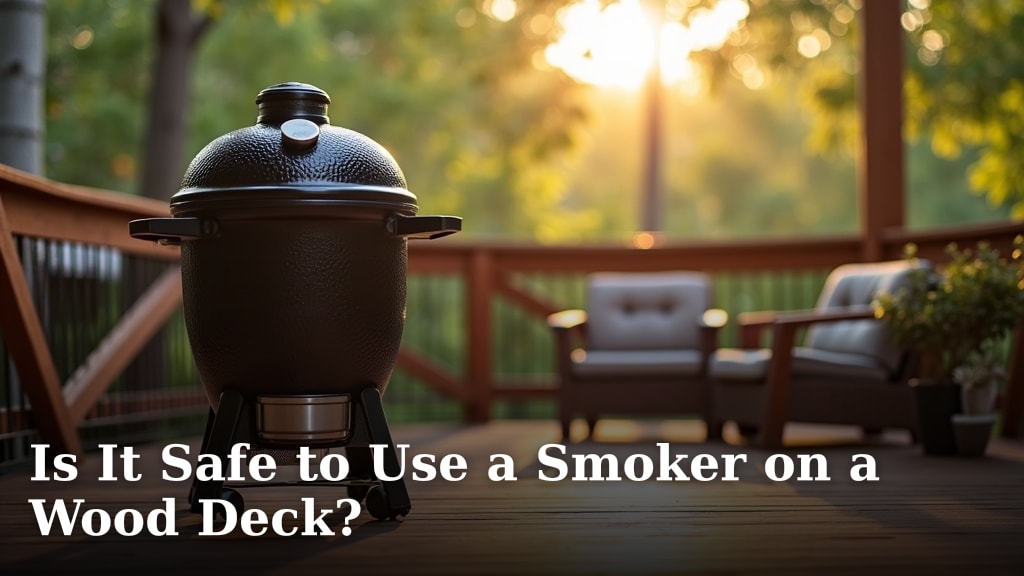
Wood decks need extra care because grease, heat, and dropped embers can damage or ignite the surface. Read Is It Safe to Use a Smoker on a Wood Deck? before placing any smoker there.
Can you use an electric smoker in an RV?
An outdoor electric smoker should not be used inside an RV. An RV has limited ventilation, combustible surfaces, and a small interior volume where heat and smoke can build quickly.
Travel also creates placement and power questions outside the vehicle. You need a safe outdoor location, a suitable power source, and enough clearance from awnings, siding, and other materials.
If you plan to travel with one, see Can You Bring an Electric Smoker on an RV Trip? for storage and campsite planning considerations.
Never operate a smoker inside the RV, beneath a closed awning, or in a small enclosed campsite structure unless the appliance is specifically designed and approved for that use.
How should you prepare an electric smoker for safe outdoor use?
Inspect the smoker, choose the location, and check the power path before adding food or wood chips. For first-use prep, see electric smoker seasoning steps.
Remove grease buildup, confirm that parts are seated correctly, and keep the operating area clear.
Use only the fuel and accessories allowed by the smoker's instructions. Do not add extra wood, modify the heating system, block vents, or cover the unit while it is operating.
Cleaning matters because grease residue can smoke heavily or ignite. Follow How to Clean an Electric Smoker? for a routine that covers the cooking chamber, racks, drip areas, and exterior.
Can a BBQ book help with electric smoker setup?
A reliable guide can help you understand smoke, heat, wood, seasoning, and cooking methods, but it cannot replace the smoker's safety instructions.
Meathead: The Science of Great Barbecue and Grilling – An NYT Bestselling BBQ Cookbook and Smoker Guide is a 400-page illustrated English book by Meathead Goldwyn and Greg Blonder. It covers barbecue science, equipment, digital thermometers, smoker calibration, wood, pellet cookers, and cooking methods.
Choose it if you want broader barbecue knowledge while learning how to use a smoker outdoors. Skip it if you only need the operating rules for one appliance, since the smoker's own manual remains the authority for placement and electrical safety.
What should you do if an electric smoker gets too hot?
Turn it off and move people away if you see flames, heavy smoke, damaged wiring, or grease ignition. Do not pour water onto an electrical appliance or grease fire.
If you can do so without approaching danger, disconnect power at the plug. Otherwise, use the appropriate emergency response for the situation and contact local emergency services.
Do not restart the smoker until the cause is understood and damaged parts are repaired or replaced. A clean exterior does not prove that the wiring, controls, or heating system is safe.
Keep a suitable fire extinguisher accessible where local guidance recommends one. Learn the difference between an appliance problem and a grease fire before cooking.
What is the safest answer for electric smoker indoor use?
Treat a standard electric smoker as an outdoor appliance. Use it in an open location, keep the required clearance, protect the electrical connection from water, and follow the exact manual.
Set it up where air can move freely around the body and away from walls, railings, and stored items. Keep the cord dry, routed away from walkways, and clear of hot surfaces.
Choose an indoor smoking appliance only when its design and instructions clearly support indoor operation. Check the stated ventilation needs, filter care, heat limits, and electrical requirements before buying.
Do not infer indoor safety from a small body, an electric plug, or a low cooking temperature. Those features describe how it runs, not where it belongs.
Care also plays a role in safe placement decisions. Clean grease from racks, pans, and interior surfaces so smoke stays controlled and fire risk stays lower.
Pick a separate indoor design for controlled indoor use, or keep an outdoor electric smoker outside. For brisket planning after the placement decision, see Best Electric Smoker For Brisket.
When in doubt, go with outdoor use and open air. The manual for your exact model remains the best guide for clearance, weather limits, and daily operation.
Frequently asked questions
Can you use a regular electric smoker indoors?
No. A regular electric smoker belongs outdoors unless its instructions clearly identify it as an indoor appliance.
Heat, smoke, grease, electrical power, and possible carbon monoxide make indoor placement unsafe.
Follow the smoker's manual and local fire rules before using it anywhere.
Do electric smokers produce carbon monoxide?
Electric smokers can still create smoke and combustion byproducts when wood chips, pellets, or other smoking materials heat and smolder. Never assume that an electric heating element makes a smoker safe for a kitchen, garage, basement, enclosed porch, or other occupied indoor space.
Can you use an electric smoker in a garage?
A garage is generally an enclosed space, so it should not be treated as outdoor placement. Keep a standard electric smoker outside in an open, suitable area, away from buildings and combustible materials.
Check the manual for the required clearance and weather limits.
What is the difference between an indoor and outdoor electric smoker?
An indoor smoking appliance is specifically designed and approved for indoor conditions, including its smoke control, heat management, electrical use, and required ventilation. An outdoor electric smoker is built for outdoor placement and should not be moved indoors simply because it uses electricity.