Can You Bring an Electric Smoker on an RV Trip?
You can bring an electric smoker on an RV trip if the campground allows it, you use it outdoors, and the available power matches its needs. Secure it for travel, then check the manual, site rules, and electrical supply before cooking.
On this page (8 sections)
- Can you bring an electric smoker on an RV trip?
- How should you secure an electric smoker for RV travel?
- Where should you place an electric smoker at a campground?
- What power supply does an electric smoker need?
- Can you use an electric smoker inside an RV?
- Which supplies and guides help with RV smoker cooking?
- What should you check before cooking at the campsite?
- Should you bring an electric smoker on your RV trip?
You can bring an electric smoker on an RV trip if the campground permits it, you operate it outdoors, and the power supply can support it. Secure the smoker for travel, then check its manual, site rules, placement, and electrical needs before using it.
A compact smoker may fit in a storage bay, but storage space alone doesn't make it suitable for every trip. Campground rules, safe outdoor clearance, and a compatible power source decide whether it can be used.
Can you bring an electric smoker on an RV trip?
Yes, you can bring one when it can be transported safely and the campground allows it. Check the smoker's manual for travel, storage, and operating instructions, and ask the campground about its cooking rules before you pack.
Some sites restrict appliances that produce heat or smoke, even when they're electric. Rules may depend on fire conditions, location, or the type of campsite, so don't assume the same policy applies at every stop.
You can plan ahead with a cooking guide such as Meathead. It covers barbecue methods, equipment, and the interaction of food, fire, heat, and smoke.
How should you secure an electric smoker for RV travel?
Pack the smoker only after it has cooled, and secure it so it can't move during travel. Follow its manual for cleaning, removing parts, and preparing the appliance for storage.
Empty the water pan, grease tray, and any ash or wood-chip area as the manual directs. Pack removable racks and accessories so they won't rattle or shift, and protect the smoker from rain and road dirt.
Place it in a storage area that can hold its weight and shape without blocking other cargo. Straps or other restraints should hold the smoker firmly without bending its body or pressing on controls.
Don't carry a hot or smoldering smoker in an RV. Give it time to cool completely before packing, and never store fuel or hot ash against materials that can burn.
Where should you place an electric smoker at a campground?
Use the smoker outdoors on a stable, level surface with the clearances required by its manual. Keep it away from the RV, awnings, tents, dry leaves, and other materials that could catch fire.
Campground rules may set a specific cooking area or distance from structures. Ask staff if the permitted location isn't clear, and don't move the smoker closer to your RV just to reach an outlet.
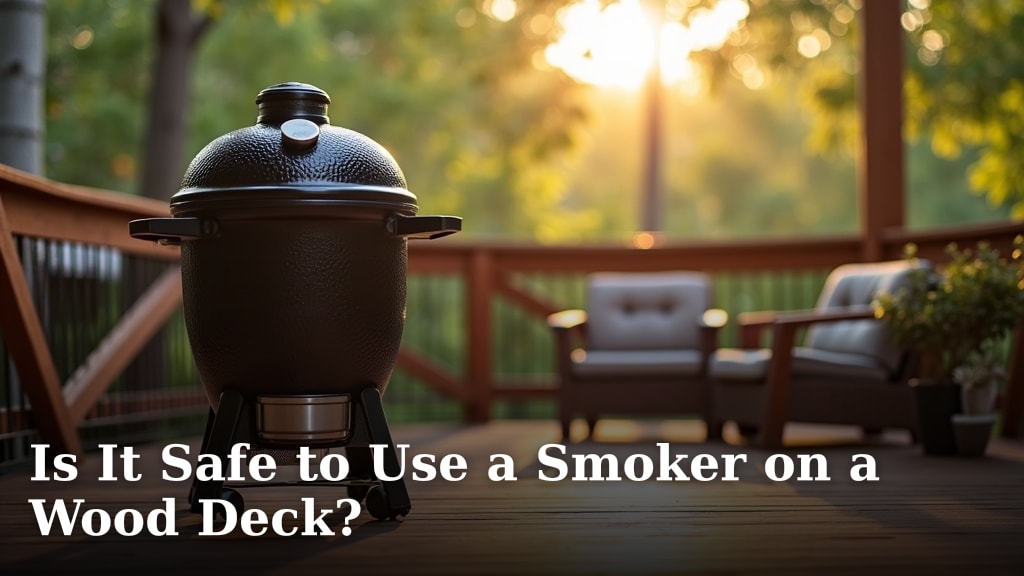
A deck or other raised surface can bring extra fire concerns. Read Is It Safe to Use a Smoker on a Wood Deck? before placing an appliance on wood.
For placement near any building, review How Far Should a Smoker Be from a House?. Keep the smoker outside and follow both the campground's rules and the appliance manual.
Can you use an electric smoker under an RV awning?
Don't assume an awning is a safe place for a smoker. A canopy can trap heat or smoke and may have fabric or other materials close to the appliance.
Use an open outdoor spot that meets the manufacturer's clearance instructions and the campground's rules. If wind could blow smoke toward a neighboring site or into the RV, choose another permitted location.
For wind-related temperature changes, see how to keep smoker temperature steady in wind.
What power supply does an electric smoker need?
Match the smoker's electrical requirements to the outlet and circuit available at your campsite. Check the manual and appliance label for voltage, current, and any instructions about cords or power sources.
An RV hookup may also be supplying the air conditioner, refrigerator, and other appliances. That does not guarantee a spare circuit can handle a smoker at the same time.
Ask the campground about the site's electrical service, and consult a qualified electrician if you can't confirm that the circuit is suitable. Don't guess based on plug shape or use an adapter to defeat grounding, circuit protection, or a manual's instructions.
Review common smoker ignition problems if the unit fails to start or operate normally. If its temperature reading fails, see smoker temperature gauge troubleshooting.
Use only a cord type and length the smoker manual permits. Keep connections dry and protected from foot traffic, and stop if a plug, cord, or outlet gets hot, damaged, or wet.
Should you run an electric smoker from an RV generator?
Use a generator only if both its instructions and the smoker's manual allow that setup. Check the generator's capacity and required connection, and ask the campground whether generator use is allowed at that time and location.
Keep a running generator outdoors and away from doors, windows, and air intakes, following its safety instructions. Never place it under an awning or inside an RV, vehicle, tent, or other enclosed space.
Can you use an electric smoker inside an RV?
No. Use the smoker outside, not inside the RV, even if a window is open.
Keep it out of enclosed porches, tents, and other confined spaces as well.
Indoor operation brings smoke and heat into a small living space and can create a fire or carbon monoxide hazard. See Can You Use an Electric Smoker Indoors? for more on why indoor use is unsafe.
A pellet smoker has its own fuel and operating risks, but the same outdoor rule applies. Read about pellet smoker indoor use if you're comparing smoker types.
Which supplies and guides help with RV smoker cooking?
Bring only supplies that suit your smoker, the trip, and the campground's rules. A cooking reference can help with planning.
You can plan ahead with a cooking guide such as Meathead. It covers barbecue methods, equipment, and the interaction of food, fire, heat, and smoke.
If you're choosing a different fuel for travel, compare Best Gas Smoker For RV Trips and Best Portable Smoker For RV Trips. Check their fuel and campground requirements before deciding which type fits your trip.
What should you check before cooking at the campsite?
Confirm permission, placement, power, and safe operating conditions before turning the smoker on. A quick check prevents a setup that conflicts with site rules or the smoker's instructions.
- Ask whether electric smokers are allowed at your site.
- Choose a stable outdoor spot with required clearance.
- Confirm the outlet and circuit suit the smoker's electrical needs.
- Keep the unit, cord connections, and cooking area dry.
- Stay nearby while the smoker is operating and follow its manual.
- Let it cool completely before cleaning or packing it away.
If the campground prohibits the smoker, don't use it there. Save it for a site that permits outdoor electric cooking, or choose another meal plan.
Should you bring an electric smoker on your RV trip?
Bring an electric smoker if the campground permits it, you have a safe outdoor location, and the available power matches the manual's requirements. Leave it behind when any of those conditions are uncertain.
Secure it after it cools, and check the rules at each campground because policies and electrical setups can differ. For a fuel alternative, compare Best Gas Smoker For RV Trips with Best Portable Smoker For RV Trips before your next stop.
Frequently asked questions
Can I use an electric smoker at an RV campground?
Often, but campground rules vary. Ask the campground whether electric smokers are allowed at your site, and follow its rules for outdoor cooking, smoke, fire safety, and quiet hours.
Set the smoker outdoors on a stable surface, away from the RV and anything that can burn.
Can an RV outlet power an electric smoker?
It depends on the smoker's electrical requirements and the RV's available circuit capacity. Check the smoker manual and electrical labels, then ask campground staff or a qualified electrician if you aren't sure.
Don't use an adapter or extension cord to bypass a limit or safety instruction.
Can I run an electric smoker inside an RV?
No. Use an electric smoker outdoors, never inside an RV, awning, tent, or enclosed space.
Smoke and heat can build up, and the appliance may create a fire or carbon monoxide hazard.
Follow the smoker manual and campground rules for its placement and clearance.
How should I transport an electric smoker in an RV?
Let the smoker cool completely, remove loose parts, empty ash or grease as directed, and secure the appliance so it cannot slide or tip. Protect it from rain and road debris, and check the manual for transport and storage instructions before packing it.