
What Is the Danger Zone Temperature for Meat?
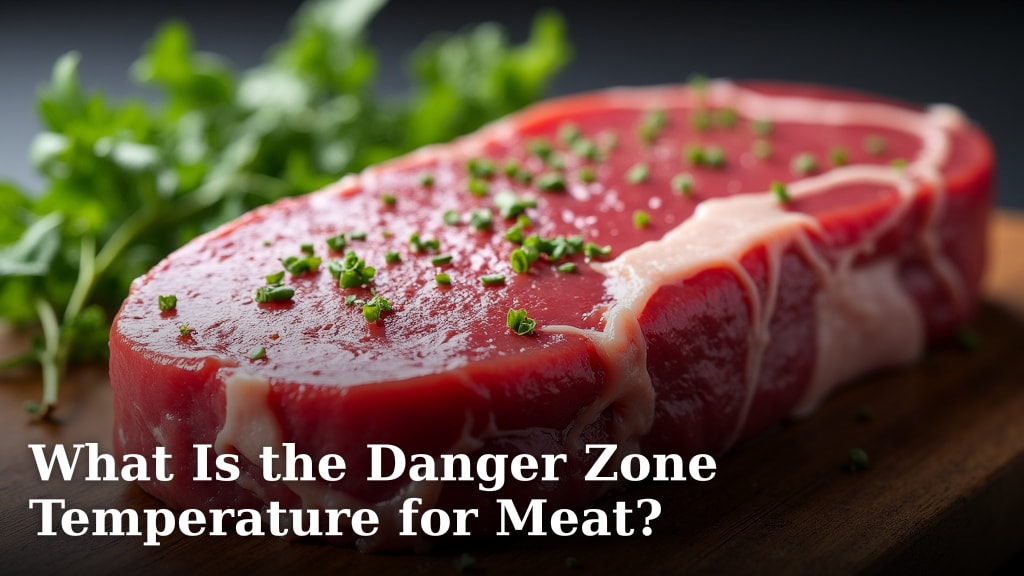
The danger zone temperature for meat is between 40°F and 140°F. Bacteria multiply rapidly in this temperature range. Keeping your meat outside this zone is key to food safety. This is where harmful germs can thrive quickly.
When meat is left in the danger zone for too long, bacteria like Salmonella and E. coli can double in number. We found that even a short time can make meat unsafe to eat. Always aim to keep hot foods hot and cold foods cold.
- The danger zone for meat is 40°F to 140°F.
- Bacteria grow quickly in this range.
- Keep hot foods above 140°F.
- Keep cold foods below 40°F.
- Don’t leave cooked meat out for more than two hours.
Let’s break down exactly why this temperature range is so important and what you can do to keep your food safe and delicious.
Understanding Meat’s Temperature Danger Zone
Keeping your meat at the right temperature is probably the most important thing you can do for food safety. This might sound simple, but it makes a big difference. Let’s talk about why the “danger zone” is such a big deal for cooked and uncooked meats. When meat sits in this zone, it’s like rolling out the welcome mat for bacteria.
Why Temperature Matters for Meat
Meat is a perfect breeding ground for germs. It has lots of protein and moisture. These are the things bacteria need to grow and multiply. You can’t see, smell, or taste most harmful bacteria. That’s why temperature control is your best defense. It’s all about slowing down or stopping their growth.
Many experts agree that keeping food out of the danger zone is key. The USDA Food Safety and Inspection Service (FSIS) has clear guidelines on this. They stress that time and temperature are the two main factors in food safety. We need to be mindful of both when handling any type of meat. It protects your family and friends.
The Science Behind the Danger Zone
So, what exactly is this danger zone temperature? It’s officially defined as any temperature between 40°F and 140°F. Think of it as a bacterial buffet. In this range, bacteria can double in number in as little as 20 minutes. That’s faster than you might think!
Rapid Bacterial Growth Explained
Different types of bacteria grow at different rates. But many common foodborne pathogens, like Salmonella and E. coli, thrive in this 40°F to 140°F window. Below 40°F, their growth slows down a lot. Above 140°F, many bacteria are killed. But in the middle, it’s prime time for them to reproduce. You don’t want that happening in your kitchen.
We found that even a short exposure can be risky. If you leave cooked food out, for example, bacteria can start multiplying quickly. This is especially true if the food is warm but not hot enough to kill germs. It’s a race against time to keep food safe. Always pay attention to how long food sits out.
Keeping Cold Foods Safely Cold
The lower end of the danger zone is 40°F. This means your refrigerator should be set at or below this temperature. Many refrigerators have a dial, but a separate thermometer is best. You can buy an inexpensive appliance thermometer to check. Make sure your fridge is consistently at 40°F or colder.
When you bring raw meat home, put it in the refrigerator right away. If you’re going to cook it within a day or two, the fridge is fine. For longer storage, freezing is the way to go. Keep raw meat on the bottom shelf. This prevents juices from dripping onto other foods. That could cause cross-contamination.
Safe Refrigerator Practices
- Check your refrigerator’s temperature regularly.
- Store raw meat on the bottom shelf.
- Don’t overpack your fridge. Air needs to circulate.
- Keep the fridge door closed as much as possible.
Keeping Hot Foods Safely Hot
On the other end of the spectrum, hot foods need to be kept at 140°F or higher. This is where cooking temperatures come into play. Once food is cooked, you need to maintain this high temperature if you’re serving it buffet-style or keeping it warm for a while. Think about hot plates or chafing dishes.
If you’re serving food at a party, for instance, keep hot dishes at 140°F or above. Use a thermometer to check. Many home ovens can be set to a “warm” setting, but this might not always reach the safe temperature. It’s better to be sure with a thermometer. This applies to cooked meats like roasts, poultry, and even dishes with meat.
Maintaining Hot Food Temperatures
What happens if food has been in the danger zone for too long? The general rule from food safety experts is this: Don’t leave cooked meat at room temperature for more than two hours. If the outside temperature is above 90°F, the safe time limit drops to just one hour.
This two-hour rule is critical. It means from the moment the food is removed from its cooking heat or refrigeration. After two hours (or one hour in hot weather), bacteria will have multiplied to unsafe levels. It’s often safer to discard the food at that point. You can’t always tell if food is contaminated just by looking at it. Better safe than sorry!
The Two-Hour Rule and What It Means for You
Let’s dive deeper into that two-hour rule. It’s a simple guideline that can prevent a lot of foodborne illnesses. Imagine you’re at a picnic or a potluck. The food comes off the grill, and everyone starts eating. After about two hours, whatever is left on the table should be put away or thrown out. This includes any meat dishes.
This rule applies to all perishable foods, not just meat. But meat is particularly susceptible due to its protein content. So, if you’re serving pulled pork, chicken wings, or burgers, be mindful of the clock. We found that people often underestimate how quickly bacteria can grow.
When Time Becomes a Factor
Consider a situation where you’re hosting a barbecue. You finish grilling burgers at 5 PM. Guests are eating. By 7 PM, you need to start packing up leftovers. Any burgers left out on the serving platter for longer than two hours should not be saved. This is true even if they look perfectly fine.
What about leftovers? Once food is cooked and cooled, it should be refrigerated within that two-hour window. Don’t let cooked meat sit on the counter while you clean up. Get it into the fridge. Prompt refrigeration is your friend. It keeps those pesky bacteria at bay.
Exceptions and Considerations
There are a couple of things to consider. If you’re serving food at an event where the ambient temperature is very high, the rule changes. We mentioned the one-hour limit for temperatures above 90°F. This is because warmer conditions speed up bacterial growth even more. Always check the weather if you’re outdoors.
Another point is about reheating. If you’re reheating leftovers, they need to reach an internal temperature of 165°F. This helps kill any bacteria that might have grown during storage. Use a food thermometer to check. Don’t rely on guesswork here.
Using a Food Thermometer is Essential
A reliable food thermometer is your secret weapon against the danger zone. It’s an inexpensive tool that provides accurate readings. You should use it for both cooking and holding temperatures. Don’t guess if your meat is cooked through. Use a thermometer.
For cooked meat, you want to reach safe internal temperatures. These vary by meat type. For example, whole cuts of beef, pork, veal, and lamb should reach 145°F with a three-minute rest. Ground meats should reach 160°F. Poultry needs to reach 165°F. These are target temperatures to kill bacteria.
Checking Temperatures Effectively
When checking the temperature of meat, insert the thermometer horizontally into the thickest part. Avoid hitting bone or fat. For large roasts or poultry, check in several places. This ensures the entire piece is cooked safely. Compare your readings to guidelines from sources like the USDA.
Remember, the danger zone applies to both cooked and uncooked perishable foods. While raw meat in the fridge is kept cold, it still needs to be handled properly to avoid cross-contamination. Once cooked, it enters a new phase where maintaining hot temperatures or rapid cooling is vital.
Quick Checklist for Food Safety
Here’s a quick rundown to help you stay safe:
- Keep cold foods at or below 40°F.
- Keep hot foods at or above 140°F.
- Discard food left in the danger zone for over 2 hours (1 hour if it’s hot out).
- Use a food thermometer to check temperatures.
- Refrigerate leftovers promptly.
- When in doubt, throw it out!
Conclusion
Keeping your meat out of the 40°F to 140°F danger zone is your number one defense against foodborne illness. You’ve learned why bacteria thrive in this temperature range and how quickly they can multiply. Remember to always keep cold foods cold and hot foods hot. Don’t let perishable foods sit out for more than two hours, or one hour if it’s over 90°F. Your best tool is a reliable food thermometer to confirm temperatures.
So, the next time you’re cooking or serving meat, double-check those temperatures and times. You can ensure your meals are both delicious and safe for everyone to enjoy. Start by grabbing an inexpensive food thermometer and checking your refrigerator’s temperature today!
Frequently Asked Questions
What happens if meat is left in the danger zone for less than two hours?
Even a short time in the danger zone can allow bacteria to start multiplying. While the two-hour rule is a guideline for general safety, some bacteria can double in as little as 20 minutes. It’s best practice to minimize any time food spends between 40°F and 140°F.
Can I taste meat to see if it’s safe after being in the danger zone?
No, you cannot taste, smell, or see most harmful bacteria. Food can look, smell, and taste perfectly fine but still be unsafe to eat. Relying on your senses is not a reliable way to determine food safety.
Does the danger zone apply to frozen meat?
The danger zone specifically refers to the temperature range where bacteria actively grow. Frozen meat is kept well below 0°F, which effectively halts bacterial growth. Once thawed, however, you must treat it as perishable and keep it out of the danger zone.
How can I safely cool down hot leftovers to refrigerate them?
To cool hot leftovers quickly, divide large portions into smaller, shallow containers. This helps them cool down faster in the refrigerator. Aim to get them into the fridge within that two-hour window after cooking.
Is it safe to reheat meat that has been in the danger zone?
It is generally not safe to reheat meat that has been left in the danger zone for an extended period. Once food has been in the danger zone for more than two hours (or one hour in hot weather), it’s best to discard it, even if you plan to reheat it.
