Pellet Grill vs Gas Grill: Which Should You Choose? (November 2026)
Choose a pellet grill for wood-fired flavor and low-and-slow cooking, or choose a gas grill for fast heat and simple grilling. Your best match depends on flavor, temperature control, setup and fuel storage.
On this page (9 sections)
- Pellet grill vs gas grill: which gives better flavor?
- Which grill is easier to start and control?
- How do pellet and gas fuel needs differ?
- Which grill is better for temperature range?
- Which model fits a small outdoor space?
- What should you choose for a family cookout?
- How should you clean and maintain each grill?
- Which products fit this pellet grill versus gas grill choice?
- Pellet grill or gas grill: what is the final choice?
Choose a pellet grill for wood-fired flavor and smoking, or choose a gas grill for fast heat and direct control.
This comparison matches each grill to your meals, outdoor space, available time and preferred fuel handling.
Pellet grills burn compressed hardwood pellets. An electrically powered system feeds the pellets and controls the burn.
Gas grills use burners supplied by propane or another gas source. You turn a knob, light the burner and adjust heat directly.
That difference shapes the choice. Pellet grills favour smoke and longer, steadier cooks.
Gas grills favour quick starts and immediate burner changes.
The Traeger Pro 22 covers 572 square inches and cooks from 180°F to 450°F. That size and range suit one cooker for smoking, grilling, baking, roasting, braising and BBQ.
The gas options sit at different ends of the size scale. The portable Cuisinart has 275 square inches, while the MASTER COOK has 471.8 square inches for larger patio cooking.
Cooking space affects daily use, not just the figures on paper. It decides how much food you can load and how much room remains for spacing.
Temperature range matters too. A wide range lets you cook low and slow, then turn up the heat for grilling during the same meal.
Fuel handling is another dividing line. Pellet grills need pellets kept dry and corded electric power.
Gas grills need the correct gas supply and a safe connection.
Think about weeknight meals first. If you cook quickly for a few people, direct burner control may suit you better than a longer pellet cook.
Think about weekend cooking as well. If you smoke brisket, roast whole chickens or bake outdoors, a pellet grill offers more methods in one machine.
Check your space before deciding. A compact tabletop grill can travel to a campsite or tailgate, while a larger freestanding grill needs a stable patio position.
Setup also deserves honest thought. Ask whether you prefer to plug in and fill a hopper, or connect gas and turn a knob.
Time and flavour should guide you too. Gas grills suit a fast meal with little waiting and leave flavour mainly to seasoning, marinades, browning and sauces.
Pellet grills add hardwood smoke from the fuel and reward patience when you want the cooker to hold a temperature while you prepare other things. Compare heat, fuel, space and cleaning ahead, then choose the grill that fits how you cook most often.
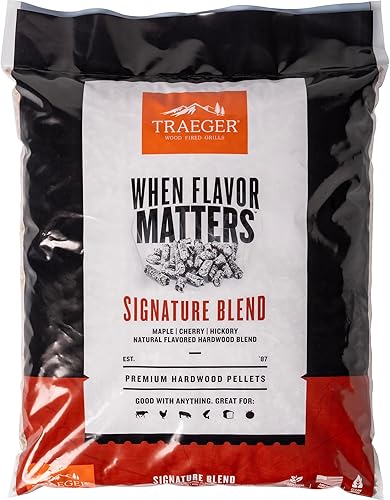 Best for versatile smoke flavor
Traeger Signature Blend Wood Pellets for Pellet

Pellet grill vs gas grill: which gives better flavor?
A pellet grill gives the clearest wood-fired flavor, while a gas grill gives a cleaner base for seasonings and sauces. The difference comes from the fuel, not just the grill shape.
Traeger Signature Blend pellets combine hickory, maple and cherry hardwoods. That blend works with beef, poultry, pork, lamb, seafood, baked goods and vegetables, so it suits a mixed menu.
Gas burns without the same hardwood fuel. You can still build strong flavor with rubs, marinades, browning and sauces, but the grill itself does not add the same pellet smoke profile.
Choose pellet fuel if smoke is part of the meal. Choose gas if you want the food's seasoning to stand out or if you prefer to avoid managing wood fuel.
Pellet grill versus gas for different foods
Pellets suit long cooks, smoked meats and foods where a wood note adds to the recipe. The Traeger Pro 22 also supports grilling, baking, roasting, braising and BBQ.
Gas suits burgers, vegetables, chicken pieces and other foods you want to cook directly over adjustable burners. Its heat can be changed without waiting for a pellet burn to settle.
For a broader look at cooker types, see our guide to what type of smoker is best.
Which grill is easier to start and control?
Gas grills are usually the faster choice for a short meal, while pellet grills offer more automated low-and-slow cooking. The trade-off is that pellet systems need electricity and pellets, while gas systems need a fuel connection or propane supply.
The Cuisinart Outdoor Gas Grill has electronic ignition, 2 independently controlled burners and a built-in thermometer. Its controls let you create separate heat zones across a 275-square-inch cooking area.
The MASTER COOK has 3 stainless steel burners, integrated piezoelectric ignition and 30,000 BTU per hour of output. Its 2 foldable shelves add working space around the 471.8-square-inch cooking area.
The Traeger Pro 22 uses a corded electric power source, an 18 lb hopper and a Digital Pro Controller. Its specified range of 180°F to 450°F covers both low-and-slow cooking and hotter grilling.
A gas grill responds directly when you turn a burner knob. A pellet grill may be the better fit when you want the cooker to hold a chosen temperature while you focus on food preparation.
How do pellet and gas fuel needs differ?
Pellets need dry storage and electricity, while gas needs a suitable fuel supply and safe cylinder handling. Think about the fuel you can store and replace easily at your cooking location.
Traeger Signature Blend pellets come in an 18 lb bag. They are all-natural hardwood pellets with no binders and low ash, and they are made in American mills.
Keep pellet fuel dry before use. Damp pellets can affect how consistently they feed and burn, so a covered storage container is useful even when the grill itself remains outdoors.
Gas grills avoid pellet storage but depend on the fuel setup required by the exact grill. Check the connection, cylinder position and manual instructions before cooking.
The Cuisinart is a portable gas grill with a 22 lb body, folding legs, a locking lid and a carry handle. The MASTER COOK is a freestanding patio grill with 2 foldable shelves and 2 wheel casters.
If propane storage and transport matter, compare this choice with our guide to pellet vs propane smoker.
Which grill is better for temperature range?
Pellet grills offer a useful low-to-high range for smoking and grilling, while gas grills offer direct burner adjustment. Compare the kind of heat you use most often instead of choosing by fuel name alone.
The Traeger Pro 22 is specified for 180°F to 450°F. That range supports low cooking temperatures for smoking and higher settings for grilling, with the controller designed to hold the selected temperature within plus or minus 15°F.
Gas grills are described here through burner count and heat output. The Cuisinart has 2 burners rated at 10,000 BTU each, while the MASTER COOK has 3 burners rated at 30,000 BTU per hour in total.
BTU numbers do not directly tell you how evenly food cooks or how quickly a grill reaches a target temperature. Cooking area, lid design, burner layout and weather also affect daily use.
For a pellet cooker that combines smoking and grilling, see our guide to the Best Pellet Smoker Grill Combo.
Which model fits a small outdoor space?
The Cuisinart is the easiest fit for portable cooking, while the Traeger and MASTER COOK need more dedicated outdoor room. Measure the cooking area, storage space and safe working clearance before choosing.
The Cuisinart measures 21.5 x 19 x 14.7 inches and weighs 22 lb. Its tabletop format suits camping, tailgating and small outdoor cooking areas where a full-size grill would be difficult to place.
The Traeger Pro 22 measures 27 x 41 x 49 inches and weighs 46.49 kg. Its larger frame and 572-square-inch cooking area suit a more permanent outdoor cooking station.
The MASTER COOK measures 41.14 x 46.46 x 20.87 inches in the listed depth, width and height format. Its foldable shelves can reduce the side-table footprint when the grill is stored.
Leave room to open lids, reach the controls and move safely around the grill. Follow the exact manual for placement, fuel connections and outdoor use.
What should you choose for a family cookout?
Choose the MASTER COOK for a larger gas cooking area, or choose the Traeger Pro 22 when you want smoke and several cooking methods. The Cuisinart fits smaller meals and portable use better.
The MASTER COOK provides 471.8 square inches of total cooking space, including a 339-square-inch primary area and a 133-square-inch warming rack. Its 3 burners allow separate heat control across the grill.
The Traeger Pro 22 provides 572 square inches and is designed to fit up to 24 burgers, 5 racks of ribs or 4 whole chickens. Those cooking examples come from the product information, so actual loading still depends on food size and spacing.
The Cuisinart's 275 square inches is more suited to a smaller group or a portable meal. Its 2 burners let you split the cooking surface into separate heat zones.
If charcoal is also on your shortlist, compare the trade-offs in our guide to pellet grill vs charcoal grill.
How should you clean and maintain each grill?
Clean either grill after it cools, keep cooking surfaces clear and follow the manual for fuel and electrical care. Pellet grills need attention to ash and pellet storage, while gas grills need burner and connection checks.
The Traeger Signature Blend pellets are described as low ash, but low ash does not mean no cleanup. Remove loose ash as directed for the grill and keep the hopper and fuel path free of damp or compacted pellets.
The Traeger Pro 22 has powder-coated steel construction and porcelain-coated grill grates. Let the grates cool before cleaning, and avoid tools or cleaners that could damage the surfaces.
The Cuisinart has stainless steel grates and a stainless steel frame. Its integrated thermometer and independent burner knobs should remain clear and usable after cleaning.
The MASTER COOK has stainless steel burners, a stainless steel control panel, a built-in stainless steel thermometer and foldable shelves. Cover the grill after it cools to reduce exposure to rain, dust, leaves and sun.
Do not move, clean or store fuel components while they are hot. Follow the manufacturer's instructions for ignition, shutdown and long-term storage.
Which products fit this pellet grill versus gas grill choice?
The Traeger Pro 22 is the strongest all-around pellet option here, while the MASTER COOK is the larger gas choice and the Cuisinart is the portable gas choice. The Traeger Signature Blend pellets support a pellet setup but are fuel, not a complete grill.
The Traeger Signature Blend is a practical choice for cooks who want one hardwood blend for beef, poultry, pork, seafood, vegetables and baked foods. Its all-natural pellets, no-binder formula and low-ash design fit regular pellet cooking.
The Traeger Pro 22 suits readers who want more than direct grilling. Its 18 lb hopper, built-in meat probe and 180°F to 450°F range support longer cooks and varied outdoor meals, but the grill needs electrical power and dry pellets.
The Cuisinart makes sense for camping, tailgating and small patios. Its 22 lb body, folding legs, locking lid and carry handle make transport easier than moving a full-size freestanding grill.
The MASTER COOK fits larger gas cookouts than the Cuisinart. Its 3 burners, warming rack and wheel casters make it a stronger match for a dedicated patio area, but it needs more room than a tabletop grill.
Pellet grill or gas grill: what is the final choice?
Pick a pellet grill if smoke, low-and-slow cooking and multi-method use are your priorities. Pick a gas grill if fast ignition, direct control and simple grilling matter more.
Start with the meals you cook most often. If smoke is a flavour you seek, and you want low-and-slow cooking alongside grilling, baking, roasting and braising, a pellet grill fits that aim.
The Traeger Pro 22 is the pellet option here for that kind of cooking. It offers 572 square inches of space and a specified range from 180°F to 450°F.
Its 18 lb hopper and built-in meat probe support longer cooks without opening the lid to check food as often. It still needs corded electric power and pellets stored dry.
The Traeger Signature Blend pellets add hickory, maple and cherry to a compatible pellet grill or smoker. The blend suits beef, poultry, pork, lamb, seafood, vegetables and baked goods.
That versatility helps if your menu changes from week to week. You keep one pellet blend on hand instead of choosing a new fuel for each type of food.
Choose the Cuisinart when portable gas cooking matters most. Its 22 lb tabletop body, folding legs, locking lid and carry handle make it easier to move than a full-size grill.
Its 2 burners, electronic ignition and built-in thermometer give direct control across 275 square inches. That suits camping, tailgating and small outdoor spaces where a larger grill would be hard to place.
Choose the MASTER COOK when you want a larger freestanding gas setup. It provides 471.8 square inches, 3 burners and 30,000 BTU per hour for family cookouts.
Its foldable shelves and warming rack add working space for serving and holding foods at a gentler heat. It needs more room than the Cuisinart and a suitable place for its gas supply.
Both gas models avoid pellet storage and the need for electric power. They do require the fuel connection and safe handling described in their manuals, so check those details before you cook.
Both pellet options need dry fuel and electrical power. That trade-off is worth it when wood-fired flavour and automated temperature holding are what you want most.
Space, fuel and control should decide together, not one factor alone. The best fit is the grill you can store, set up and use safely for your usual meals.
For a three-way comparison before you decide, read gas vs charcoal vs pellet grills. Your best grill is the one whose fuel, cooking space and daily setup match the meals you actually make.
Frequently asked questions
Is a pellet grill better than a gas grill?
A pellet grill is better for wood-fired flavor, smoking and a wider range of outdoor cooking methods. A gas grill is better for fast setup, direct heat and simple temperature changes.
Choose pellets when smoke matters most, or gas when convenience and quick grilling matter more.
Does food taste better on a pellet grill or gas grill?
A pellet grill gives food smoke from burning hardwood pellets, while a gas grill provides heat without the same wood-fired fuel. The Traeger Signature Blend pellets use hickory, maple and cherry.
Choose gas if you prefer the food's seasoning and cooking method to lead.
Which reaches a higher temperature, pellet or gas grill?
The exact temperature depends on the model. The Traeger Pro 22 is specified from 180°F to 450°F, while the gas grills here are described by burner output rather than a matching maximum temperature.
Compare the exact model's temperature details for high-heat cooking.
Are pellet grills easier to use than gas grills?
Pellet grills automate much of the heat and smoke process but need corded electric power and dry pellets. Gas grills offer quick ignition and direct burner control.
A pellet grill suits set-and-monitor cooking, while gas suits short cooks with frequent heat changes.
Can a pellet grill replace a gas grill?
A pellet grill can replace a gas grill for many outdoor meals, especially when you want grilling, smoking, baking, roasting, braising and BBQ in one cooker. Gas remains the simpler choice for quick direct grilling, portable use or cooking without wood smoke.


