How to Start a Charcoal Smoker?
On this page (6 sections)
To start a charcoal smoker, you need to first arrange your charcoal for even heating. Then, light it carefully, and let it reach the right temperature before adding your food. This method gives your food that amazing smoky flavor we all love.
Getting your smoker going the right way is key for successful barbecue. You want nice, consistent heat and clean smoke, not black, sooty smoke. We found that a little patience at the beginning makes a huge difference in your smoked meats.
- Set up your charcoal correctly.
- Ignite the charcoal safely.
- Let your smoker reach the ideal temperature.
- Add your food when the smoke is clear.
- Enjoy perfectly smoked dishes.
Ready to get that smoker fired up and smelling delicious? Let’s walk through exactly how to start a charcoal smoker step by step.
Setting Up Your Charcoal Smoker for Success
Getting your charcoal smoker ready for cooking is all about creating the right environment. You want consistent heat and smooth airflow. It sets the stage for that amazing flavor you’re after.
Choosing Your Charcoal: Lump vs. Briquettes
When you’re starting, you have a couple of choices for charcoal. Each has its own benefits. We found that understanding the differences helps you pick the best option for your cook.
Lump Charcoal Advantages
Lump charcoal is natural wood burned down to carbon. It lights faster and burns hotter than briquettes. Many pitmasters love it for its clean burn and minimal ash. It’s often irregular in shape, which can be a good thing for airflow.
Briquettes for Consistency
Charcoal briquettes are manufactured. They’re typically uniform in size and burn more consistently. They usually last longer, too. If you’re looking for a steady, predictable temperature over many hours, briquettes are a solid choice.
We often use briquettes for longer smokes, like pork shoulders or briskets. They provide a very stable heat source once they get going.
Arranging Your Charcoal for Even Heat
How you arrange your charcoal really matters. This step directly impacts how your smoker heats up. You want a method that gives you the most control over temperature.
The Minion Method
The Minion Method is super popular, especially for long cooks. You load most of your unlit charcoal into the smoker. Then, you place a small amount of lit charcoal on top. This creates a slow burn, like a fuse, providing hours of steady heat.
It’s like a self-feeding fire. The lit coals slowly ignite the unlit ones below them. We found this method is fantastic for an overnight brisket. It needs very little tending.
The Snake Method (or Fuse)
Another great way to arrange briquettes is the snake method. You line up briquettes in a double or triple row around the perimeter of your charcoal grate. Then, you light one end. The fire slowly travels along the “snake,” providing controlled, indirect heat.
This is perfect for ribs or chicken. It gives you zones of heat, too. You can place a water pan in the middle for moisture. Many home cooks swear by this for medium-length cooks.
The Art of Lighting Charcoal Cleanly
Lighting charcoal seems simple, right? Just add fire. But there’s a trick to it for smokers. You want clean-burning charcoal. This means getting rid of those nasty chemicals that produce bad smoke flavor.
Why Avoid Lighter Fluid?
Lighter fluid can leave a terrible aftertaste on your food. It’s also not great for your health. Many reports, including information from the American Lung Association, suggest avoiding prolonged exposure to its fumes. When you’re smoking, you want the smoke to come from the wood and charcoal, not from petrochemicals. Your taste buds will thank you.
Using a Chimney Starter Effectively
A chimney starter is your best friend when lighting charcoal. It’s just a metal cylinder with handles. It channels heat upwards, getting your coals hot and ready quickly. It’s truly the easiest and cleanest method.
- Fill the top section with your desired amount of charcoal.
- Crumple a couple of pieces of newspaper or use a natural fire starter below the grate.
- Light the paper. The flames will ignite the bottom coals.
- Wait 15-20 minutes until the top coals are mostly ashy.
- Carefully pour the lit coals into your smoker.
We find that using a natural fire starter block sometimes works better than newspaper. It burns longer and ignites more coals thoroughly.
Alternative Lighting Methods
Don’t have a chimney starter? No problem. You can still light your charcoal. An electric starter is a coil that gets hot and lights coals. You just place it in the charcoal and plug it in. What about a propane torch? That works too, but be careful. Always use proper safety gear, like heat-resistant gloves.
Managing Airflow and Temperature in Your Smoker
Once your charcoal is lit and in the smoker, it’s all about airflow. If the coals keep going out, our guide explains why charcoal will not stay lit. This controls the fire, which controls the temperature. It might seem tricky at first, but with practice, you’ll feel like a pro managing those vents. Temperature control is key to good barbecue.
The Role of Smoker Vents
Smokers usually have at least two vents: an intake vent (bottom) and an exhaust vent (top). The intake vent feeds oxygen to the fire. More oxygen means a hotter fire. The exhaust vent lets hot air and smoke escape. This creates a draw and prevents stale smoke. Think of it like breathing for your smoker.
Here’s a simple rule: More open vents mean hotter temperatures. Partially closed vents mean lower temperatures. It’s a delicate balance. A good starting point often has both vents about halfway open.
| Vent Type | Function | Effect on Temperature |
|---|---|---|
| Intake (Bottom) | Feeds Oxygen to Fire | Adjusts Heat Up or Down |
| Exhaust (Top) | Releases Hot Air/Smoke | Controls Draw & Smoke Quality |
Achieving Your Target Temperature
You need to let your smoker get up to temperature and stabilize. This takes time, often 30-60 minutes. Don’t rush this part. Waiting until the temperature is steady ensures your food cooks evenly. We always recommend using a good thermometer. The built-in ones can sometimes be inaccurate. A reliable external thermometer is a smart investment.
If your smoker runs too hot, close the intake vent slightly. If it’s too cool, open the intake vent a bit more. Make small adjustments. Give it 10-15 minutes to respond before adjusting again. Patience is a virtue in smoking, truly.
Reading the Smoke: Thin Blue vs. Thick White
This is crucial. When you first light the charcoal, you might see thick, white smoke. This is often “dirty smoke” from unburnt fuel or chemicals. You don’t want this touching your food. What you’re aiming for is “thin blue smoke.” It’s almost invisible, with a slight bluish tint. This is clean, flavorful smoke.
If you see heavy, white smoke after your smoker has stabilized, something is wrong. Check your airflow. Ensure no lighter fluid residue is burning. You want that clear, blue wisping out. That’s the signal your smoker is ready for meat. Clean smoke equals delicious results.
Smoker Ready Checklist
- Charcoal chosen and arranged (Minion or Snake)
- Coals fully lit and ashed over (no lighter fluid)
- Smoker vents adjusted for initial temperature climb
- Temperature steady around your target range
- Smoke is thin, blue, and wispy
- Water pan (if using) filled with warm water
Adding Your Food and Maintaining Temperature
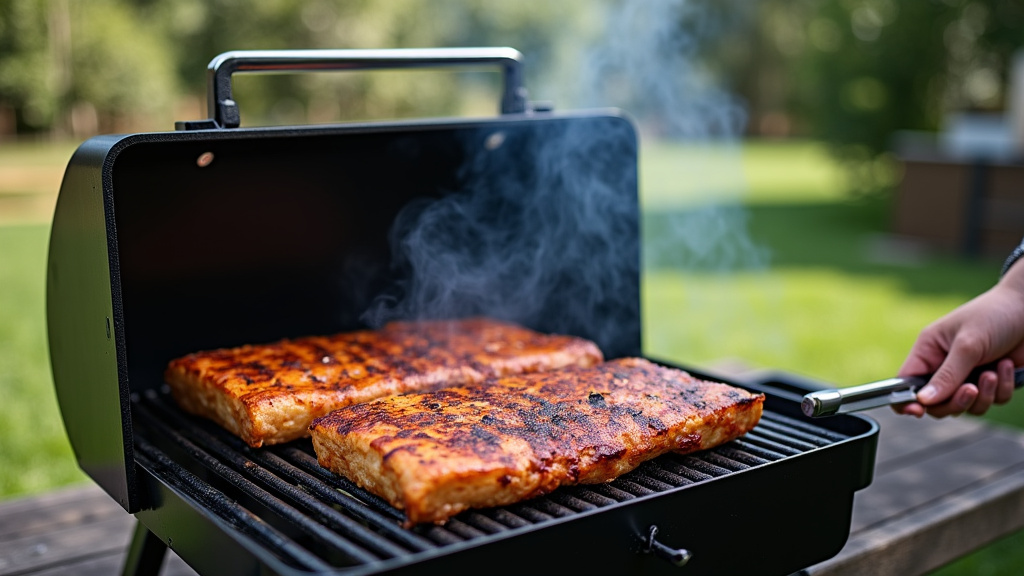
Once your smoker is singing, it’s time for the stars of the show: your delicious meats. Placing them in properly and keeping that temperature stable is the final step before the long, rewarding wait.
Placing Food in the Smoker
Always place your food on the cooking grates, usually away from direct heat. Most smokers are designed for indirect cooking. If you’re using a water pan, ensure it’s below the food. This helps maintain moisture and stabilize temperature. Don’t crowd the grates; allow for good airflow around each piece of meat.
Some cuts, like ribs, can be stood up in rib racks to maximize space. We found that giving each item a bit of breathing room helps it cook evenly and absorb smoke better. It’s like giving your flavors space to mingle.
Monitoring Temperature During the Cook
Now the waiting game begins. Keep an eye on your smoker’s temperature. Use those vents for fine-tuning. Small adjustments are best. Try to avoid opening the lid too often. “If you’re looking, it’s not cooking,” as the old saying goes. Every time you lift the lid, you lose heat, and it takes time to recover. Patience is truly your superpower in barbecue.
It’s normal for temperatures to fluctuate a little. Don’t panic over a few degrees. Aim for an average. Trust your thermometers and the process. Smoked meat takes time, and that’s part of its charm. You’re building amazing flavor, minute by minute, hour by hour.
Conclusion
Starting a charcoal smoker efficiently transforms your BBQ. You’ve learned how to choose the right charcoal, arrange it for even heat, and light it cleanly. We covered how to master airflow to control your temperature. You also know how to read the smoke signals. These methods ensure flavorful, juicy results every time you fire up your pit.
Remember, patience and small adjustments are your best tools. Now, gather your tools, pick a recipe, and get ready to enjoy some amazing smoked meals. Happy smoking!
Frequently Asked Questions
How long does it take for a charcoal smoker to heat up?
Typically, a charcoal smoker takes about 30 to 60 minutes to reach and stabilize at your target temperature. This allows the charcoal to ash over properly and the internal smoker temperature to even out. Rushing this step can lead to inconsistent cooking.
Can I add more charcoal during a long smoke?
Yes, you absolutely can and often need to add more charcoal during extended smoking sessions. It’s best to add pre-lit charcoal (from a chimney starter) to maintain consistent heat and avoid introducing off-flavors from new, unlit coals. Add them gradually to keep temperature fluctuations minimal.
What’s the ideal temperature range for smoking most meats?
For most low-and-slow smoking, target a temperature range between 225°F and 275°F (107°C to 135°C). This range helps break down tough cuts of meat, renders fat, and allows for maximum smoke absorption. Always use a reliable thermometer to monitor your smoker’s internal temperature.
Is it okay to open the smoker lid to check on my food?
Try to avoid opening your smoker lid too frequently. Every time you open it, you lose heat and smoke, which can extend cooking times and dry out your food. We found that it takes your smoker a while to recover. Use temperature probes to monitor meat doneness instead of constantly peeking.
Why is my charcoal smoker producing black, sooty smoke?
Black, sooty smoke usually means incomplete combustion and can impart a bitter flavor to your food. This often happens when charcoal isn’t fully lit, airflow is restricted, or wood chunks are added too early. Aim for thin, blue, almost invisible smoke for the best results.