How to Smoke a Whole Hog?
On this page (8 sections)
Smoking a whole hog is a fantastic way to feed a crowd and create an unforgettable meal. You can absolutely do it yourself, and it’s more achievable than you might think with the right preparation and patience. The key is a slow, low-temperature cook to break down the tough connective tissues and render the fat.
When you’re ready to tackle a whole hog, you’re looking at a commitment, but the rewards are immense. This isn’t just cooking; it’s an event. We found that successful whole hog cooks often involve careful temperature control and a solid understanding of your smoker’s capabilities. It’s a labor of love, and we’re here to guide you through it.
- Choose a quality whole hog.
- Prepare your smoker for a long cook.
- Maintain a consistent low temperature.
- Allow ample resting time for the meat.
Ready to turn that pig into a smoky masterpiece? Let’s walk through exactly how this works, step by step.
Your Guide to Smoking a Whole Hog
Smoking a whole hog is a major undertaking, but oh, is it worth it! It’s a truly special experience. You’re not just cooking meat; you’re creating a centerpiece for an unforgettable gathering. The aroma alone will have your guests talking for ages.
We understand that the idea of smoking an entire hog can seem daunting. Many people wonder if they can really pull it off. The truth is, with a solid plan and the right equipment, you absolutely can. It’s about patience and paying attention to the details. Let’s break down how to make this happen.
Selecting and Preparing Your Hog
The first step to an amazing smoked hog is choosing the right pig. What size are you looking for? This depends on how many people you plan to feed. A general rule of thumb is about one pound of hog per person.
Choosing the Right Size Pig
Hogs typically range from 80 to 200 pounds. A 100-pound hog will yield about 70-80 pounds of cooked meat. Remember, you’ll lose weight during the cooking process as fat renders and moisture evaporates. Consider your guest list and potential leftovers when making your selection. We’ve found that ordering from a reputable local butcher or farm is your best bet for quality.
Getting Your Hog Ready for the Smoker
Once you have your hog, it needs a little prep work. You’ll want to make sure it’s clean. Many butchers will deliver it cleaned out, which is a big help. If not, you’ll need to do that yourself. You may also want to consider injecting it with flavor. A simple brine or a flavorful injection can add a lot of moisture and taste deep into the meat.
Some cooks like to butterfly the hog. This means splitting it lengthwise from the backbone to the belly. This allows the hog to lay flatter, making it easier to manage in the smoker and helping it cook more evenly. It’s a bit of work, but many find it’s a step worth taking.
Setting Up Your Smoker for a Marathon Cook
Smoking a whole hog is a long haul. We’re talking 18 to 24 hours, sometimes even longer. This means your smoker needs to be ready for a marathon. Consistency is king here. Smoking a whole hog is a long haul, and this guide explains how to manage an overnight smoke.
Choosing the Right Smoker
You’ll need a smoker large enough to accommodate your hog comfortably. Offset smokers or large drum smokers are popular choices for whole hog cooks. Many pitmasters use custom-built smokers for this very purpose. Whatever smoker you choose, ensure it can maintain a steady temperature for extended periods. We found that smokers with good temperature control features are essential.
Fueling Your Fire: Wood and Coals
For a whole hog, you’ll want a good, consistent heat source. Many pitmasters opt for a combination of charcoal and wood chunks or logs. Oak, hickory, and pecan are popular choices for hog. You want enough fuel to last for many hours without needing to refuel too often. This helps maintain that steady temperature we talked about. Aim for a **low and slow** approach.
Maintaining Consistent Temperature
This is arguably the most critical part of smoking a whole hog. You want to maintain a temperature between 225°F and 250°F throughout the cook. This temperature range is ideal for breaking down connective tissues and rendering fat without drying out the meat. You’ll need to monitor your smoker closely. We found that using a reliable thermometer, both for the smoker and for the meat, is non-negotiable.
You might need to add fuel every few hours. Opening the smoker too often will cause temperature fluctuations, which you want to avoid. Resist the urge to peek too frequently! Planning your fuel refills is key. Have your wood or charcoal ready to go. This helps keep the temperature as stable as possible (National Pork Board).
The Smoking Process: Step-by-Step
Once your smoker is ready and your hog is prepped, it’s time to get cooking. This is where the magic happens, but it requires patience.
Placing the Hog in the Smoker
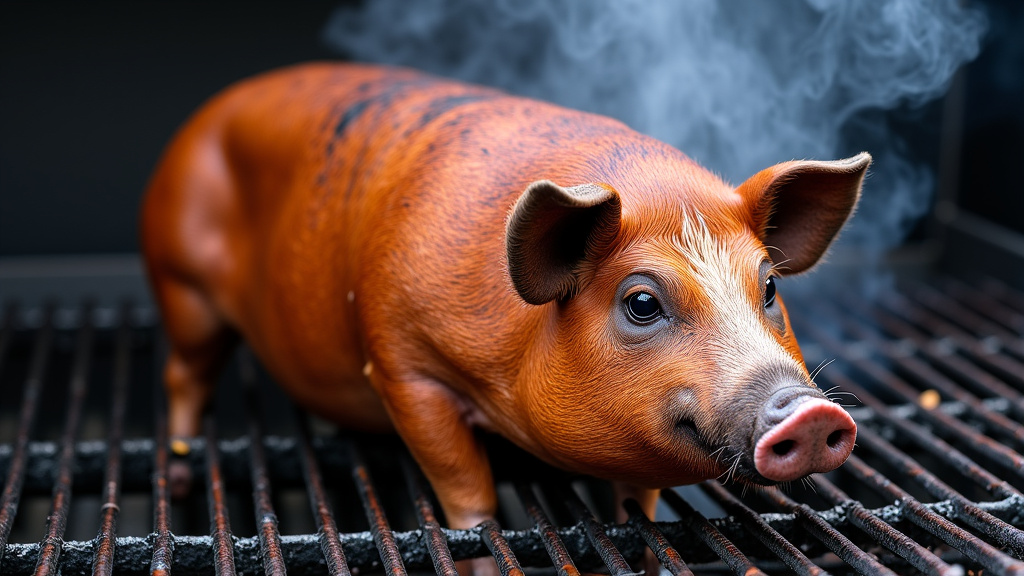
Carefully place your hog in the smoker. If you’ve butterflied it, you can lay it flat. Many people place the hog skin-side up initially. This protects the meat from direct heat. If you’re using a hog roaster, you’ll secure it to the spit.
Monitoring Internal Temperature
Your goal is to reach an internal temperature of at least 195°F to 203°F in the thickest parts of the hog. This range ensures the meat is tender and easily pulled. Use a reliable meat thermometer. Insert it into the thickest part of the ham and shoulder, avoiding bone.
You’ll be checking temperatures in multiple spots. The shoulder and ham are usually the thickest and take the longest to cook. The loin and belly will cook faster. It’s important to have patience here. Many experts say that reaching the target temperature is more important than the exact cooking time (American Society of Animal Science).
Basting and Flipping (Optional but Recommended)
Some pitmasters like to baste the hog during the cook. This can be with a mop sauce, apple cider vinegar, or even melted butter. Basting adds moisture and flavor. You might choose to baste every few hours, especially during the latter half of the cook.
Flipping the hog is often necessary for even cooking, especially if your smoker has hot spots. This is usually done about halfway through the cook. If you’ve butterflied the hog, you might flip it so the skin-side is down for a portion of the cooking. This requires extra hands and careful maneuvering! We found that a sturdy hog lifter or multiple people can make this much easier.
The All-Important Rest: Don’t Skip This!
You’ve done it! The hog is cooked to perfection. But your work isn’t quite done yet. Resting the meat is just as important as the cooking itself. Skipping this step will result in dry, less flavorful pork.
Why Resting Matters
When meat cooks, the muscle fibers tighten up and push moisture toward the center. Resting allows these fibers to relax. This redistribution of juices makes the meat incredibly tender and moist. It’s like letting a sponge reabsorb all the water it squeezed out. Many culinary guidelines recommend a significant resting period for large cuts of meat (The Culinary Institute of America).
How Long to Rest
A whole hog needs a substantial rest, typically at least 2 to 4 hours. Ideally, you’ll wrap the hog tightly in foil or butcher paper and then place it in a warm cooler or a very low oven (around 150°F) to keep it hot. This extended rest allows the juices to settle throughout the meat.
Carving and Serving Your Masterpiece
The moment of truth has arrived! Time to carve and share your incredible smoked hog with your friends and family.
Breaking Down the Hog
Carving a whole hog is an event in itself. You’ll likely want sharp knives and perhaps some cleavers. Start by separating the major sections: the ham, the shoulder, the loin, and the belly. Each section has its own unique texture and flavor.
The shoulder is usually the best for pulled pork. It’s rich in fat and connective tissue, which breaks down beautifully during the long smoke. The loin is leaner and more delicate. You might slice this section. The belly will be rich and fatty, great for crispy bits.
Serving Suggestions
Pulled pork from the shoulder is a classic. Toss it with some of your favorite barbecue sauce. The ham and loin can be sliced and served as is, perhaps with a side of your favorite sauce. Don’t forget to serve the crispy skin, often called cracklings, if you achieved it!
Consider classic BBQ sides: coleslaw, potato salad, baked beans, and cornbread. And of course, plenty of napkins!
Here’s a quick checklist to help you prepare:
- Confirm smoker size and fuel needs for 24+ hours.
- Secure a quality whole hog of the appropriate size.
- Gather necessary tools: thermometers, heavy-duty gloves, carving knives.
- Plan for a dedicated helper or two for flipping and moving.
- Prepare a resting area that can maintain warmth.
- Don’t forget the serving dishes and plenty of ice for drinks!
Conclusion
You’ve learned that smoking a whole hog is an epic culinary adventure. It requires careful planning, steady temperature control, and a whole lot of patience. From selecting the perfect hog to mastering the low and slow cook, you have the knowledge to pull it off. Remember that the resting period is just as vital as the cook itself for juicy, tender pork. Now, gather your crew, fire up that smoker, and get ready to serve a feast your guests will never forget!
Frequently Asked Questions
How much should I estimate for the total cooking time?
Expect your whole hog cook to last anywhere from 18 to 24 hours, sometimes even longer. This is a marathon, not a sprint, so plan accordingly for fuel and your own stamina.
What’s the best way to transport a whole hog?
Transporting a whole hog requires planning. You’ll likely need a large cooler, a truck bed with a tarp, or a dedicated meat transport vehicle. Consider getting help to load and unload it safely.
Can I smoke a whole hog in a smaller smoker?
Smoking a whole hog usually requires a large smoker, such as an offset or a large drum smoker. Smaller smokers won’t be able to accommodate the size, and temperature consistency will be much harder to maintain.
What internal temperature should the hog reach?
You’re aiming for an internal temperature of 195°F to 203°F in the thickest parts of the hog, like the ham and shoulder. This ensures the meat is tender and pulls apart easily.
How do I keep the hog moist during a long cook?
You can keep your hog moist by basting it with a mop sauce, apple cider vinegar, or melted butter every few hours, especially during the latter half of the cook. Butterflying the hog can also help it cook more evenly and retain moisture.