How to Smoke a Prime Rib?
On this page (8 sections)
To smoke a prime rib, you’ll want to use a low and slow cooking method. This helps break down connective tissues, creating an incredibly tender and juicy roast. It’s a wonderful way to achieve that perfect smoky flavor for your holiday meal.
Many home chefs find that smoking prime rib delivers a superior taste and texture compared to oven roasting. You get that amazing smoke ring and a perfectly cooked interior. We found that patience is key when you’re smoking a prime rib for the best results.
- Prep your prime rib.
- Apply your rub.
- Set up your smoker.
- Smoke at a low temperature.
- Finish with a high-heat sear.
Ready to impress your guests with a perfectly smoked prime rib? Let’s walk through exactly how to do it, step by step.
Preparing Your Prime Rib for the Smoker
Getting your prime rib ready is the first step to an amazing meal. This preparation makes sure your roast cooks evenly and absorbs all that smoky flavor. We found that a little effort here goes a long way.
Choosing the Right Prime Rib
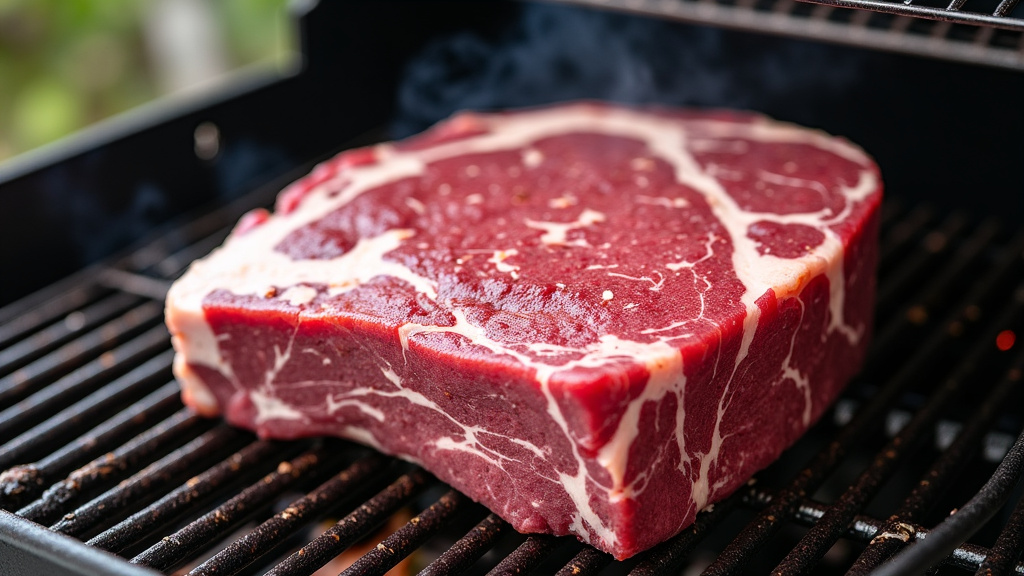
When you’re at the butcher, what should you look for? You want a high-quality roast, often called a standing rib roast. Look for good marbling, which is the white flecks of fat within the meat. This marbling melts during cooking, keeping your prime rib moist and flavorful.
Bone-in or boneless? Bone-in roasts often have more flavor and can cook more evenly. The bones act as a natural rack and insulator. If you choose boneless, tying it with butcher twine helps keep its shape.
Trimming and Tying Your Roast
First, inspect your prime rib. Some roasts come with a thick fat cap. You can trim this down to about a quarter-inch thick. This fat will render and baste the meat as it cooks, but too much can prevent your rub from penetrating. Don’t remove all the fat; it adds wonderful flavor.
If your roast is boneless or if you removed the bones, tying it is important. Use butcher twine every couple of inches. This helps the roast maintain a uniform shape, which leads to more even cooking. It’s like giving your roast a little hug.
Applying the Dry Rub
This is where the flavor truly begins! A good dry rub creates a delicious crust, often called “bark” in the smoking world. You can use a store-bought blend or make your own.
Our Favorite Prime Rib Rub Recipe
We found a simple rub that consistently delivers fantastic results. It balances savory, spicy, and a touch of sweet. Here’s what you’ll need:
- 1/4 cup coarse kosher salt
- 2 tablespoons freshly ground black pepper
- 1 tablespoon garlic powder
- 1 tablespoon onion powder
- 1 tablespoon dried rosemary (crushed)
- 1 teaspoon smoked paprika
- 1/2 teaspoon cayenne pepper (optional, for a little kick)
Mix all these ingredients in a small bowl. Make sure they are well combined. You want a consistent flavor profile.
How to Apply the Rub
Pat your prime rib dry with paper towels. This helps the rub stick better and promotes a crispier exterior. Then, generously apply the rub all over the roast. Don’t be shy! Gently press the rub into the meat. Make sure every surface is covered, even the ends.
After applying the rub, wrap the prime rib tightly in plastic wrap. Place it in the refrigerator for at least 4 hours, or ideally, overnight (12-24 hours). This allows the salt to penetrate the meat, tenderizing it and infusing flavor. This process is called dry brining, and it’s a game-changer.
Setting Up Your Smoker for Success
The right smoker setup is crucial for perfect prime rib. You’re aiming for a consistent, low temperature with plenty of smoke. This is where patience truly becomes a virtue.
Choosing Your Smoker and Fuel
You can use various types of smokers: offset, pellet, electric, or even a kettle grill with a smoke box. Each has its pros and cons. Pellet smokers are often easier for temperature control. Charcoal smokers give a deeper flavor.
For fuel, we recommend using wood chunks or pellets that complement beef. Hickory, oak, and cherry are excellent choices. They provide a rich, robust smoke flavor that pairs beautifully with prime rib. Avoid overly strong woods like mesquite, as it can sometimes overpower the delicate beef flavor. For more details on wood choices, you can explore the best wood for smoking brisket to find complementary flavors.
Achieving the Ideal Smoking Temperature
The key to a tender, juicy prime rib is low and slow cooking. You want to maintain a consistent temperature between 225°F and 250°F (107°C – 121°C) throughout the smoking process. This gentle heat slowly breaks down connective tissues without drying out the meat.
Preheat your smoker to your target temperature. Give it plenty of time to stabilize before putting the meat in. Temperature fluctuations can lead to uneven cooking, so keep a close eye on your smoker’s thermometer. An ambient thermometer clipped to the grate near the meat is more accurate than a lid thermometer (USDA).
Smoking the Prime Rib to Perfection
Now comes the waiting game. Smoking prime rib isn’t a quick process, but the results are absolutely worth it. You’re aiming for a specific internal temperature, not a set time.
Placing the Roast in the Smoker
Take your prime rib out of the refrigerator about 1-2 hours before smoking. This allows it to come closer to room temperature, promoting more even cooking. Insert a reliable meat thermometer into the thickest part of the roast, avoiding the bone. This will be your guide.
Place the prime rib directly on the smoker grates, fat-cap side up. If you have bones, place it bone-side down. Close the lid and resist the urge to open it frequently. “If you’re lookin’, you ain’t cookin’!” Every time you open the lid, you lose heat and smoke, extending the cooking time.
Monitoring Temperature and Doneness
Smoke your prime rib until it reaches your desired internal temperature. Here’s a general guide:
| Doneness | Target Internal Temperature (before resting) | Appearance |
|---|---|---|
| Rare | 120-125°F (49-52°C) | Cool red center |
| Medium-Rare | 130-135°F (54-57°C) | Warm red center |
| Medium | 135-140°F (57-60°C) | Warm pink center |
Remember, the temperature will rise another 5-10 degrees during resting. So, pull your roast off the smoker when it’s 5-10 degrees below your target final temperature. For example, if you want medium-rare at 130-135°F, pull it at 125°F.
Smoking time can vary greatly depending on the size of your roast, your smoker’s efficiency, and outdoor temperatures. A general estimate is 30-45 minutes per pound at 225°F. Always cook to temperature, not to time.
The Final Touches: Searing and Resting
You’re almost there! These last two steps are crucial for the best possible prime rib. Don’t skip them.
Achieving That Perfect Crust
After smoking, your prime rib will have a beautiful smoky flavor and a tender interior. But it might lack that crispy, savory crust you expect. This is where a high-heat sear comes in. This is called the “reverse sear” method.
Once your prime rib reaches its pull temperature, remove it from the smoker. Tent it loosely with foil while you prepare for the sear. You have a few options for searing:
- Oven Sear: Preheat your oven to its highest setting (usually 450-500°F or 232-260°C). Place the roast directly on a rack over a baking sheet. Sear for 10-15 minutes, or until a beautiful crust forms.
- Grill Sear: If you have a grill that can get very hot, fire it up. Sear the prime rib over direct high heat for 2-3 minutes per side. Watch it closely to prevent burning.
- Cast Iron Skillet: Heat a large cast iron skillet over high heat with a tablespoon of high-smoke-point oil (like avocado or grapeseed oil). Sear the roast for 2-3 minutes per side until browned.
The goal is to create a delicious, caramelized exterior quickly without overcooking the interior.
The Importance of Resting
This is arguably the most critical step after cooking. Once seared, immediately transfer the prime rib to a cutting board. Tent it loosely with foil. Let it rest for at least 20-30 minutes, or even up to 45 minutes for larger roasts.
Why rest? As meat cooks, its muscle fibers contract, pushing the juices towards the center. If you cut into it immediately, all those delicious juices will spill out onto your cutting board, leaving you with dry meat. Resting allows the fibers to relax and redistribute the juices throughout the roast. This results in a much juicier, more tender prime rib. We found that patients makes the difference here.
Carving and Serving Your Smoked Prime Rib
The moment of truth! Carving properly ensures each slice is perfect and presentation-ready.
Carving Against the Grain
After resting, remove any twine. If your roast is bone-in, carefully cut along the bone to remove the main slab of meat. Then, place the meat on your cutting board. Identify the “grain” of the meat, which refers to the direction of the muscle fibers.
Always carve against the grain. This shortens the muscle fibers, making each bite more tender and easier to chew. Use a sharp carving knife and slice the prime rib into your desired thickness, usually 1/2 to 3/4 inch thick. You want clean, even slices.
Essential Checklist for Smoking Prime Rib
To help you remember all the steps, here’s a quick checklist:
- Choose a high-quality, well-marbled prime rib.
- Trim excess fat and tie the roast if needed.
- Apply a generous dry rub and refrigerate for 12-24 hours.
- Bring the roast to room temperature before smoking.
- Preheat your smoker to 225-250°F (107-121°C).
- Smoke until 5-10°F below your desired final doneness.
- Reverse sear at high heat for a beautiful crust.
- Rest the prime rib for 20-45 minutes before carving.
- Carve against the grain and serve immediately.
Troubleshooting Common Smoking Issues
Even seasoned pitmasters run into snags. Here are a few common issues and how to fix them.
Dealing with Temperature Swings
Is your smoker’s temperature all over the place? This is a common challenge. For charcoal smokers, ensure consistent fuel supply and adjust vents slowly. For pellet smokers, check your auger and make sure pellets aren’t jammed. Wind and cold weather can also affect temperature stability. Consider adding a water pan to help stabilize temperatures and add moisture to the cooking environment (University of Nebraska-Lincoln Extension).
“The Stall” – What Is It?
You might notice your prime rib’s internal temperature stops rising for a few hours. This is called “the stall.” It’s caused by evaporative cooling as moisture leaves the meat’s surface. Don’t panic! It’s normal. Resist the urge to crank up the heat significantly, as this can dry out your meat. Just be patient and let it work through the stall. Wrapping your roast in butcher paper or foil (the “Texas Crutch”) can help push it through the stall faster, but it may soften the bark.
Avoiding Dry Prime Rib
Nobody wants a dry prime rib
Conclusion
Smoking a prime rib is a culinary journey that rewards patience with incredible flavor. You’ve learned how to select your roast, apply a perfect rub, master your smoker, and finish with a critical sear and rest. These steps ensure your prime rib is not just cooked, but truly transformed into a tender, juicy masterpiece with that coveted smoke ring.
We found that trusting your thermometer and resisting the urge to peek are your best allies. Now, go forth and create an unforgettable meal. Your guests (and your taste buds) will thank you!
Frequently Asked Questions
How long does it take to smoke a prime rib?
Smoking a prime rib isn’t about the clock, it’s about the temperature. Typically, you can estimate 30-45 minutes per pound at 225°F. However, always rely on an accurate meat thermometer to tell you when it’s done, not just the time.
Can I smoke a prime rib without a dedicated smoker?
Yes, you can! Many charcoal or gas grills can be converted into a smoker using indirect heat and a smoke box or foil pouch filled with wood chips. We found that maintaining a consistent low temperature is the biggest challenge, but it’s definitely achievable.
What should I serve with smoked prime rib?
Smoked prime rib pairs beautifully with classic sides. Think creamy mashed potatoes, roasted asparagus, a fresh green salad, or Yorkshire puddings. A rich gravy made from the pan drippings also complements the smoky flavor wonderfully.
How do I store leftover smoked prime rib?
Allow any leftover prime rib to cool completely, then wrap it tightly in plastic wrap or aluminum foil. Store it in an airtight container in the refrigerator for 3-4 days. For longer storage, slice and freeze portions for up to 3 months.
Why is my prime rib tough after smoking?
If your prime rib turned out tough, it’s likely due to overcooking or not resting it long enough. Overcooking dries out the meat and tightens muscle fibers. Insufficient resting means all the juices escape when you cut it. We found that cooking to the correct internal temperature and giving it ample rest time prevents toughness. You can also learn how to smoke ribs without drying them out to apply similar principles to other meats.