Why Is My Brisket Tough?
On this page (3 sections)
Your brisket is tough because the connective tissues like collagen haven’t broken down enough during cooking. This usually happens from not cooking long enough or at the wrong temperature. Brisket needs slow, gentle heat to become tender and juicy.
You probably spent hours on that brisket, only to find it chewy, right? We’ve all been there. Achieving that fall-apart tender brisket requires understanding a few key factors. It’s about more than just the cooking time; moisture and consistent heat are crucial.
- Undercooking is a common culprit.
- Heat control matters a lot.
- Lack of moisture can dry it out.
- Don’t rush the process.
We’ve researched and found the most common reasons why your brisket might be tough. Let’s break down each issue so you can achieve perfectly tender brisket every time.
Common Reasons Your Brisket Isn’t Tender
If your brisket isn’t meltingly tender, you’re likely encountering one of a few common issues. These problems often center around heat, time, and moisture. Let’s dig into why your brisket might be giving you a workout for your jaw.
You Didn’t Cook It Long Enough (Undercooked Brisket)
This is probably the most frequent reason for tough brisket. Many home cooks pull their brisket off the heat too soon. Remember, brisket is not like a steak; it needs a lot more time.
The Role of Connective Tissue
Brisket is a tough cut of meat. It’s packed with connective tissues, particularly collagen. Think of collagen like tiny, sturdy rubber bands holding the muscle fibers together. These rubber bands need to break down.
When you cook brisket at a low temperature for a long time, this collagen slowly converts into gelatin. Gelatin is what makes the meat moist and gives it that desirable “melt-in-your-mouth” texture.
If you don’t allow enough time, the collagen won’t fully break down. It will stay tough and chewy. This is why an undercooked brisket feels rubbery and hard to chew.
The Brisket Stall
Have you ever noticed your brisket’s temperature getting stuck? This is known as “the stall.” It’s when the internal temperature of the meat stops rising, sometimes for hours. It can be frustrating, but it’s completely normal.
The stall happens when the moisture evaporating from the surface of the meat cools it down. It’s like your brisket is sweating to cool itself off. You just have to be patient and let it work through this phase. Don’t increase the heat too much during the stall, or you risk drying out the meat.
Your Cooking Temperature Was Off
Temperature control is absolutely vital for brisket. Too high, and it dries out. Too low, and it might never finish cooking in a reasonable amount of time. You need a consistent, gentle heat.
Too High Heat
Cooking brisket at too high a temperature is a fast track to tough, dry meat. High heat causes the muscle fibers to contract quickly. This squeezes out moisture, leaving your brisket dry and chewy. It also doesn’t give the collagen enough time to slowly break down into gelatin. It just toughens it up instead.
Many experts recommend a consistent cooking temperature between 225°F and 275°F for smoked or oven-cooked brisket (Texas A&M AgriLife Extension).
Too Low Heat (or Inconsistent Heat)
While low and slow is the mantra, cooking too low for too long can also be a problem. If your cooker can’t maintain a consistent temperature, you’ll have uneven cooking. Parts might be undercooked, while others dry out.
Invest in a reliable thermometer for your smoker or oven. This lets you monitor the ambient temperature. Don’t rely solely on the built-in thermometer, as they can sometimes be inaccurate.
Not Enough Moisture or Drying Out During Cooking
Brisket needs moisture, both from within and around it, to stay tender. Losing too much moisture during the cook is a recipe for a tough outcome.
What Wrapping Does
Many people use a technique called “the Texas Crutch” or simply wrapping. This involves wrapping your brisket in butcher paper or foil once it hits a certain internal temperature (often around 150-165°F).
Wrapping helps to trap moisture and push the brisket through the stall faster. It creates a steamy environment that tenderizes the meat. This is particularly helpful in preventing the outside from getting too dry or crusty before the inside is done.
Lack of External Humidity
If you’re using a smoker, you might consider adding a water pan. A water pan helps to create a humid environment inside your cooker. This reduces moisture evaporation from the brisket’s surface, helping it stay juicy.
In an oven, you might not have the same level of humidity control, but wrapping becomes even more crucial there to prevent drying.
You Cut Against the Grain (or Didn’t Rest It)
Even if you’ve cooked your brisket perfectly, how you handle it afterward can still make or break its tenderness.
The Importance of Resting
After your brisket reaches its target internal temperature (usually between 195-205°F, but remember, tenderness is key), it’s vital to let it rest. This isn’t just a suggestion; it’s a critical step.
Resting allows the muscle fibers to relax. It also lets the juices redistribute throughout the meat. If you slice it too soon, those precious juices will run out onto your cutting board, leaving you with dry, tough slices. A rest period of at least one hour, often longer, is recommended for a full-size brisket.
Wrap it loosely in butcher paper or foil, then place it in an insulated cooler. This helps it maintain a warm temperature while it rests.
Slicing Against the Grain
Brisket has a prominent grain – the direction in which the muscle fibers run. You need to slice the meat against the grain. This shortens the muscle fibers, making each bite much more tender and easier to chew.
If you slice with the grain, you’ll end up with long, chewy strands of meat, no matter how well you cooked it. Take a moment to identify the grain before you start cutting. Brisket actually has two distinct muscle groups (the flat and the point) with grains running in different directions, so you’ll usually need to separate them and slice each part appropriately.
Other Factors Affecting Brisket Tenderness
While the big three (time, temperature, moisture) cover most issues, a few other things can influence your brisket’s final texture.
The Quality of the Brisket
Starting with a good piece of meat matters. Choice or Prime grades of beef often have more intramuscular fat (marbling). This marbling adds flavor and helps keep the meat moist during the long cooking process. While you can certainly make a good Select grade brisket, it might be more prone to drying out if not handled carefully.
Trimming Your Brisket
Trimming excess fat is important, but don’t overdo it. A thin layer of fat (about 1/4 to 1/2 inch) on top of the flat helps insulate the meat and keep it moist as it renders. Removing too much fat can expose the meat directly to the heat, potentially drying it out.
Your Brisket Tenderness Checklist
To recap, here’s a quick checklist to help you troubleshoot your next brisket:
- Did you cook it to the correct internal temperature (around 195-205°F for tenderness, not just doneness)?
- Did you allow enough cooking time, patiently working through “the stall”?
- Was your cooking temperature consistent and in the recommended range (225-275°F)?
- Did you wrap the brisket to retain moisture once it reached the stall?
- Did you rest the brisket for at least an hour (or more) before slicing?
- Did you slice the brisket against the grain?
Troubleshooting Common Brisket Outcomes
Sometimes it helps to compare what happened to what you wanted. Here’s a quick guide:
| Symptom | Likely Cause | Solution for Next Time |
|---|---|---|
| Brisket is firm and chewy | Undercooked; collagen not broken down. | Cook longer; ensure proper internal temp. |
| Brisket is dry and crumbly | Overcooked, or cooked too hot. | Cook at lower temp, wrap sooner, don’t overcook. |
| Outside is burnt, inside is raw | Too high initial cooking temp. | Lower the heat, cook “low and slow.” |
| Juices run out when slicing | Not rested long enough. | Always rest for 1-2 hours in an insulated cooler. |
| Meat is stringy and tough when eating | Sliced with the grain. | Identify and slice against the grain. |
Achieving perfect brisket takes practice, but by understanding these common pitfalls, you’re well on your way to that tender, juicy result everyone craves. Don’t get discouraged! Every cook is a learning experience.
Conclusion
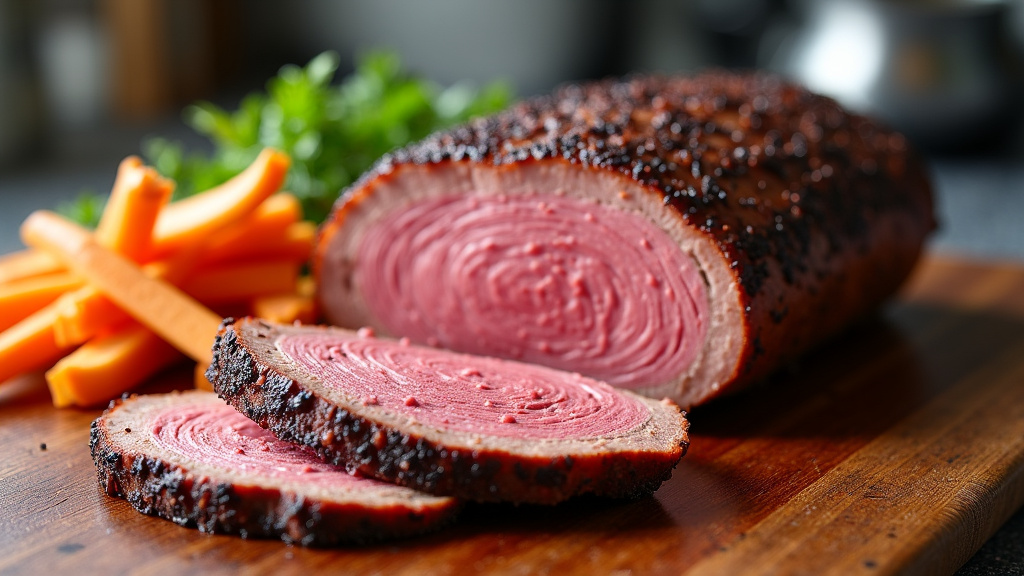
Achieving perfectly tender brisket truly comes down to patience and precision. You now understand that breaking down tough connective tissues requires time, consistent low heat, and proper moisture management. Don’t let a tough brisket discourage you; every cook is a valuable learning experience.
By focusing on internal temperature, embracing the stall, and mastering the art of resting and slicing, you’re set for success. Apply these techniques with confidence, and your next brisket will be the succulent, fall-apart masterpiece you’ve been craving.
Frequently Asked Questions
Can I salvage a tough, undercooked brisket?
Sometimes, yes! If your brisket is still tough but not completely cold, you can try wrapping it tightly in foil with a little beef broth and returning it to a very low oven (around 225°F) for another few hours until it reaches tenderness. Monitor its internal temperature carefully.
What’s the ideal internal temperature for brisket tenderness?
While beef is technically “done” at lower temperatures, brisket needs to reach an internal temperature between 195°F and 205°F to allow the collagen to fully convert into gelatin. Always test for probe tenderness rather than relying solely on temperature. The probe should slide in with little resistance.
How do I know if I’m slicing against the grain?
Look closely at the cooked meat before slicing. You’ll see visible lines or fibers running in one direction. To slice against the grain, make your cuts perpendicular to these lines. With brisket, remember that the flat and point sections often have different grain directions, so you’ll need to adjust your slicing.
Does the quality of the raw brisket really make a difference?
Yes, it absolutely does. Higher grades like USDA Prime or Choice have more intramuscular fat (marbling), which helps keep the meat moist and tender during the long cooking process. While you can make good brisket from Select grade, it’s generally more forgiving to start with a well-marbled cut.
Is it better to cook brisket fat side up or down?
This is a debated topic, but many pitmasters recommend cooking fat side up, especially if your heat source is coming from above. The rendering fat helps baste the meat below, adding moisture and flavor. If your heat source is from below, cooking fat side down can offer some insulation.