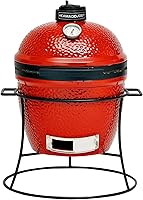
Is a 13-Inch Kamado Worth Buying?
A 13-inch kamado is worthwhile when portability and a small footprint matter more than cooking space. It is less suitable if you regularly cook for a large group or want room for several large cuts at once.
On this page (8 sections)
- Is the Kamado 13 worthwhile for everyday cooking?
- How much food can a 13-inch kamado cook?
- What are the portability tradeoffs?
- How does a 13-inch kamado compare with the smallest Kamado Joe?
- What should you use if a kamado feels too small?
- Is a 13-inch kamado worth the fuel and setup?
- Should you buy a 13-inch kamado or a larger grill?
- Is the Kamado 13 worthwhile for your cooking style?
A 13-inch kamado is worthwhile if you need a compact charcoal cooker for small meals, balconies, patios, or limited storage. It is not the best fit if your main goal is cooking several large cuts at once.
The decision comes down to capacity, portability, heat control, and how often you cook. A small kamado can offer the cooking style you want in a smaller footprint, but its grate area leaves less room for spreading food out or using indirect zones.
Is the Kamado 13 worthwhile for everyday cooking?
The Kamado 13 is worthwhile for everyday cooking when your portions are modest and your cooking space is limited. It can make sense for one or two people, small families, or anyone who prefers a compact cooker over a larger backyard setup.
The main benefit is the smaller footprint. You may have an easier time finding a place for it on a patio, beside other outdoor equipment, or in a storage area.
The tradeoff is limited cooking room. A 13-inch class cooker gives you less space for multiple steaks, racks of ribs, a large roast, or food that needs separate direct and indirect zones.
Before buying, measure the space where you plan to use and store it. Include room around the cooker for safe operation, access to the lid, and handling charcoal or cooking tools.
How much food can a 13-inch kamado cook?
A 13-inch kamado is best for small portions rather than large barbecue batches. The exact amount depends on the grate design, the shape of the food, and whether you need space around each item for airflow.
Small cooking surfaces work well for a few burgers, chicken pieces, vegetables, or a modest roast. They become harder to manage when food is tall, wide, or irregularly shaped.
A small grate also limits how easily you can set up two heat zones. You may have less room to keep food away from the hottest area while still leaving space for fuel and airflow.
If you often cook for gatherings, compare the kamado's grate diameter with the food you normally prepare. A cooker that fits your storage area may still feel too small once a full meal is arranged inside.
For a closer look at compact options, see our guide to the Best Kamado Grill For Small Spaces. It helps compare small footprints with the cooking room you actually need.
Is the Kamado 13 worthwhile for apartment or patio use?
A 13-inch kamado can be worthwhile for a patio when the installation rules and ventilation needs allow charcoal cooking. A small footprint does not remove the need for a stable, heat-safe location and adequate clearance.
Check your lease, building rules, and local fire guidance before using any charcoal cooker. The National Fire Protection Association's outdoor cooking safety guidance covers basic precautions for grills and outdoor cooking.
A small kamado may fit where a large cooker cannot, but do not place it under a low roof, close to siding, or beside materials that can catch fire. Keep children and pets away from the hot cooker and its fuel.
Our guide to the Best Kamado Grill For Apartment Patio covers the space and placement questions that matter before you choose a compact model.
What are the portability tradeoffs?
A 13-inch kamado is easier to position than a larger cooker, but small does not always mean lightweight. Ceramic construction can make a compact kamado awkward to carry, so portability depends on the design, handles, stand, and your storage plan.
Think about how often you will move it. If it will stay in one place, a small footprint may matter more than carrying weight.
If you plan to transport it, check the assembled weight and how securely it can be lifted.
Do not move a hot cooker. Let the kamado cool fully, remove loose accessories if the instructions allow, and use two people when the weight or shape makes carrying uncertain.
If you want a smaller cooker for travel, compare the actual packed size with your vehicle and storage space. A compact cooker still needs protection from impacts during transport.
How does a 13-inch kamado compare with the smallest Kamado Joe?
The smallest Kamado Joe BBQ may offer a useful comparison if you want a compact branded cooker, but the cooking surface still determines whether it fits your meals. Look beyond the outside footprint and compare grate size, height, weight, fuel access, and storage needs.
The phrase “smallest” can refer to the smallest model in a brand's range, not necessarily the smallest cooker available across all brands. Check the exact dimensions before deciding that a model will fit a shelf, cart, or vehicle.
Read What Is the Smallest Kamado Joe BBQ? when you are comparing compact Kamado Joe choices. Then match the cooking area to the portions you normally prepare.
A 13-inch kamado may be the better choice when you want the smallest practical footprint. A larger compact model may be better if you cook for more people and can accept extra storage space.
What should you use if a kamado feels too small?
Choose a larger kamado when cooking area matters most, or choose an electric smoker when you want rack space and simple temperature operation. The right alternative depends on whether your main limit is grate room, fuel handling, or outdoor placement.
The Smokehouse Products Big Chief Electric Smoker uses electric power, maintains 165°F, and has five racks. It can smoke up to 50 lb of meat or fish at once, making it more suitable for large batches than a 13-inch kamado.
This smoker measures 12 in deep, 18 in wide, and 24.5 in high, so it still needs a suitable outdoor location and vertical clearance. Its 165°F setting suits foods such as fish, sausage, cheese, and jerky, but it does not replace the higher-heat grilling role of a kamado.
Choose it if you want electric operation, front loading, and a removable wood chip pan. Choose the kamado if charcoal cooking, searing, and a smaller cooking footprint are more important to you.
For another buying comparison, see Best Kamado Grill for Portable Cooking. Focus on the cooking space and moving weight, not only the outside dimensions.
Is a 13-inch kamado worth the fuel and setup?
A 13-inch kamado is worth the setup when you enjoy charcoal cooking and will use its heat control often. It takes more involvement than an electric smoker because you must manage fuel, airflow, lighting, and cooking temperature.
That extra work can be a benefit if you want the flavor and process of charcoal cooking. It can feel unnecessary if you prefer plugging in a smoker and setting a steady low temperature.
Use the manufacturer's lighting and airflow instructions. Keep the lid, vents, cooking grate, and fire area clean enough for safe operation, and never leave a live charcoal cooker unattended.
Plan for a full cool-down before covering or moving it. Ash and leftover fuel should be handled only after the cooker is cold.
Should you buy a 13-inch kamado or a larger grill?
Buy the 13-inch kamado when storage space and small portions are your first priorities. Buy a larger grill when you regularly cook for groups, need room for indirect cooking, or want to prepare several foods at once.
A larger cooker gives you more flexibility, but it also takes more floor space and may be harder to move. The best size is the one that matches your usual meals without creating a storage problem.
If you are still weighing the cost and long-term value of kamado cooking, read Is a Kamado Grill Worth the Money?. That comparison can help you decide whether the cooking style fits your routine.
Is the Kamado 13 worthwhile for your cooking style?
The Kamado 13 is worthwhile for compact charcoal cooking, small portions, and buyers who have limited outdoor space. It is less worthwhile for large briskets, group meals, or anyone who wants rack-style capacity with simple electric controls.
Pick the 13-inch kamado if you value a small footprint and enjoy managing charcoal. Pick a larger cooker if you need more cooking zones, and pick the Smokehouse Products Big Chief Electric Smoker if five racks and up to 50 lb of capacity better match your meal prep.
If you are comparing fuel types instead, see Is a Pellet Smoker Worth It? before making your final choice.
Frequently asked questions
Is the Kamado 13 worthwhile for one or two people?
Yes, a 13-inch kamado can suit one or two people when you value a compact cooker and usually prepare small meals. Measure the grate and cooking area carefully before buying, because the small size limits how much food you can cook at once.
Can a 13-inch kamado cook brisket?
A 13-inch kamado may handle smaller barbecue portions, but it is not the easiest choice for a full brisket. The cooking surface and lid clearance limit the size of the cut, so check the grate diameter and your preferred cooking setup before ordering.
Is a small kamado easy to move?
A small kamado is easier to place and move than a larger ceramic cooker, but it can still be heavy and fragile. Use a stable surface, protect the cooker during transport, and follow the manufacturer's handling instructions.
What is better than a 13-inch kamado for large batches?
A larger kamado or an electric smoker is usually better for large batches. The Smokehouse Products Big Chief Electric Smoker has five racks and a stated capacity of up to 50 lb, so it suits meal prep and gatherings better than a very small kamado.