Do You Need a Temperature Controller for an Offset Smoker?
On this page (8 sections)
- Is a Temperature Controller Necessary for Your Offset Smoker?
- What Does a Temperature Controller Actually Do?
- Benefits of Using a Temperature Controller
- Do You *Really* Need One? Considerations for Your Decision
- Comparing Manual vs. Controller-Assisted Smoking
- Making Your Final Decision: A Checklist
- Conclusion
- Frequently Asked Questions
You don’t always need a temperature controller for an offset smoker, but it can greatly improve your results. While traditional offset smoking relies on manual adjustments, a controller offers a more set-it-and-forget-it experience for maintaining stable temperatures. This can be a game-changer for consistent cooks.
Many pitmasters achieve fantastic barbecue without any electronic aids. They learn to read their fire and adjust vents with precision. Yet, for those who want to reduce guesswork and minimize the need for constant monitoring, a temperature controller is a smart investment.
- Temperature controllers aren’t mandatory for offset smokers.
- They offer improved temperature stability and consistency.
- Many pitmasters succeed with manual fire management.
- Controllers reduce the need for constant babysitting.
- They are a helpful tool for more predictable cooks.
Let’s break down what a temperature controller does and whether it’s the right addition to your smoking setup.
Is a Temperature Controller Necessary for Your Offset Smoker?
The short answer is: no, it’s not strictly necessary. Many pitmasters have been smoking delicious meats for decades with just their keen eye and skillful hands. They understand how their smoker breathes and how the fire dances. But, if you’re looking for more predictable results and want to spend less time tending to the fire, a temperature controller can be a wonderful addition to your smoking arsenal.
Think of it like this: learning to drive a manual transmission car is a skill. You learn to feel the engine and shift gears perfectly. But an automatic transmission still gets you where you need to go, often with less effort. A temperature controller is much like that automatic transmission for your smoker. It handles some of the heavy lifting for you.
What Does a Temperature Controller Actually Do?
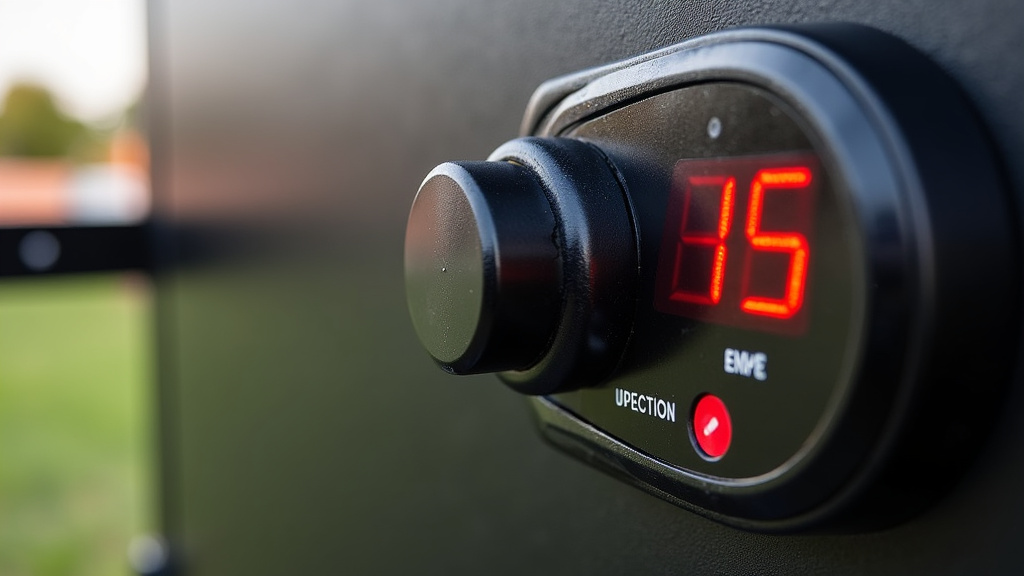
A temperature controller is essentially a smart device that helps regulate the temperature inside your smoker. It has a few key components that work together.
The Pit Probe
First, there’s a temperature probe. You place this probe inside your smoker, near where your food will be. This probe is the controller’s eyes and ears, constantly measuring the actual temperature inside your cooking chamber. It’s like a thermometer that’s always on duty.
The Controller Unit
Next, there’s the main controller unit. This is the brain of the operation. You set your desired target temperature on this unit. Whether you want 225°F for briskets or 300°F for chicken, you tell the controller what temperature you’re aiming for.
The Fan and Airflow Control
The magic happens with how the controller manages airflow. Most controllers connect to a small fan. This fan is typically attached to your smoker’s air intake vent. When the pit probe detects that the temperature is dropping below your set point, the controller tells the fan to blow more air onto the coals. More air means a hotter fire. When the temperature rises too high, the controller tells the fan to slow down or stop, reducing the oxygen supply to the fire and letting it cool down. This constant back-and-forth helps maintain a much more stable temperature.
Benefits of Using a Temperature Controller
Why would you want this technology in your smoking setup? Several reasons make it appealing to many grillers and smokers.
Consistent Temperature Stability
This is the big one. Offset smokers are notorious for temperature fluctuations. Wind gusts, opening the lid, or even just the wood burning down can cause dips and spikes. A controller works tirelessly to keep the temperature within a few degrees of your set point. We found that this consistency is incredibly helpful for achieving tender and evenly cooked meats every time.
Less “Babysitting” Required
Let’s be honest, nobody likes being chained to their smoker for hours on end. With a controller, you can step away to clean up, hang out with guests, or even take a nap. You’re no longer constantly adjusting vents or adding small pieces of wood every 20 minutes. This frees you up to enjoy the process and the company.
Better for Long Cooks
For those all-day cooks, like a whole packer brisket or a pork shoulder, temperature stability is key. When you’re smoking for 12-18 hours, even small temperature swings can add up. A controller helps ensure your meat cooks at the optimal temperature range throughout the entire smoke. This can lead to more tender and juicy results.
Beginner-Friendly Operation
If you’re new to offset smoking, managing the fire can feel daunting. There’s a learning curve to understanding how much wood to add, when to add it, and how to adjust the dampers. A temperature controller simplifies this aspect significantly, allowing beginners to focus on rubs, sauces, and cooking times without the added stress of constant fire management.
Achieving Specific Temperatures for Different Foods
Different meats and cooking styles often call for precise temperatures. For example, some barbecue competitions require specific temperature ranges for different categories. A controller makes it much easier to hit and hold those exact temperatures, giving you a competitive edge or simply ensuring your food is cooked perfectly for its type.
Do You *Really* Need One? Considerations for Your Decision
So, while a controller offers many benefits, it’s not an automatic “yes” for everyone. Your personal smoking style, experience level, and what you’re cooking all play a role.
Your Current Smoking Skills
If you’re already a seasoned pitmaster who can read your smoker like a book, you might not feel the need for a controller. You’ve mastered the art of manual temperature control and are happy with your results. Many pitmasters pride themselves on this skill. Research shows that experienced smokers can achieve excellent results without electronic aids, often developing a deeper connection with the cooking process (National Barbecue Association). They learn to “feel” the fire.
The Types of Foods You Smoke
Are you primarily smoking thick cuts like briskets and pork butts that benefit from long, stable cooks? Or are you often smoking quicker items like chicken wings or fish where temperature swings are less critical? For longer, slower cooks, a controller can be a more significant advantage.
Your Budget and Investment Philosophy
Temperature controllers can range from $100 to over $300. Consider if this investment aligns with your barbecue budget. Sometimes, the money might be better spent on better quality wood or a more robust smoker. Think about how often you smoke and how much value you place on convenience and consistency.
Reliability of Your Existing Setup
How well does your current smoker hold temperature without assistance? Some offset smokers have excellent airflow designs and are easier to manage. Others are more temperamental and would benefit more from a controller. You might need to assess how much effort you’re currently expending to keep your smoker at the desired temperature.
Comparing Manual vs. Controller-Assisted Smoking
Let’s look at a side-by-side comparison to help you visualize the differences.
| Feature | Manual Temperature Control | Temperature Controller |
|---|---|---|
| Temperature Stability | Can fluctuate significantly with wind, lid opening, fire changes. Requires constant monitoring. | Maintains temperature within a narrow range (often +/- 5-10 degrees). Highly stable. |
| Effort Required | High. Frequent adjustments to vents, fuel. Constant attention needed. | Low. Set it and forget it for long periods. Minimal adjustments. |
| Learning Curve | Steep. Understanding fire dynamics and airflow takes practice. | Gentle. Easier for beginners to achieve consistent results. |
| Predictability | Less predictable. Results can vary based on external conditions and skill. | Highly predictable. Easier to replicate successful cooks. |
| Cost | Generally lower initial cost (just the smoker). | Additional investment ($100-$300+). |
| Best For | Experienced smokers, those who enjoy the challenge, quick cooks. | Long cooks, beginners, those seeking convenience and consistent results. |
Making Your Final Decision: A Checklist
To help you decide if a temperature controller is right for you, consider these points:
- Do you often find yourself tied to your smoker for hours?
- Are you frustrated by temperature swings during long cooks?
- Are you relatively new to offset smoking and find fire management challenging?
- Do you cook thicker cuts of meat that require extended, stable temperatures?
- Is investing in barbecue accessories a priority for you right now?
- Do you value consistent, predictable results over the “traditional” smoking experience?
If you answered “yes” to several of these questions, a temperature controller could be a smart investment that significantly enhances your smoking journey. It’s not about replacing skill, but rather augmenting it with technology for a more enjoyable and successful outcome. Many enthusiasts report that once they start using one, they wonder how they ever smoked without it.
Conclusion
Ultimately, a temperature controller for your offset smoker isn’t a strict requirement for delicious barbecue, but it can be a wonderful addition. If you’re looking to spend less time tending your fire and more time enjoying the process and the results, a controller offers incredible consistency. It helps beginners achieve predictable cooks and frees up seasoned pitmasters for longer, more demanding smokes. Consider your current smoking habits and goals; if more stable temps and less “babysitting” sound appealing, you’ll likely find a controller to be a worthwhile investment that elevates your barbecue game.
Frequently Asked Questions
Will a temperature controller actually make my food taste better?
A temperature controller doesn’t directly change the flavor of your food. However, by maintaining a stable cooking temperature, it ensures your meat cooks evenly and avoids drying out. This consistency leads to more tender and juicy results, which many people associate with better taste.
Can I still use wood chunks or logs with a temperature controller?
Yes, you absolutely can. The temperature controller manages the airflow to your charcoal or fire source to maintain temperature. You’ll still add wood chunks or logs for smoke flavor according to your preference and the type of meat you’re cooking.
How much more time will I save with a temperature controller?
You can save a significant amount of time, especially on long cooks. Instead of making adjustments every 20-30 minutes, you might only need to check in every few hours. This frees you up to focus on other tasks or simply relax while your smoker does the heavy lifting.
Is a temperature controller difficult to set up and use on an offset smoker?
Most temperature controllers are designed for straightforward installation and operation. You’ll typically attach a fan to your smoker’s air intake and place a probe inside. Setting your desired temperature is usually as simple as pressing a few buttons.
What’s the biggest drawback to using a temperature controller?
The primary drawback is the upfront cost, as controllers can range from $100 to over $300. Additionally, some purists enjoy the challenge and connection that comes with manually managing the fire, and a controller can feel like it takes away from that traditional experience.