How to Choose a Pellet Smoker Made in the USA
A pellet smoker made in the USA needs clear, model-specific proof of where it is made. Check the manufacturer’s origin statement and any country-of-origin label, then compare construction, cooking space, and controls with your needs.
On this page (8 sections)
- How can you verify a pellet smoker’s origin?
- What does “made in USA” mean for a pellet smoker?
- Which construction details matter for outdoor cooking?
- How much cooking space and capacity do you need?
- Which controls and features fit your cooking style?
- Which of these pellet smokers fits your needs?
- What should you check before buying?
- What is the best way to choose a pellet smoker made in the USA?
A pellet smoker made in the USA requires model-specific proof of origin. Check the manufacturer’s country-of-origin statement and the label on the smoker or its packaging, then compare cooking space, construction, and controls with your needs.
A brand based in the United States may sell smokers made elsewhere. If domestic manufacturing matters to you, verify the exact model before you buy rather than relying on the brand’s location or general wording.
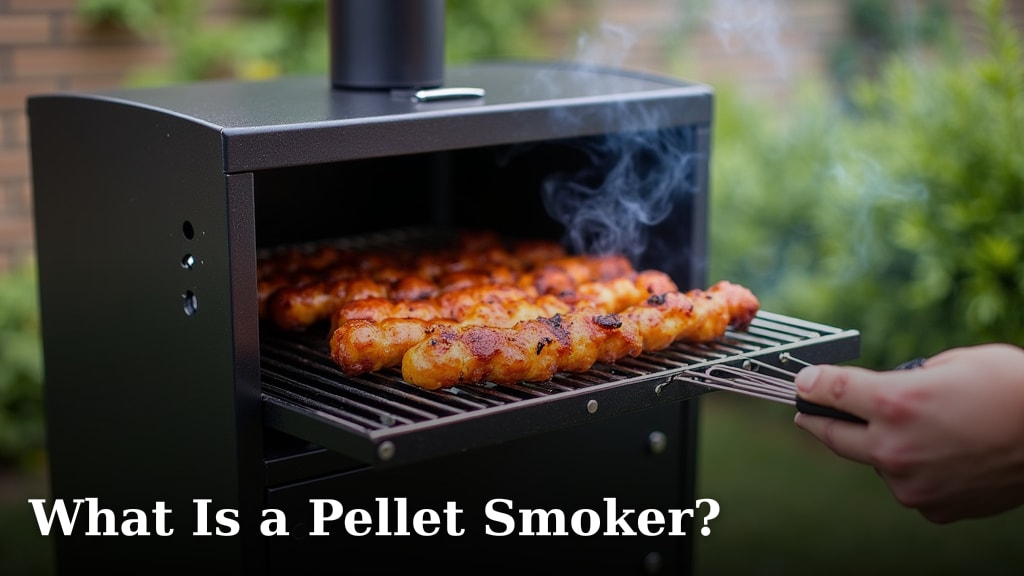
This guide covers how to check origin, what construction details to compare, and how to match capacity to your cooking routine. If you’re still learning how these cookers work, start with What Is a Pellet Smoker?.
How can you verify a pellet smoker’s origin?
Look for a clear origin statement tied to the exact model. Check the smoker and its packaging, and ask the manufacturer what the statement covers if the wording is unclear.
“Made in USA,” “assembled in USA,” and “US-based brand” describe different things. If you require a smoker made domestically, an assembly statement alone may not meet your standard.
Ask a manufacturer these direct questions:
- Where is this exact model manufactured?
- Where does final assembly take place?
- Are major parts, such as the cooking chamber or controller, imported?
- Does the country-of-origin statement apply to the entire smoker or selected components?
- Can you confirm the answer in writing?
Keep the model name and number with the answer. A brand can use different factories or suppliers for different models, so a general statement about the company may not settle the question for the smoker you’re considering.
Treat unclear wording as a reason to ask for details. Terms like “American brand” describe a company connection, not necessarily where its products are built.
What does “made in USA” mean for a pellet smoker?
The phrase should identify the product’s origin, not just the company’s address. Look for wording that clearly applies to the finished smoker, and check how the manufacturer explains it.
A smoker combines parts from different sources. The metal body, grates, electronics, auger, and other components may come from different places, so ask which stages and parts the origin statement covers.
The Federal Trade Commission’s Made in USA guidance explains the standard businesses must meet when making an unqualified “Made in USA” claim. Use it as background when reviewing a manufacturer’s wording, and contact the manufacturer if you need more detail about a specific model.
Some buyers require the finished product to meet a particular definition of domestic origin. Others are comfortable with domestic assembly or some US-made components.
Decide what matters to you before comparing smokers, then seek evidence that matches that standard.
Which construction details matter for outdoor cooking?
Compare the body, cooking surfaces, and movable parts for details that fit your setup. Construction descriptions help you compare designs, but they do not prove where a smoker was made.
Look for stated materials and finishes. A model may specify steel for its body or cooking grates, while its coating or finish can affect how you care for the exterior.
Follow the manufacturer’s care instructions and use a suitable cover when the smoker is not in use.
Think about how you’ll move and position it. A heavier smoker can be harder to relocate across a patio, while wheels or a lift handle can make repositioning easier.
Measure the space where it will sit, including room to open shelves and move around it during a cook.
A shelf can keep tools, plates, and seasonings within reach. If you need more detail on cooking setup, compare a pellet smoker with smoke box and note whether the design fits your planned recipes and available space.
How much cooking space and capacity do you need?
Choose cooking space around the largest meal you expect to cook at one time. Count the food you cook together, then leave room to place it with gaps for heat and smoke to move.
A smaller cooking surface may fit regular family meals and take less room on a patio. A larger surface can help when you cook several racks or larger cuts together, but also check the smoker’s outside dimensions and overall weight.
Hopper size can affect how often you need to add pellets during a cook. Check its capacity and whether the design makes it easy to monitor or refill, especially if your routine includes long smoking sessions.
For a broader comparison of cooking space, controls, and other features, see our Best Pellet Smoker 2026 guide.
Which controls and features fit your cooking style?
Choose controls based on how closely you want to manage a cook. Basic temperature control may suit someone who prefers to check the smoker in person, while connected features can help if you want to monitor or adjust settings from a phone.
Check whether the smoker includes a food probe, what its display shows, and how it responds when the temperature needs adjustment. Do not assume a controller will hold a particular temperature range unless the manufacturer confirms it for that model.
WiFi or Bluetooth can offer remote monitoring, but the smoker needs a compatible app and a suitable connection. Compare the features in our best pellet smokers with Bluetooth guide if phone control is a priority.
Cleaning access matters too. Look for details on grease collection, ash removal, and pellet cleanout, then consider whether you can reach those areas easily where the smoker will sit.
Which of these pellet smokers fits your needs?
These three options show how cooking area and controls can shape your shortlist. Their available descriptions do not confirm US manufacturing, so verify origin with the manufacturer before choosing any of them on that basis.
Z GRILLS ZPG-450A2 Wood Pellet Grill
The Z GRILLS ZPG-450A2 has a stated cooking area of 459 sq in and a PID controller that the brand says adjusts fuel and airflow. It also includes a meat probe and a foldable shelf.
Its powder-coated steel construction and wheels may matter when you’re comparing how a smoker is built and moved around your outdoor space. Its listed origin is not confirmed here, so contact Z GRILLS about where this exact model is manufactured and assembled.
Traeger Pro 22 Wood Pellet Grill
The Traeger Pro 22 has 572 sq in of cooking space and a Digital Pro Controller. Traeger says the controller keeps the temperature within plus or minus 15°F, and the model includes two wired meat probes.
The smoker has a powder-coated steel body, porcelain-coated grates, and large wheels. Confirm the model’s manufacturing origin with Traeger if US origin is part of your decision.
Pit Boss 850 Navigator Series WiFi
The Pit Boss 850 Navigator Series WiFi offers 932 sq in of cooking space, a 30 lb hopper, WiFi and Bluetooth, and two meat probes. The listed temperature range is 180°F to 500°F.
Its folding shelves add prep space, while the design includes an easy-access grease tray. Ask Pit Boss where this exact model is made and assembled before treating it as a US-made option.
What should you check before buying?
Confirm origin and fit before you place an order. A smoker can match your cooking needs while failing your origin requirement, or meet your origin standard while being too large for your space.
Use this checklist:
- Write down what “made in the USA” means for your purchase.
- Find the country-of-origin wording for the exact model.
- Ask the manufacturer about assembly and major components if the statement is unclear.
- Measure the smoker’s outside dimensions against your patio or cooking area.
- Compare cooking area with the meals you plan to prepare.
- Check hopper capacity, controls, probes, and cleanup features.
- Confirm that the smoker fits your budget and fuel routine.
Keep written confirmation with the model details, especially if the manufacturer gives you a more specific answer by email or chat. If the answer stays vague, choose another model with origin information that better fits your needs.
What is the best way to choose a pellet smoker made in the USA?
Choose a smoker only after you confirm its origin for the exact model. Then select the smallest cooking area that fits your largest regular meal, with controls and cleanup features you’ll use.
If manufacturing origin is your first filter, seek a clear country-of-origin statement and ask follow-up questions about parts and assembly. If cooking space or remote monitoring matters more, compare those features separately and verify origin before you buy.
For a different cooking style, compare an offset smoker with a pellet smoker to see which setup better fits the way you want to manage a fire.
Frequently asked questions
How can I tell if a pellet smoker is made in the USA?
Look for a clear country-of-origin statement for the exact model, and check the label on the unit or packaging. Ask the manufacturer whether the statement covers the whole smoker or only certain parts.
A US-based brand or US customer service address does not, by itself, confirm where a smoker was made.
Does assembled in the USA mean made in the USA?
No. Assembly in the United States does not necessarily mean all or most parts were made there.
Ask which parts are imported and what work happens at the US facility, then compare the answer with the wording on the product’s country-of-origin label.
Are all pellet smokers from a US-based brand made in the USA?
No. A brand’s location does not guarantee where a particular smoker was built or assembled.
Manufacturing can vary between models and production runs, so confirm the origin for the exact model you plan to buy.
What should I compare besides manufacturing origin?
Compare cooking space, temperature controls, fuel hopper access, cleanup features, and the smoker’s size and weight. Those details affect how well it fits your cooking routine and setup.
Check origin separately, because construction features alone do not show where the smoker was made.
Can I find a pellet smoker made in the USA with WiFi?
Possibly, but verify both details for the exact model. Confirm that its origin meets your standard, then check whether it offers WiFi and what the controls allow you to do.
A connection feature or a US-based brand does not answer the manufacturing-origin question.