
Is It Safe to Leave a Smoker on Overnight?
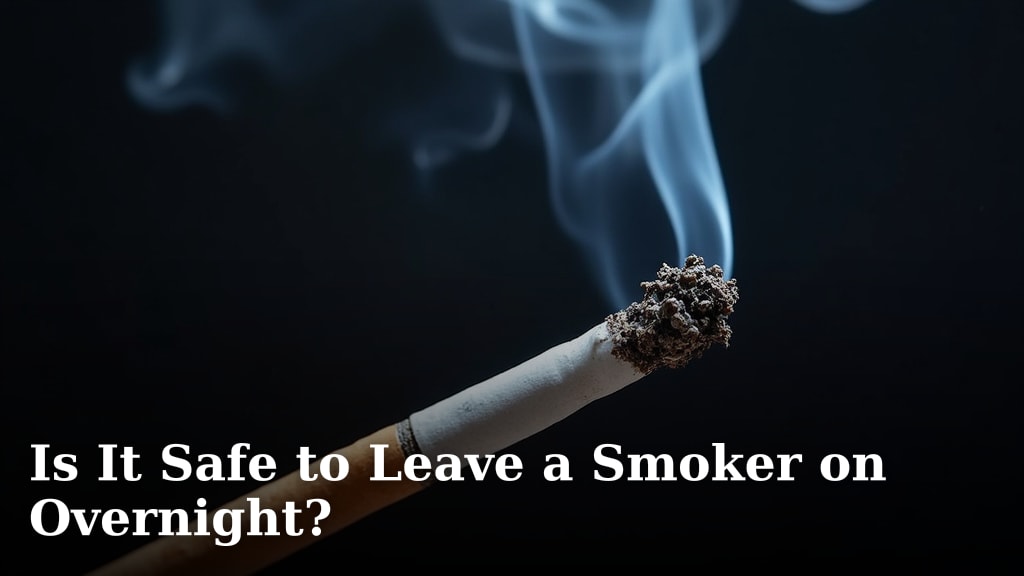
No, it is not generally safe to leave a smoker unattended overnight. The primary reason is the significant fire risk from an unmonitored heat source and potential equipment malfunctions.
We found that most manufacturers and fire safety experts strongly recommend against it. The danger comes from temperature spikes, grease fires, or electrical issues that can quickly escalate when no one is home. It’s simply not worth the risk to your property or safety.
- The safest practice is to avoid leaving any smoker running while you are asleep or away.
- Unattended cooking is a leading cause of home fires.
- Properly managing temperature and fuel is critical for safe smoking.
- Many experts say finishing cooks during the day is the best rule.
- Always check your specific smoker’s manual for safety warnings.
Below, we’ll break down exactly why this rule is so important and what safer alternatives you can use for long, slow cooks.
The Fire Risks of Unattended Smoking
Let’s get straight to the heart of it: fire. When you leave a smoker alone, especially overnight, you’re leaving a managed fire source completely unmonitored. That’s a risk most safety experts say you shouldn’t take. The National Fire Protection Association (NFPA) consistently reports that unattended cooking is a top cause of home fires and injuries. A smoker, with its hot surfaces and combustible fuel, falls squarely into that category.
Think about it. You’re not just relying on the equipment to work perfectly. You’re also banking on nothing unexpected happening in your yard or garage. A gust of wind, a curious pet, or a piece of debris can all introduce a variable you didn’t plan for when no one is there to react.
Grease Fires Can Spark in a Heartbeat
One of the most common dangers is a grease fire. As fats and oils from your brisket, pork shoulder, or ribs render, they drip onto hot surfaces. This creates smoke, which is great for flavor. But if that grease pool gets too hot, it can ignite. An unattended grease fire can quickly spread from the drip tray to the entire unit.
We found that many residential fire reports involving grills and smokers start just this way. Once a grease fire starts, it needs to be smothered, not doused with water, which can make it worse. If you’re asleep or away, you can’t do that.
Why Grease Builds Up and Ignites
Over a long cook, grease accumulation is inevitable. If your drip tray is full or your smoker isn’t cleaned regularly, you have a ticking time bomb. The key is to clean your smoker before every long cook. But even with a clean smoker, a sudden temperature spike from a control board failure can turn a slow drip into a fast-burning fire.
Electrical Malfunctions and Temperature Spikes
Modern pellet smokers and electric smokers are marvels of convenience. They rely on control boards, heating elements, and fans. Any of these components can fail. A faulty temperature probe might read too low, causing the controller to dump more pellets or apply more heat, sending the temperature soaring.
A relay failure can do the same thing. Your smoker is designed to shut down at certain temperatures, but a malfunction could bypass that safety feature. Being present allows you to notice the error codes on the display and shut things down manually.
How a Simple Fault Can Turn Dangerous
Imagine a fan motor failing. In a pellet grill, the fan is critical for oxygen flow and combustion. If it stops working, the fire can smolder and build up carbon monoxide (CO). If it starts working erratically, it can cause the fire to flare uncontrollably. These are subtle failures you might not notice until you smell smoke or hear a strange noise.
Fuel and Oxygen Management Gone Wrong
Your smoker is a delicate dance of fuel, oxygen, and heat. Leave it untended, and that dance can turn into a stampede. For charcoal and wood smokers, the risk is a sudden flare-up if a log shifts and exposes more fuel to air, or if the vents move on their own due to wind. For pellet grills, the auger can jam, causing a dangerous pile-up of pellets that ignite all at once in a “flare-up.”
The Danger of Dying Embers and Sudden Flare-Ups
A dying fire isn’t necessarily a safe fire. If your fire goes out but the pellet hopper is still feeding, you’re dumping unburned pellets into a chamber full of hot embers. This can cause a massive, delayed flare-up. It’s a perfect storm that happens when you’re not there to watch the fire’s behavior.
Why Temperature Control Is Your Best Defense
You’ve seen those “set it and forget it” ads. While technology has made smoking easier, forgetting about it overnight is a mistake. Maintaining a steady temperature, like 225°F, is crucial not just for tender meat but for safety. Wild temperature swings are where problems hide.
The real danger is when you’re not there to catch a swing from 225°F to 400°F. At 400°F, you’re in the range where grease ignites easily. A proper fire needs your eyes and ears. A gentle drift in temperature is one thing; a sudden, sharp spike is an emergency.
The Pitfalls of Relying on “Set It and Forget It”
The “set and forget” mindset is tempting. You prep the meat, set the temperature, and go to bed. But this mindset ignores the many external factors that can disrupt the cook. Power outages, wind, humidity, and even the specific cut of meat can affect how your smoker behaves.
Many experts say that treating a long cook like a supervised event, not a hands-off task, is key. You wouldn’t leave a running car unattended in your garage. A smoker deserves the same respect as a running engine of heat and fire.
When Probes Fail and Firebrands Burn
Your meat probe and the smoker’s internal probe are your eyes inside the chamber. But probes can come loose, get covered in grease, or simply fail. If the controller thinks the temp is 180°F when it’s actually 300°F, it will keep pumping fuel. You need to be there to cross-check with a separate thermometer and feel the smoke.
Safer Alternatives for Long, Slow Cooks
You want that perfect 12-hour brisket without the all-nighter. We get it. The good news is, you have safer options than just babysitting your smoker until 3 a.m. You can plan your cook differently or use technology as an assistant, not a replacement.
The goal is to finish the cook during your waking hours. Starting early in the day, around 4 a.m. for a dinner brisket, is a common and safe strategy. This keeps you home and alert for the entire cook.
The Overnight Cook with a Twist
If you absolutely must cook through the night, you need a game plan that doesn’t involve sleep. Consider breaking the cook into two parts. Smoke the meat until it hits the “stall” (around 160°F internal), then take it off, wrap it, and finish it in your kitchen oven. Your oven is a tested, safe, and monitored appliance.
This method, often called the “Texas Crutch,” gives you control. You handle the smoky part when you’re awake and the safe, contained oven part when you need a break. You still get the smoke ring and flavor without the overnight fire risk.
Digital Tools That Help You Sleep
Modern tools can give you peace of mind, but they shouldn’t give you a false sense of security. A Wi-Fi thermometer that alerts your phone if the temperature spikes or drops is incredibly useful. It’s like having a smoke detector for your smoker, right in your pocket.
However, an alert is not the same as a person. An alert wakes you up; it doesn’t put out a fire. These tools are fantastic for monitoring, not for replacing supervision. Use them to stay informed, not to check out completely.
Wi-Fi Thermometers and Auto-Feed Pellet Grills
Top-brand pellet grills now have auto-shutdown sequences and robust Wi-Fi. They can notify you of errors and even shut down in a controlled way if something goes wrong. This is a huge safety improvement. But, no system is foolproof. A phone can die, Wi-Fi can drop, and a catastrophic mechanical failure can still happen. Always have a backup plan.
A Quick Safety Checklist Before You Walk Away
Before you even think about stepping away, run through this mental checklist. It takes two minutes and could save your home.
- Clean the Grease Trap: Empty and clean the drip tray and any grease collection cups. Start with a clean slate.
- Check Fuel Levels: Ensure you have enough charcoal, wood, or pellets to complete the cook without needing a risky mid-cook refill.
- Inspect the Area: Make sure the smoker is on a stable, level, non-combustible surface, at least 10 feet away from your house, deck, or trees.
- Test the Thermostat: Verify your smoker’s temperature with a separate, handheld thermometer to ensure the probes are accurate.
- Set Alerts: If you have a smart grill, set high-temperature and low-temperature alerts on your phone.
- Have an Extinguisher Ready: Keep a fire extinguisher (Class B or K) rated for grease fires within easy reach, not locked in the garage.
Respecting the Fire for a Great Cook
Smoking meat is an art and a science. It’s about patience and respect—for the process, for the food, and for the fire you’re managing. That respect means you don’t trust it to run alone all night. The best pitmasters are attentive. They adjust vents, manage smoke, and respond to the fire’s behavior.
By staying involved, you ensure not only a safer environment but also a better result. You can
Conclusion
Ultimately, the verdict from fire safety experts and manufacturers is clear: you should not leave a smoker running unattended overnight. The risk of a fire from grease buildup, electrical failure, or an unmanaged fuel source is just too significant. Your safest strategy is to plan your cook so it finishes during your waking hours. We recommend starting early in the morning for a dinner cook or using the oven to finish the meat after a day of smoking. That way, you can enjoy incredible barbecue without putting your home at risk. Your peace of mind is worth the planning.
Frequently Asked Questions
Can I leave a pellet smoker on overnight if it has Wi-Fi?
While a Wi-Fi-enabled pellet smoker gives you monitoring and alerts, it does not make overnight use safe. An alert on your phone is not the same as having a person present to address a potential fire. We still recommend against it, as a mechanical failure could still lead to a dangerous situation while you sleep.
How long does it take to smoke a brisket safely?
A full packer brisket typically takes 1 to 1.5 hours per pound at 225°F. For a 15-pound brisket, that’s 15 to 22 hours. To cook this safely, you’ll need to start very early in the morning or plan to finish it in your oven, not leave the smoker running overnight.
What is the safest way to rest a large piece of meat after smoking?
Once your meat reaches temperature, remove it from the smoker, wrap it loosely in butcher paper or foil, and place it in a dry cooler or a warm oven (set to its lowest temperature). This safe resting method allows you to shut down and disconnect the smoker completely.
Are electric smokers safer to leave unattended than wood-fired ones?
No, an electric smoker is not safer to leave unattended. While it eliminates flare-ups from burning wood, it still presents serious electrical and grease fire risks. A heating element can malfunction, and grease can ignite on the hot element, creating the same danger you’d have with any other smoker.
Can I leave a smoker on overnight if it’s just cold smoking cheese?
Cold smoking is different because it uses very low temperatures (under 90°F) and no direct heat. The fire or smoke source is usually external. Even so, it’s best to stay nearby and monitor the process. Never leave the main heat source or a traditional smoker unattended for any purpose, day or night.
